
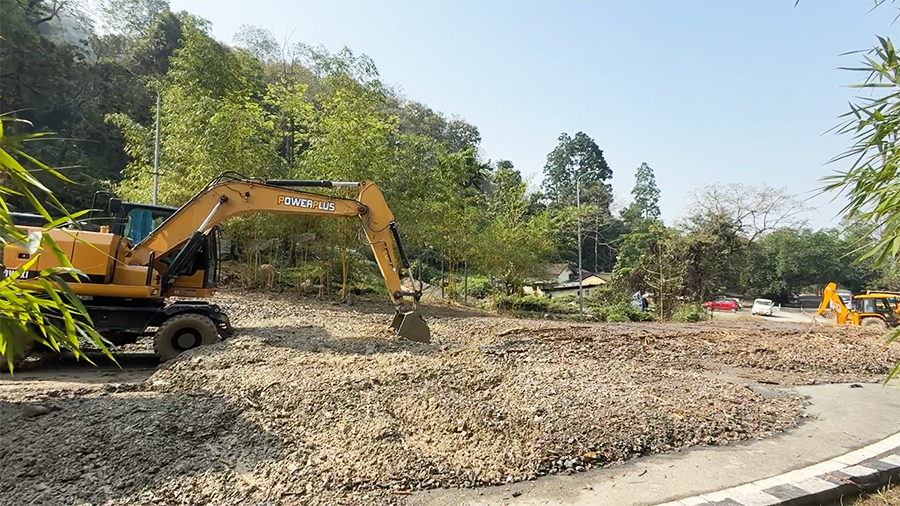
 Residents in the upper areas of Phuentsholing, particularly along the Phuentsholing–Thimphu highway near Rinchhending, are facing increasing risks. Early rains are washing debris from ongoing bypass construction onto the road. The highway is frequently flooded during rainfall, while dust pollution continues to be a persistent concern during dry periods.
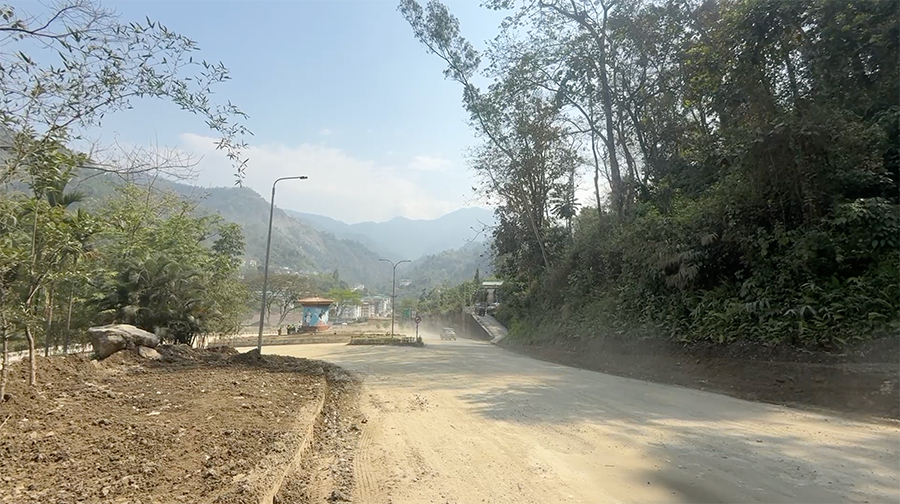 Once a landmark at the edge of Phuentshogling’s core town area, the roundabout where the Phuentshogling–Thimphu Highway begins now tells a different story.
In recent weeks, unseasonal heavy rains have washed down mud and debris from the bypass construction above the highway, turning the once scenic stretch into a mix of sludge and dust.
With every downpour, mudslides spill onto the highway, disrupting traffic and leaving behind a trail of mess as it dries.
Phuentshogling Thrompon Uttar Kumar Rai said, “Debris is washed down the highway as and when it rains. The commuters are left stranded, and it’s very challenging. The roundabout area used to be a beautiful and cinematic area, but now it’s left desolate. When these difficult situations occur even before the monsoon starts, the monsoon rain will bring a lot of issues posing serious risks to the army and police camps below the road. Moreover, Phuentshogling Primary School is also located there.”
With repeated incidents, even before the onset of the monsoon, many fear the situation could worsen in the coming months.
Residents say the conditions pose risks not only to property but also to their safety. Business owners said it is also affecting their businesses.
Some residents, requesting anonymity, said the timely construction of retention walls along the bypass could have helped prevent such incidents. They also alleged that not all excavated soil appears to have been disposed of at designated dumping sites.
Officials from the Department of Surface Transport said the Rinchhending bypass recently completed formation cutting and incomplete drainage at this stage worsened the situation, leading to uncontrolled surface runoff. However, officials said that immediate measures were taken to restore traffic. The contractor has now been instructed to carry out permanent protection works, including gabion walls and random rubble masonry toe walls.
According to Thromde officials, the affected highway stretch was blacktopped only last year. The shortcut road below the highway, near Pemaling, has also been damaged by debris flowing from above.
The thrompon said, “If retention walls were constructed, I feel, the issue wouldn’t have been this severe. It must be because heavy rains at this time of the year are unexpected. However, knowing Phuentshogling’s climate and soil stability, the works should have been executed. Our infrastructures have also been destroyed, and we are worried we don’t have any budget to repair those, as we get budget only once a year.”
DoST officials said, apart from debris flowing over the road surface, there has not been major structural damage, and debris clearance and disposal are already being carried out. They said maintenance and restoration of the shortcut road near Pemaling will also be carried out.
As the monsoon draws closer, residents and commuters are worried about what each heavy rain might bring down from the slopes. For the Phuentshogling Thromde, the concern runs deeper, over how to restore a recently blacktopped road and new drainage affected by repeated damage and no clear budget to fall back on.
Kinley Dem