
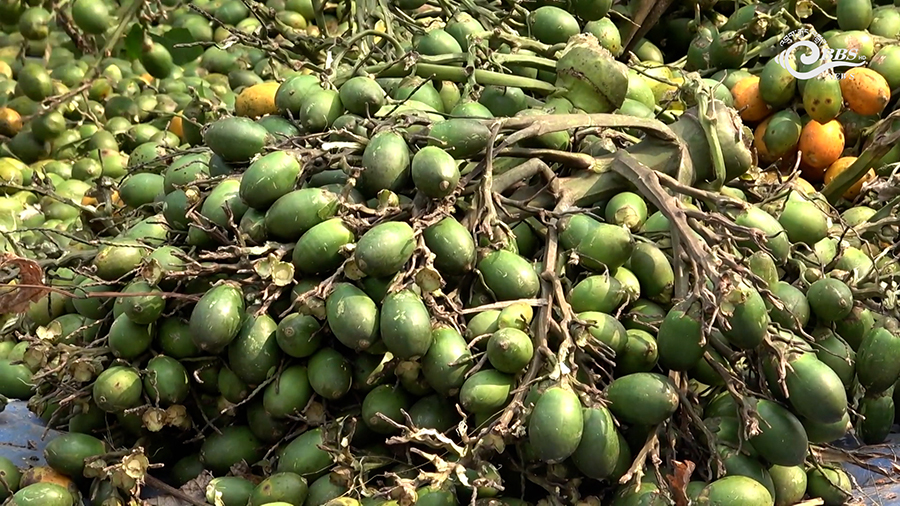
 Falling areca nut prices are raising concerns among growers and exporters in Gelephu, just as the peak harvest season gets underway. Over the past two weeks, buyers from across the border have scaled back purchases, offering lower rates despite good production.
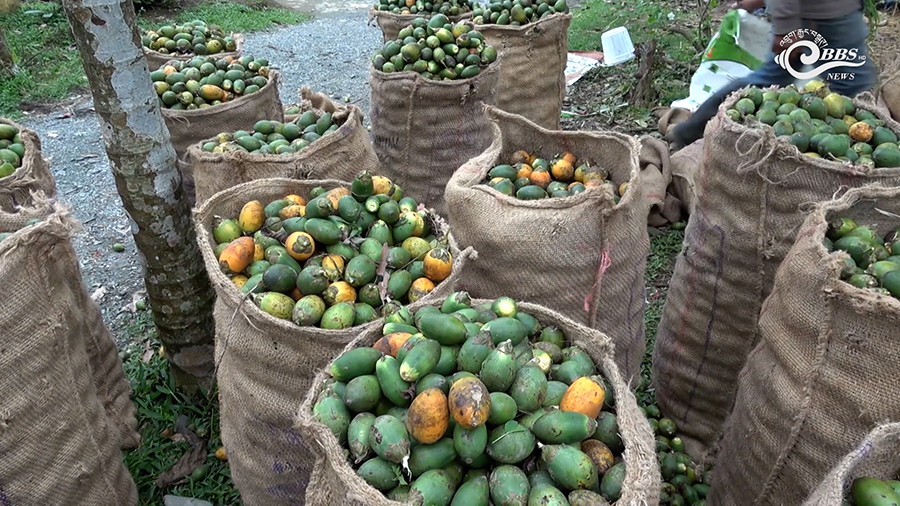 It is peak doma season in Shompangkha and Dekiling gewogs of Sarpang. Farmers and exporters are busy harvesting, sorting, and drying areca nuts, activities that usually signal strong business during this time of the year.
Jigme, a resident said, “The price of the doma prices is better this time. This year we can fetch about Nu 6,000 for a quintal of areca nut. Last year the prices were only about 5700 for a quintal. For now, I feel it’s a good business for all doma growers.”
But the mood has quickly shifted. Over the past two weeks, exporters say buyers from across the border have reduced their purchases, offering significantly lower prices. A sack of areca nut that fetched higher rates just last week is now being sold for about Nu 1000 to 500 less, cutting into already tight margins.
Dawa Singey Gomdan, one of the exporters said, “Prices have started to fall, and we are seeing fewer buyers in the market. Early rainfall is one reason, as it becomes difficult for buyers to dry the nuts during the monsoon. At the same time, rising fuel prices and transportation costs are also affecting the trade.”
Exporters also link the slowdown to the ongoing elections in Assam, which they say has reduced cross-border market activity.
But beyond market conditions, a bigger issue persists. Despite Bhutan introducing a formal export route from Gelephu to Assam in 2024, much of the areca nut trade continues informally, just as it has for years. The move to formalize trade was aimed at reducing informal tariffs, increasing the inflow of Indian currency, and aligning with India’s trade policies. However, exporters say the system has yet to work effectively on the ground.
Norbu Wangdi, an exporter said, “We don’t face much difficulty sending goods from our side. But once the consignment reaches India, it can take three to four days for customs clearance. By then, the areca nuts start getting damaged, which causes us losses.”
Another exporter said, “If customs clearance could be completed within a day, we would be willing to follow the formal system. But right now, it sometimes takes up to a week. That delay discourages us from using formal trade routes.”
Agricultural officials said while Bhutan has taken steps to formalize areca nut exports, progress has only been partial. Challenges such as delays in customs procedures, the absence of a plant quarantine facility at the Hatisar Land Customs Station, and coordination issues with authorities across the border continue to slow the transition.Despite these efforts, informal trade, driven by long-standing relationships between exporters and buyers, remains dominant.
Last year, Bhutan exported approximately 5,401 metric tonnes of areca nuts, valued at around Nu 251.15 M, with about 510 truckloads transported, primarily as transit goods via the Gelephu–Phuentshogling route.
Though the current market remains uncertain, exporters and farmers say the slowdown may be temporary. They expect trade to normalise after the elections in the bordering areas, which could help stabilise prices. Until then, the sector continues to navigate both market and system challenges.
Passang Dorji