Age-old local festivals in rural pockets of Bhutan continue to play a vital role in preserving and strengthening community bonds. However, residents of Tachey and Thasa villages in Dagana’s Laja Gewog have been facing difficulty in observing the three-day Londha festival without a permanent structure. They say, having a permanent structure would greatly help the smooth and safe conduct of the festival.
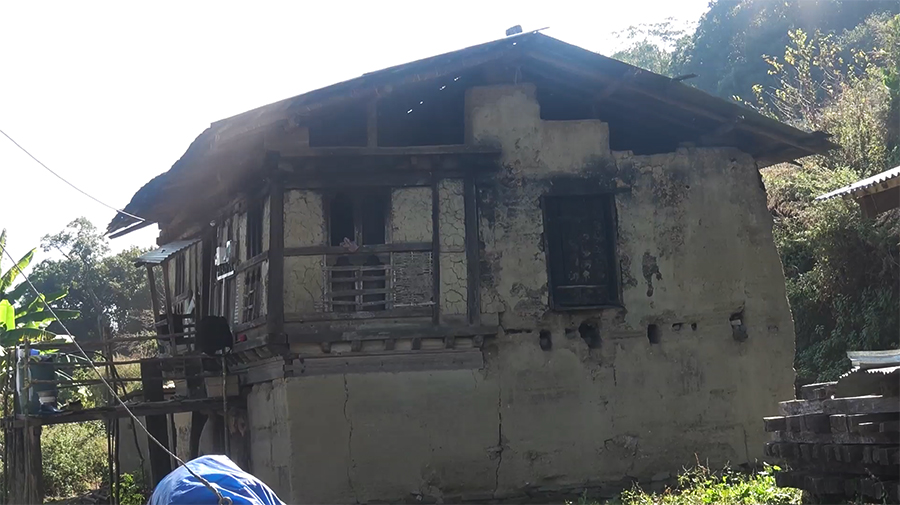 Until about two decades ago, Londha was observed inside a two-storey traditional house locally known as Tachey Chhubi Chhim. However, due to safety concerns arising from its deteriorating condition, the venue was relocated to an open space nearby.
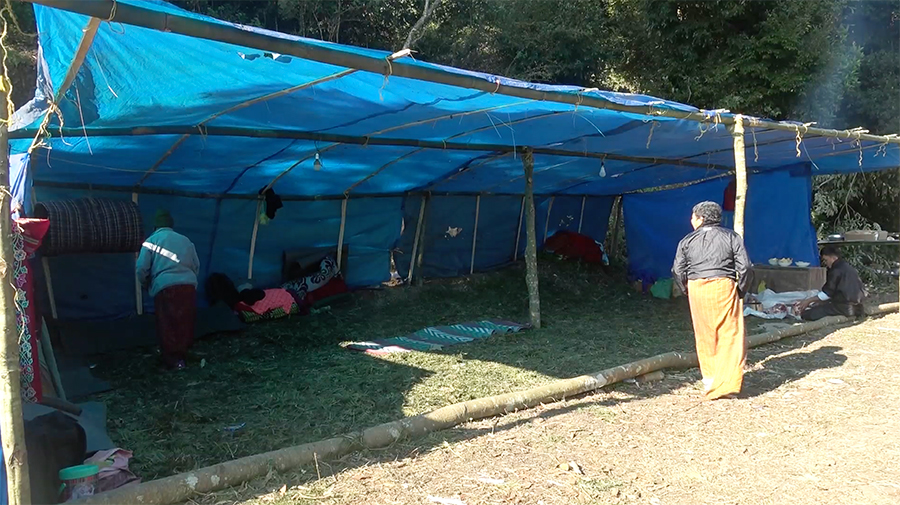 In the absence of a proper hall, villagers have been relying on temporary sheds constructed from old tarpaulins and bamboo. The makeshift structure serves multi purposes. It is used as a guesthouse and resting place during the daytime. And it is also used for sleeping for elderly residents who attend the festival from Thasa throughout the three nights during the festival.
Locals say, constructing a temporary shed every year is difficult. Moreover, extreme cold in the mornings and evenings further adds to their hardship as the festival begins as early as five in the morning and continues until late at night.
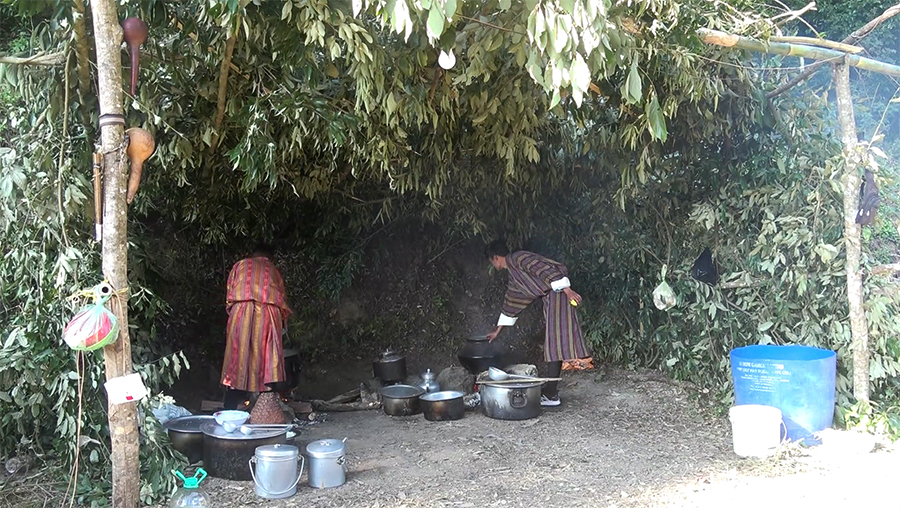 Similarly, meals are prepared in a temporary kitchen set up beside the event ground. Cooks say, maintaining hygiene in such an open space remains a major challenge.
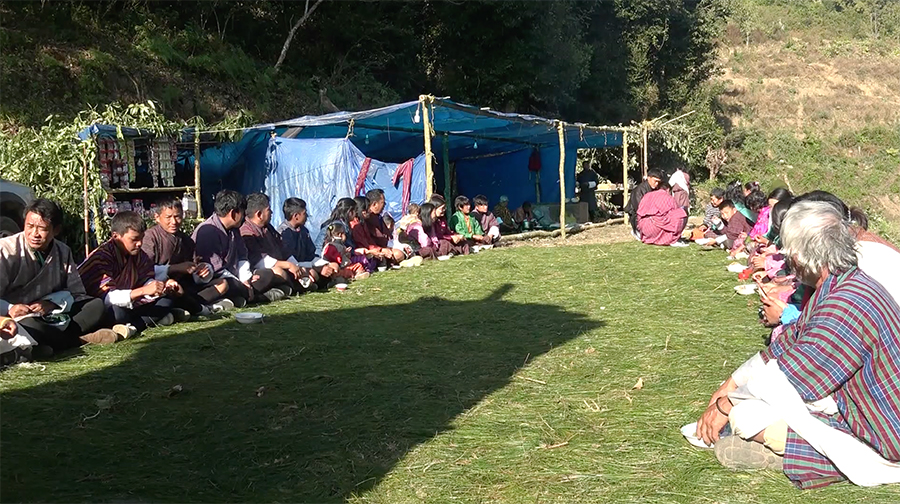 Despite the difficulties, villagers say, the annual festival cannot be discontinued under any circumstances.
“We don’t even have proper space for butter lamps and offerings when we rely on temporary sheds,” said Khandu, a resident of Thasa. “We continue making offerings from the old house, but it is not in good condition. We face serious difficulties, yet we have no alternative for now.”
Another resident, Dawa Tshering, said a permanent hall would significantly ease their challenges. “If possible, we would be grateful to have a hall that can accommodate 100 to 200 people during the festival. We also need proper toilet facilities.”
Zeko Tashi, also from Thasa, highlighted the financial constraints faced by the community. “When we rely on temporary sheds, we are forced to endure extreme cold. Without financial support, we are unable to construct a permanent structure ourselves.”
Meanwhile, the chiwog tshogpa said that the matter was discussed with the Laja Gewog Administration last year. However, the construction of a permanent structure was delayed due to budget constraints. The tshogpa added that the project has now been included in the next financial year.
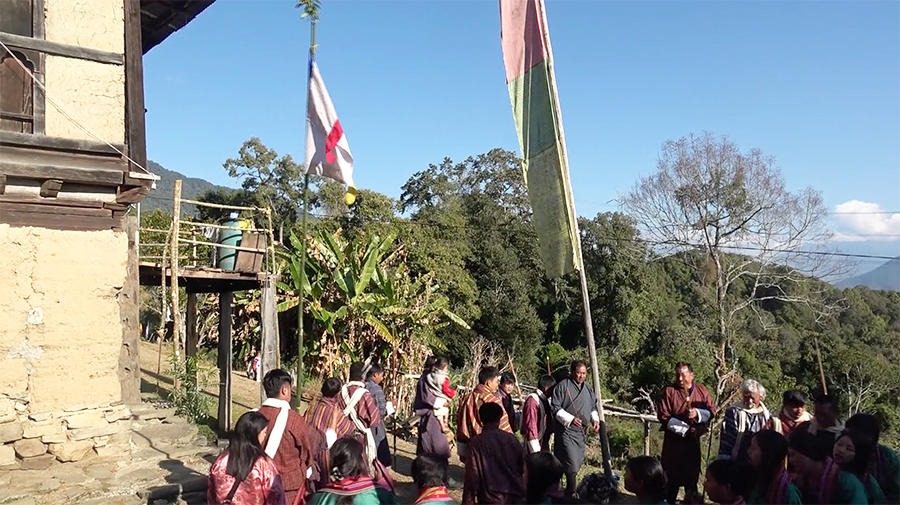 Like in a few other communities in Dagana, residents of Tachey and Thasa observe Londha every year as a gesture of gratitude to their local deities for peace, safety, and good harvests.
Pema Tshewang, Dagana