
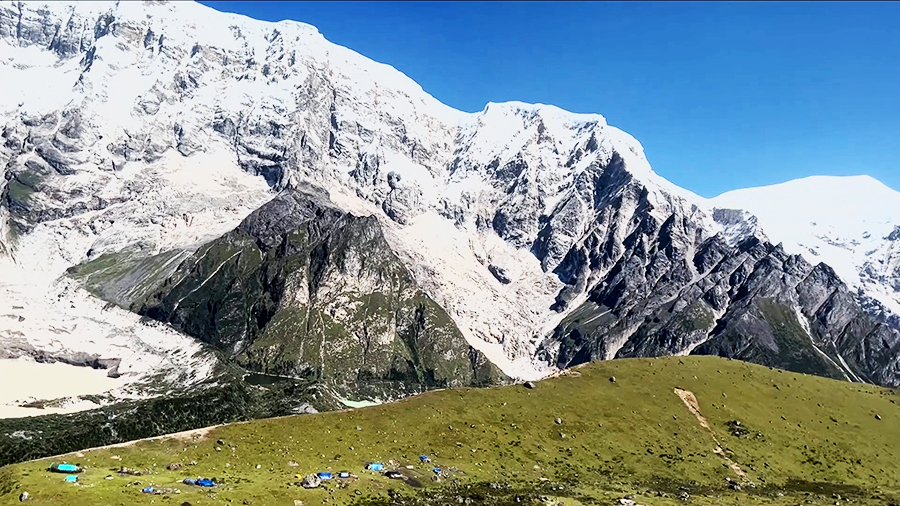
 Lunana in Gasa will soon get a 500-kilowatt mini hydropower project, a flagship project under the 13th Five Year Plan to provide reliable electricity and reduce dependence on fossil fuels. The project will be Bhutan’s first hydropower project constructed at high altitude, an elevation of about 4,200 metres above sea level.
The Druk Green Power Corporation (DGPC) will implement the construction work by awarding the contract works to private companies.
The contract for the first package, which includes civil and hydro-mechanical works, was awarded to a company at a contract price of approximately Nu 390 M.
Works are expected to start from April this year.
DGPC is now in the process of bidding for the second package involving electro-mechanical works.
Later, the Bhutan Power Corporation will implement the transmission and local distribution network.
According to the DGPC and the energy and natural resources ministry, construction works will take more than two years, considering the short working season due to harsh winter conditions.
Gem Tshering, Minister of Energy and Natural Resources said, “We need to transport things manually. In addition, the things cannot be carried easily as the total weight of the equipment weighs over tonnes. So, the challenge would be in transporting the things there.”
For now, the remote highland communities of Lunana rely on solar home lighting systems for basic lighting, and firewood for cooking and heating.
The project is expected to benefit nearly 700 residents across 13 villages in Lunana.
The minister said, “The ministry has developed an energy roadmap till 2040. In that, we aim to generate 20,000 megawatts of hydro-electricity and about 5,000 megawatts of solar energy. While a large hydropower project could not be planned, we have planned for a small one to benefit the people there.”
The project is funded by the Government of India under its Project Tied Assistance framework, through a Nu 1.5bn allocation for small hydropower, solar and wind projects.
By improving energy access, the project is expected to strengthen local livelihoods, support sustainable rural development, and help residents remain in their ancestral villages.
Kelzang Chhophyel