
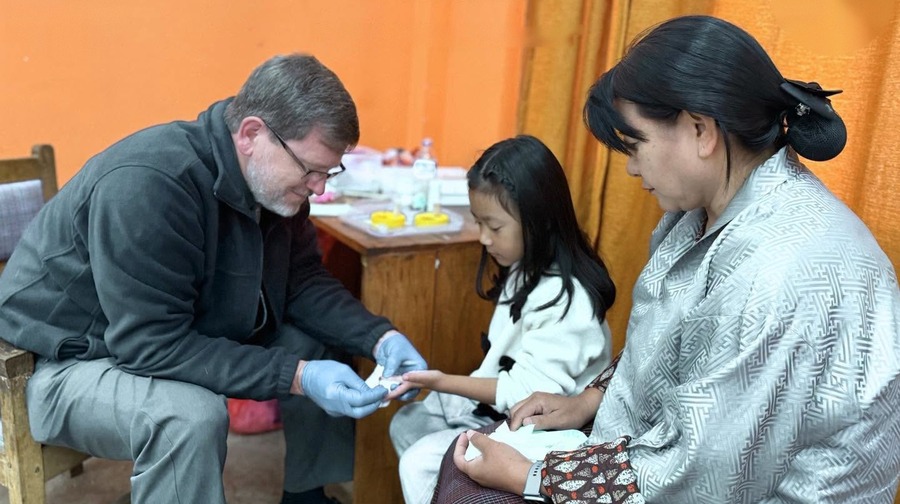
A simple blood test has helped track a significant drop in the blood lead level of a five-year-old girl, highlighting the importance of early detection and prevention of lead exposure in children.
Sonam Tshokey’s blood lead level has dropped from 31.1 micrograms per decilitre in April this year to 4.8 micrograms per decilitre, five months after she was first found to have an elevated level.
The World Health Organisation identifies five micrograms per decilitre as a level of concern. However, health experts stress that no level of lead exposure is considered safe.
Sonam’s mother, Kinley Zangmo, says learning about the risks of lead exposure has helped her take steps to protect her daughter.

“Since finding out that her lead level was high, I have started giving her more nutritious food and making sure she washes her hands regularly. I have also stopped giving her colourful toys after learning that some may contain lead. We found lead in some of our household items, so I threw them away,” she said.
The case highlights the importance of awareness and preventive measures. In 2023, the health ministry found that more than 75 per cent of children tested had blood lead levels of 3.5 micrograms per decilitre or higher.
To address the risk, the health ministry and UNICEF are working to strengthen prevention, awareness and treatment measures. So far, 300 primary health workers have been trained on environmental health risks, while industry workers are being urged to reduce lead exposure in products and workplaces.
The Prime Minister’s Office has endorsed the National Lead Poisoning Prevention Strategy to strengthen the national response.
The health ministry is also preparing a national framework for the prevention and control of lead exposure, which will soon be submitted to the Cabinet for approval.
Meanwhile, the ministry is developing clinical guidelines for managing lead poisoning. The plan is to establish a clinic in every hospital across the country to identify, prevent and treat lead exposure.
Karma Wangdi, Programme Analyst with the health ministry, says the programme may not begin in all districts immediately due to budget and resource constraints.
“However, once the guidelines are finalised, we will introduce the program at the National Referral Hospital for a duration of two years, following the training of doctors and the strengthening of the laboratory,” he said.
Dr Phillip Erbele, Research Specialist at MECRIT, KGUMSB, says children and pregnant mothers with blood lead levels above 45 micrograms per decilitre would be assessed by specialists trained in chelation therapy.
The treatment helps bring down lead levels in the body. Patients would be monitored closely for several months to identify and eliminate the source of exposure and ensure their blood lead levels are falling.
For patients with lower lead levels, health workers will assess nutritional needs, provide counselling and prescribe vitamins when necessary.
As part of the prevention effort, the health ministry and UNICEF also brought together 100 industry representatives under the theme “From Detection to Prevention” to strengthen efforts to prevent childhood lead exposure.
Health experts say preventing exposure at home, in workplaces and in communities remains essential to protecting children from lead poisoning.
Singye Dema
Edited by Sonam Pem