
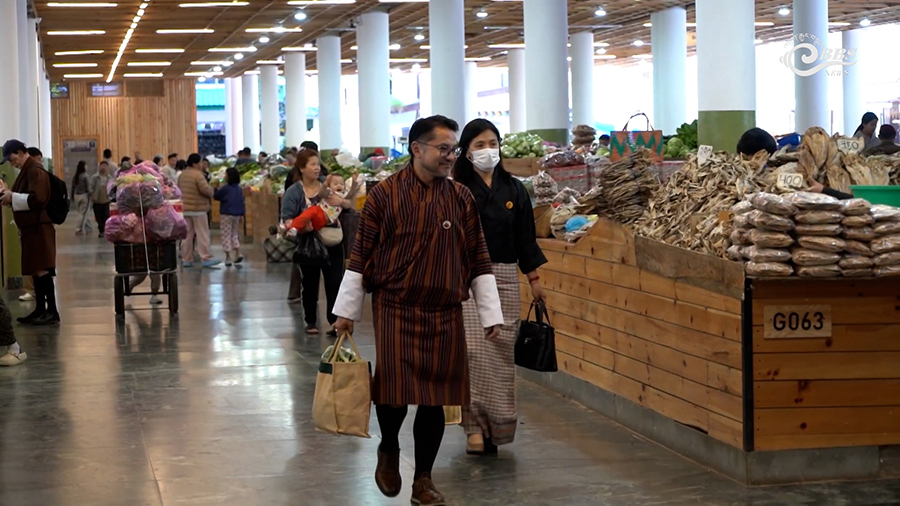
 Bhutanese households buy vegetables every week, but how much does it really cost? BBS put it to the test by sending a Minister and an ordinary parent to the same market, with the same amount of money, to see what they choose for their families. The baskets were then taken to a nutritionist to see whether their choices meet a family’s nutritional needs.
According to the National Statistics Bureau’s Household Consumption and Expenditure Survey 2025, Bhutanese households spend nearly Nu 3,500 per month on vegetables. That is roughly Nu 785 a week, based on the monthly average.
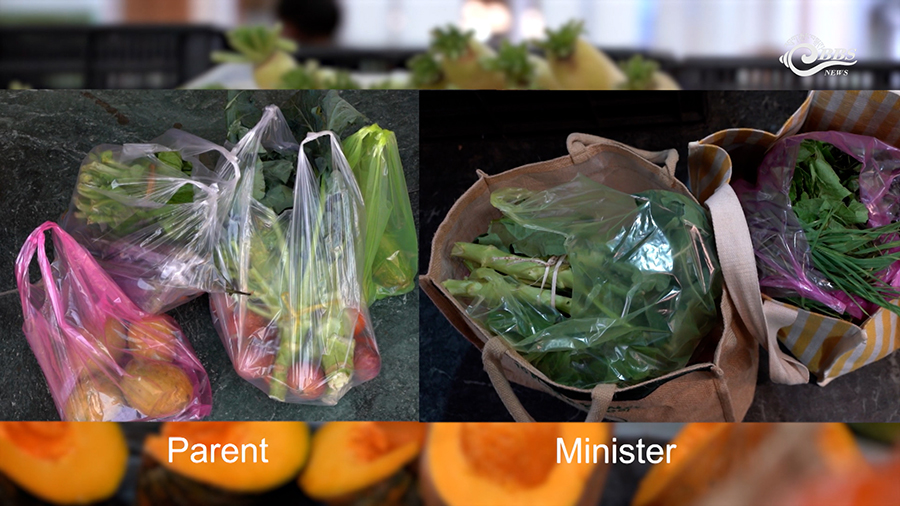
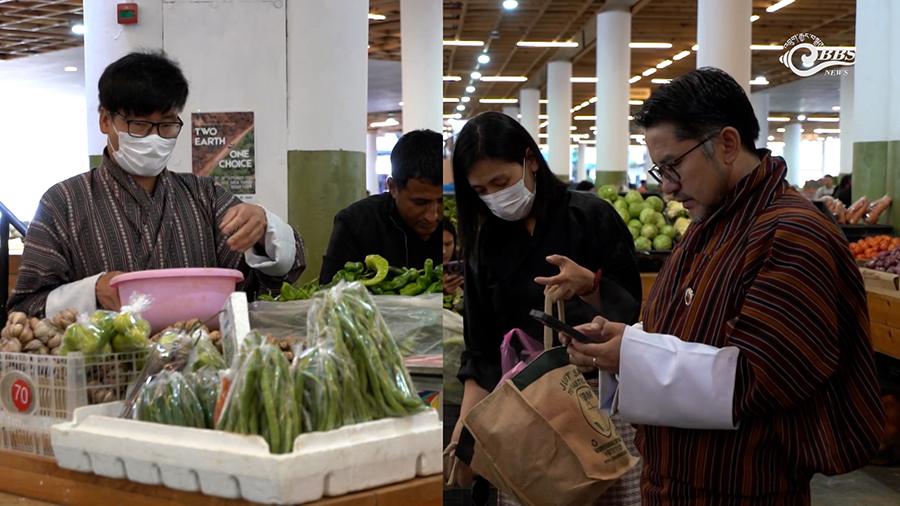 BBS gave Nu 1,000 each to two shoppers, a minister and a parent, and asked them to shop for their families. Same market. Same money. Two different shopping lists. There is no right or wrong basket. The question is simple: what can one actually buy with the money they have?
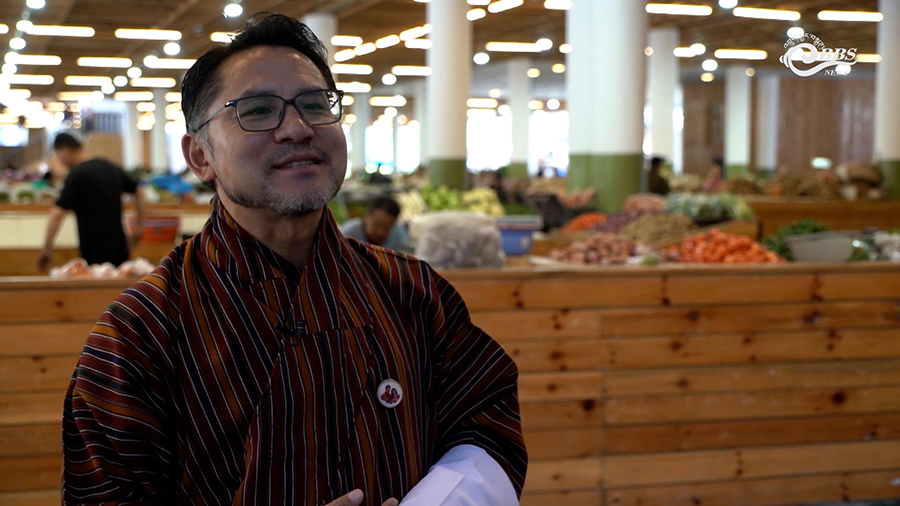
Agriculture and Livestock Minister Younten Phuntsho said, “With Nu 1,000, it is difficult to buy the vegetables that will last for one week. So, with 1,000, I managed to buy onion, tomato, cauliflower, and also spinach. What I could not buy were potatoes, chillies, and beans.”
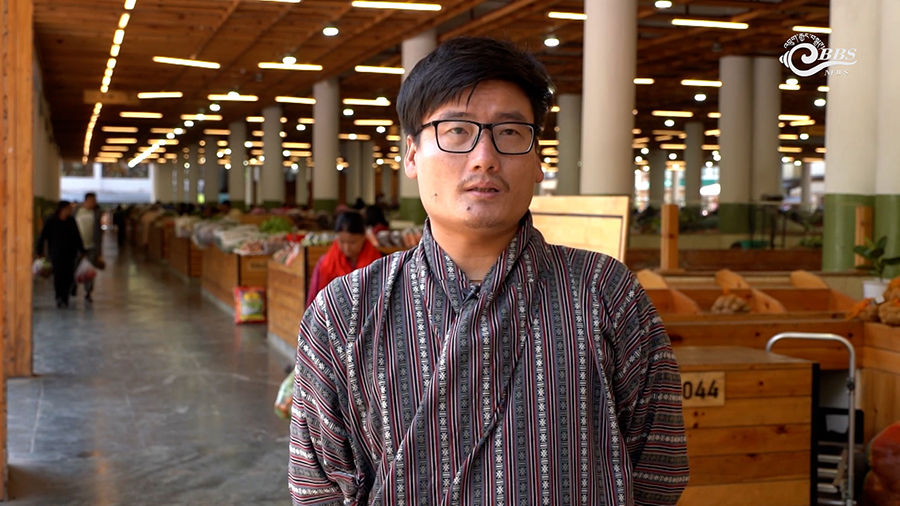
Tshewang Phuntsho, a parent and Thimphu resident, said, “With Nu 1,000, I could buy spinach, cauliflower, onions and tomatoes. I could also buy about one kilogram of cucumber and mangoes. I could have bought meat or fish, but because fruits and vegetables are expensive, I had to make careful choices. If vegetable prices were lower, we could buy more vegetables and get better nutrition. So, lower prices would be helpful for ordinary people, especially those with limited budgets.”
A nutritionist assessed the two baskets, not against each other, but against the nutritional needs of a family.
Tenzin Wangchuk, a Clinical Dietitian at JDWNRH, said, “Both the minister’s and the parent’s baskets lack high-biological-value protein sources. Although the minister has bought a greater quantity of food, both baskets are nutritionally similar. These foods provide essential vitamins, minerals, and potassium. The main concern is the low intake of protein-rich foods. Some people do not eat foods such as meat, fish, eggs, and cheese even once a week, while others consume them only two to three times a week. Bhutanese people commonly eat cereals and vegetables daily, but including enough protein in the diet is equally important for good health.”
To understand why food costs what it does at the market, BBS followed the vegetables back to where they begin, the farm. For farmers, the price paid by consumers is shaped by the cost of production, labour, transportation, seasonal availability and market demand.
Lungten Dema, a vendor at Farmers Centenary Market, said, “People often say that local products are expensive. I believe this is partly because we do not use chemicals in producing them, which makes them more nutritious compared to imported products, which may contain chemicals. Since local vegetables are considered more nutritious, we mainly sell them during the summer when they are readily available. However, during the off-season, we have no choice but to sell imported vegetables because local production is limited.”
Meanwhile, the government says it is intervening at different stages to support farmers and improve the supply of local produce.
Minister Younten Phuntsho said, “The challenge our farmers are facing is the shortage of labour. Therefore, the government is supporting farmers through a cost-sharing mechanism by providing them with mini-tillers that our women are capable of using. Likewise, globally we are facing the impact of climate change. Therefore, we release climate-resilient seed varieties and provide farmers with these new seeds.”
The minister says the ministry generally avoids direct price regulation.
“We are currently facing the problem of being able to market pork. But we are trying to protect our farmers through a price guarantee scheme. That means we are trying to ensure farmers can recover the cost of production they invested in producing a kilogram of pork. At the same time, we are also trying to regulate the price so that our consumers can get pork at an affordable price,” the minister said.
The agriculture sector still employs a large share of Bhutan’s workforce, even as its share of the economy has shrunk to around 13 per cent of GDP last year. That gap between agriculture’s economic weight and its role in food security is exactly where this story lives.
Same market. Same money. But behind every basket is a different household, a different budget, and different nutritional needs.
 The real question is not what the Minister bought, or what the parent bought. It is whether either basket is within reach for the households who don’t get a film crew watching.
Namgay Wangdi
This news story is produced in partnership with the Ministry of Health and UNICEF.