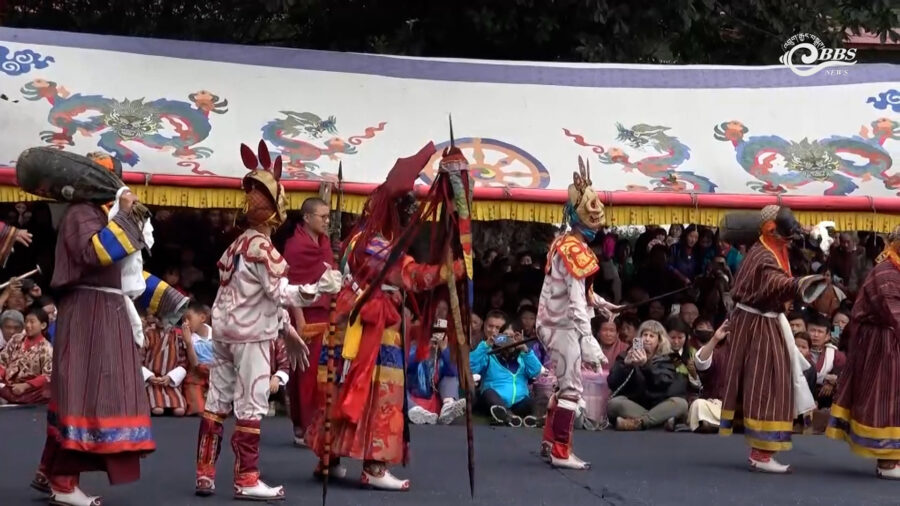
 Every year at this time, devotees make their way to Tamzhing in Bumthang for a blessing unlike any other. They receive the Pakpa Wang, loosely translated as the leather bag blessing, as part of the monastery’s annual festival, Phagla Choedpa. The three-day festival honours the lineage of Terton Pema Lingpa, one of Bhutan’s most revered saints.
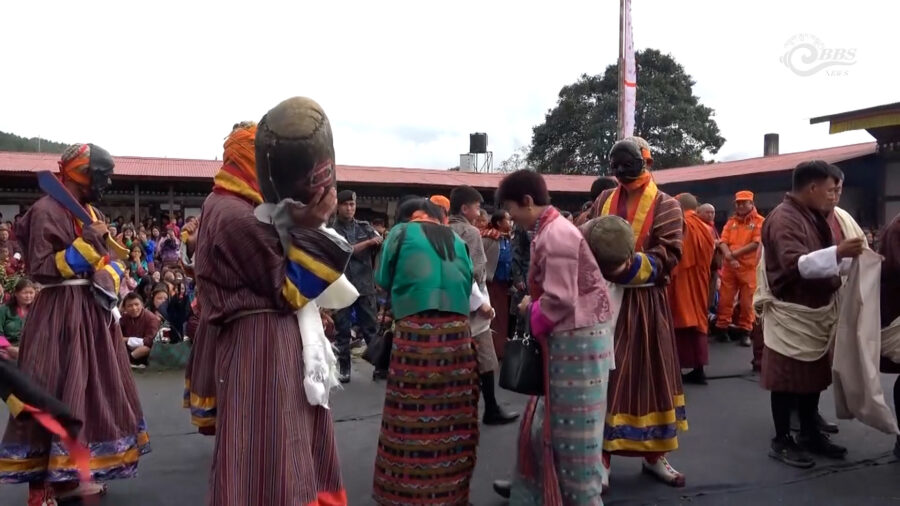 Unlike the usual tap on the head, devotees receive a blessing on their backs. Two masked officiants strike the backs of the devotees with a leather sack each stuffed with sacred relics. This is Pakpa Wang.
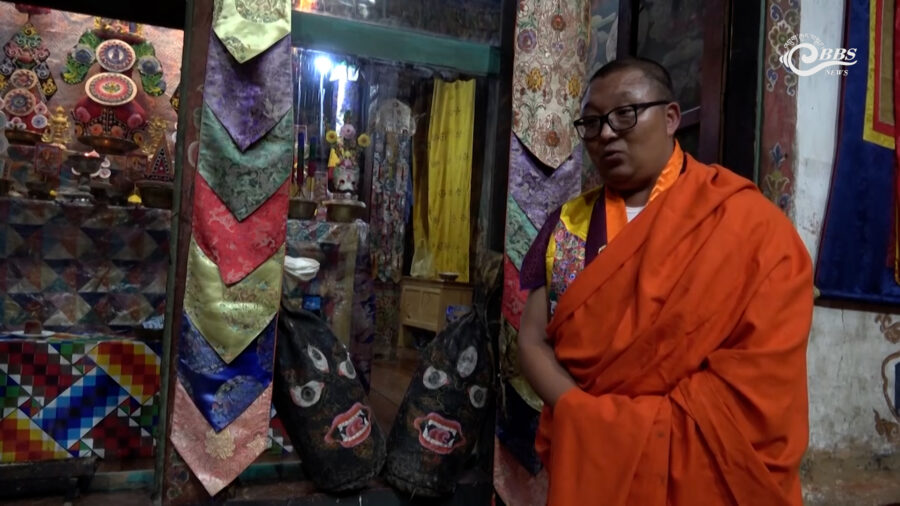
Principal of Pema Lingpa Central School in Tamzhing, Sonam Tashi said, “The Tsiumar mask dance has been performed in the country since the 19th century. Then, it was mainly known among the monks and local people of Tamzhing village. Later, with time, the Pakpa Wang gained popularity for its sacredness, and more devotees started coming to receive the blessing.”
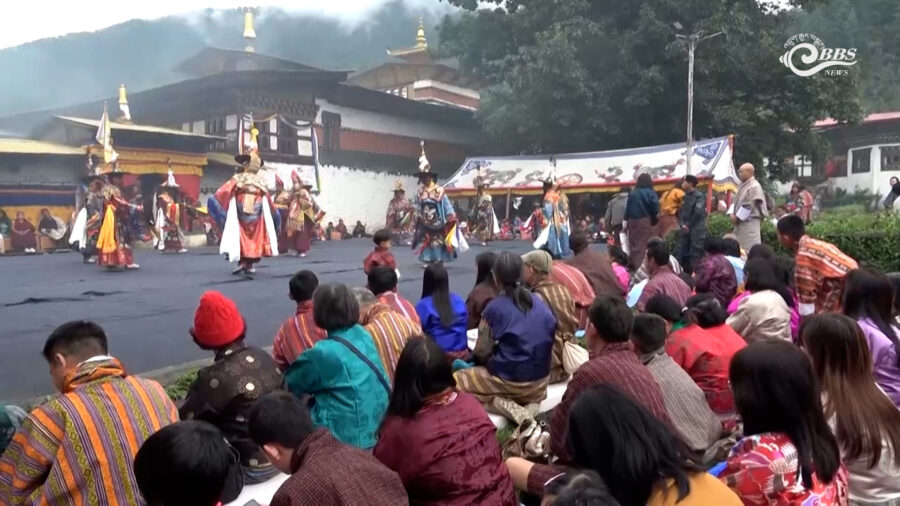 Devotees believe the blessing helps purify negative actions and ward off misfortune. It is one of the distinctive rituals of Tamzhing Phagla Choedpa bestowed as part of the Raktsha Tsiumar mask dance.
The tradition is closely linked to the Peling lineage of Lhalung in Tibet.
As per oral tradition, the ninth Peling Sungtrul, Tenzin Chokyi Gyeltshen, witnessed Tsiumar, a Tibetan choesung or protector deity, and his attendants arriving with their symbolic attributes in a procession at Lhalung.
Subsequently, the processional mask dance is believed to have been introduced to Tamzhing and became an important part of its annual Phagla Choedpa festival.
The Principal said, “Written mantras were placed as relics within the symbolic attributes, making them more sacred and believed to ward off misfortunes for those who receive blessings from them.”
The setting of the festival carries its own history. Tamzhing is the principal seat of Terton Pema Lingpa’s tradition in Bhutan. The temple’s foundation was laid in 1501, and the annual Phagla Choedpa continues to bring its sacred dances and rituals before the community, including the Pakpa Wang.
Thinley Dorji, Bumthang
Edited by Sonam Wangdi