
 As climate change reshapes the risks Bhutan faces, disaster preparedness is becoming increasingly important. But how prepared is Bhutan? With awareness, preparedness and mitigation more important than ever, this story looks at what an effective early warning system should encompass and how Bhutan’s system currently works.
In Bhutan, the National Centre for Hydrology and Meteorology (NCHM), is responsible for generating critical weather and hydrological information.
But data alone is not enough.
“Information is not for the use of the NCHM, but it has to be used by the sectors: urban planning, hydropower design and bridge design, and also agriculture planning and horticulture, livestock and so on,” said Karma Dupchu, Director General, NCHM.
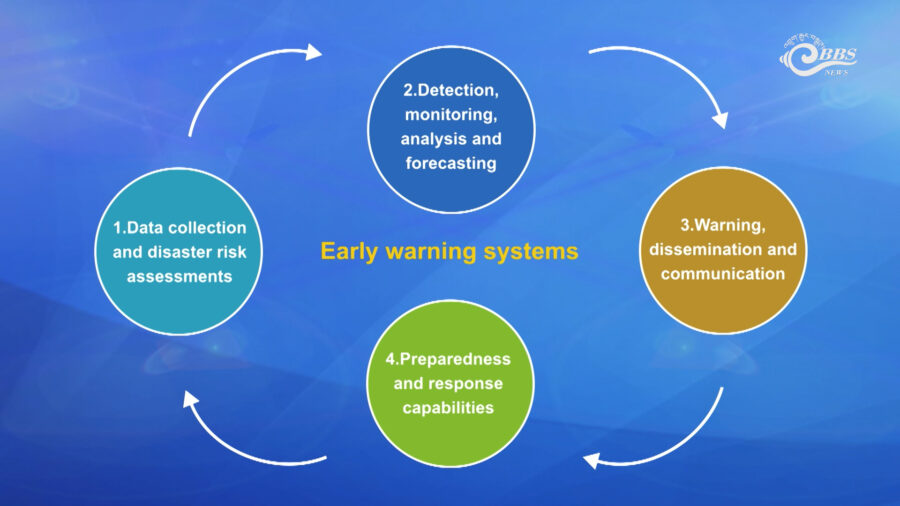 According to the United Nations Office for Disaster Risk Reduction (UNDRR), an effective early warning system has four interrelated components: understanding disaster risks, monitoring and forecasting hazards, communicating warnings and ensuring communities are prepared to respond.
For Bhutan, this includes identifying risks such as glacial lake outburst floods (GLOFs) and installing sensors to detect changes in water levels and other hazards.
“When we talk about early warning, it is end-to-end: starting from planning, coordination, and then the communications part will come. And the community equally have a huge responsibility,” said Karma Dupchu, Director General, NCHM.
Bhutan currently has two operational GLOF or rainstorm flood early warning systems covering the Punatshangchhu basin and Chamkhar-Mangde Chhu Basin.
“We have two early warning systems established in two river basins. So if you come to the Punatsangchhu Basin, we have 10 automatic water-level stations strategically located along the Punatsangchhu River. Our early warning system is based on a detection system where we have a remote water-level monitoring station from the lake to the Punatsangchhu Basin,” said Trashi Namgyal, Chief Engineer, NCHM.
The systems are monitored around the clock on a shift basis. When water levels reach predefined thresholds, warnings are issued, with sirens automatically alerting the public.
“So, whenever that particular water level station reaches the alert, it will turn yellow. When the water level turns yellow, that indicates that our control room staff and the disaster focal have to stay alert. And then we will prepare for it: what is the next phase of steps, as per the SOP. Then, when it reaches the alarm, again, that is the predefined threshold that will turn red. When it turns red, then information will be disseminated to the general public through the siren- it will go off automatically,” said Trashi Namgyal, Chief Engineer, NCHM.
However, the systems were installed more than a decade ago and now need to be modernised.
“The priority now is to rehabilitate and to modernise these systems. These systems are not broken; they are working, but they are old. Now they need to be improved. And how are we going to do that? The government has submitted a USD 22 M project to the Green Climate Fund (GCF) to strengthen the early warning systems across Bhutan’s major river basins. The concept was approved in June this year,” said Prime Minister Tshering Tobgay.
Meanwhile, NCHM continues to issue weather information and advisories, including during extreme weather events.
“During extreme weather events as well. So, this is the room where we make the decisions whether to give the weather advisory, and what kind of impact the weather may bring. So this is basically everything related to weather services that comes online on social media or websites,” said Sangay Tshering, Hydromet Officer, NCHM.
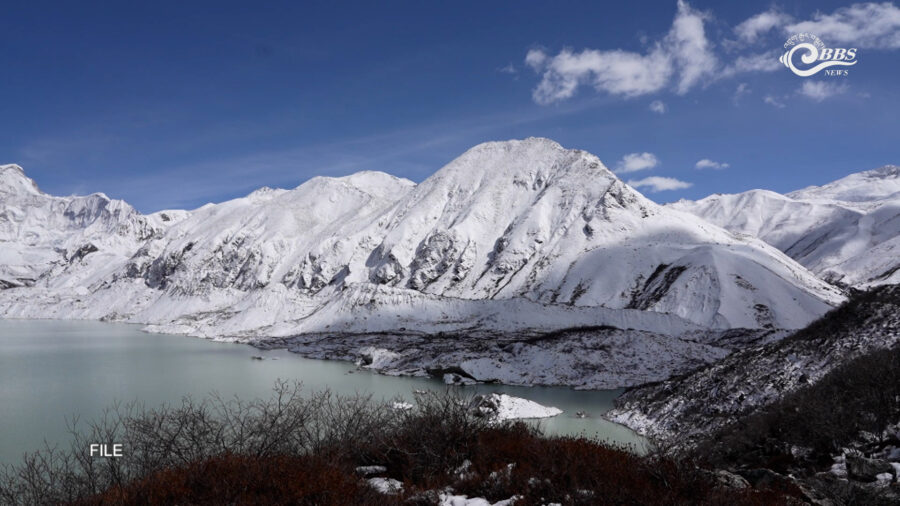
 The NCHM has identified 17 potentially dangerous glacial lakes, with Thorthormi among those posing the highest risks. The threat extends beyond the lake itself, putting downstream communities and river valleys at risk.
For Bhutan, the challenge is therefore not only to strengthen early warning systems, but to ensure those warnings lead to timely action. While hazards may be inevitable, their impacts can be reduced through better preparedness and more resilient communities.
Devika Pradhan
Edited by Sonam Pem