
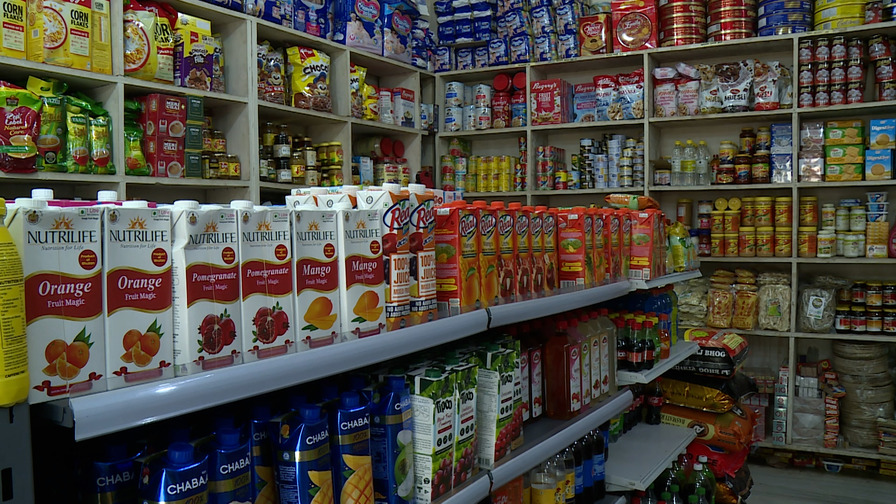
 After falling in June, prices rose slightly again last month. The latest Consumer Price Index, which is the measure of how much everyday goods and services cost, shows that prices increased by 0.24 per cent in July. According to the National Statistical Bureau (NSB), food was the main reason, even as many non-food items, from clothes to transport, continued to get cheaper.
For most Bhutanese, July brought a small change in prices.
After falling by 0.81 per cent in June, the national Consumer Price Index, CPI, edged up again last month by 0.24 per cent. This means, for every Nu 100 spent in June, consumers paid roughly 24 chhetrum more in July. And food was the main reason.
As per the NSB’s monthly report, food prices increased by 1.16 per cent last month.
Within food, prices of food and non-alcoholic beverages increased by 1.37 per cent.
Non-food prices, however, moved in the opposite direction. They fell by 0.69 per cent.
Clothing and footwear prices dropped by 1.17 per cent, while health costs dropped by 1.25 per cent, and transport by 1.01 per cent.
While food pushed prices up, these cheaper items softened the blow. As such, the overall rise in July stayed modest.
Experts say that as an import-driven country, any changes in prices in the country of import directly impact the prices in Bhutan.
As per the report, the change last month was not the same everywhere.
The eastern region recorded the highest increase, with prices up by 0.95 per cent, followed by the central region with a 0.68 per cent.
However, in Thimphu, prices actually fell slightly by 0.06 per cent. Overall, the western region saw the biggest fall, down 2.23 per cent.
Meanwhile, the year-on-year inflation increased by 6.83 per cent in July compared with July 2025. The year-on-year inflation compares prices in a particular month with prices in the same month of the previous year. It indicates how much the general price level has changed over 12 months.
Behind these monthly ups and downs is also a bigger story about what your money buys or ngultrum’s purchasing power. As per the NSB, a product that costs around Nu 51 in December 2012 now costs about Nu 100. That means the same amount of money now buys only about half as much as it did then, a reminder of how steadily rising prices add up over the years.
Deki Lhazom
Edited by Sonam Wangdi