
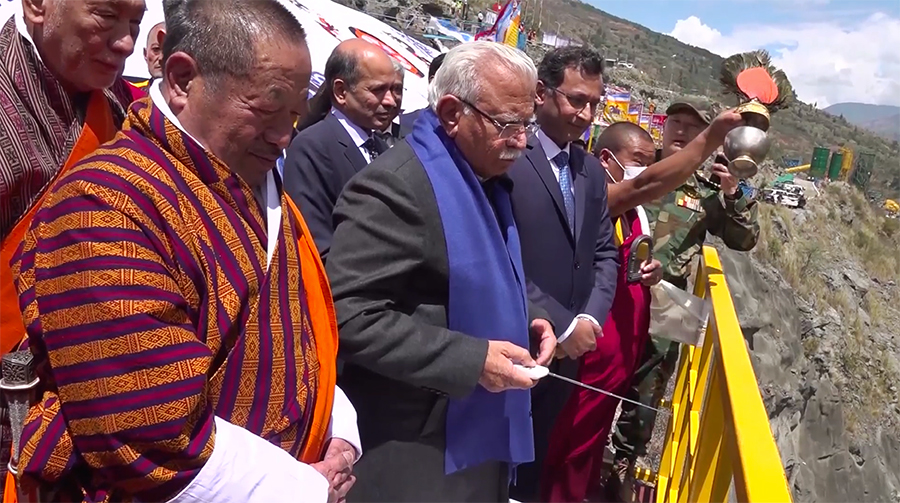
 After almost seven years, work on the 1,200-megawatt Punatsangchhu-I Hydroelectric Project in Wangdue Phodrang has resumed with the commencement of the dam construction. Minister of Energy and Natural Resources, Gem Tshering, and India’s Minister of Power, Housing and Urban Affairs, Manohar Lal, attended the commencement ceremony today. While most components of the project had been almost completed, the main dam construction work was halted since 2019 due to major geological challenges.
After years of delay, the machines are turning again.
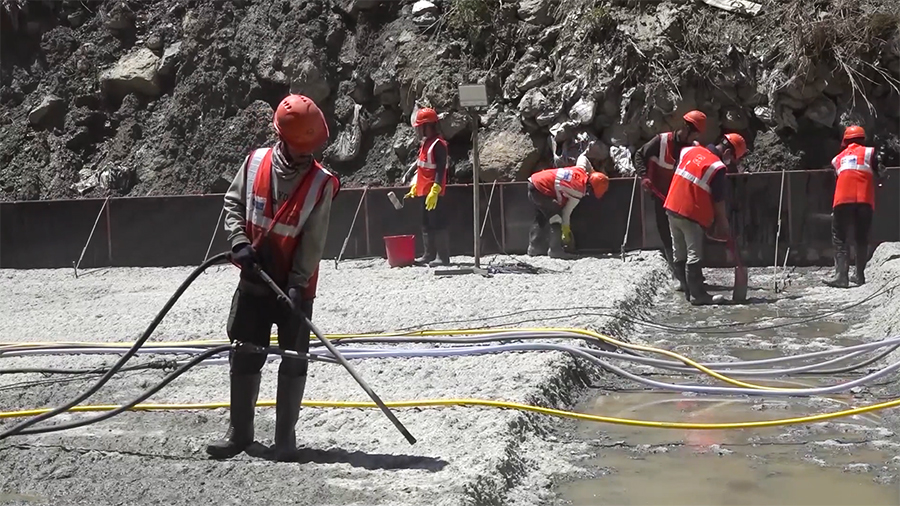 Workers are back on site at one of the country’s biggest hydropower projects, as construction resumes.
If everything goes as planned, the dam is expected to be completed by 2030.
 Once operational, the Reinforced Concrete Gravity Dam will store 4.6 million cubic meters of water to run six turbines at the powerhouse, each with a capacity of 200 megawatts.
According to the Minister of Energy and Natural Resources, the cost of the main dam construction has yet to be finalised.
He says the ministry does not see any hindrance going forward unless there is a natural disaster, as it has already taken sufficient time for expertise from both countries to decide on resuming dam construction following extensive studies and consultations.
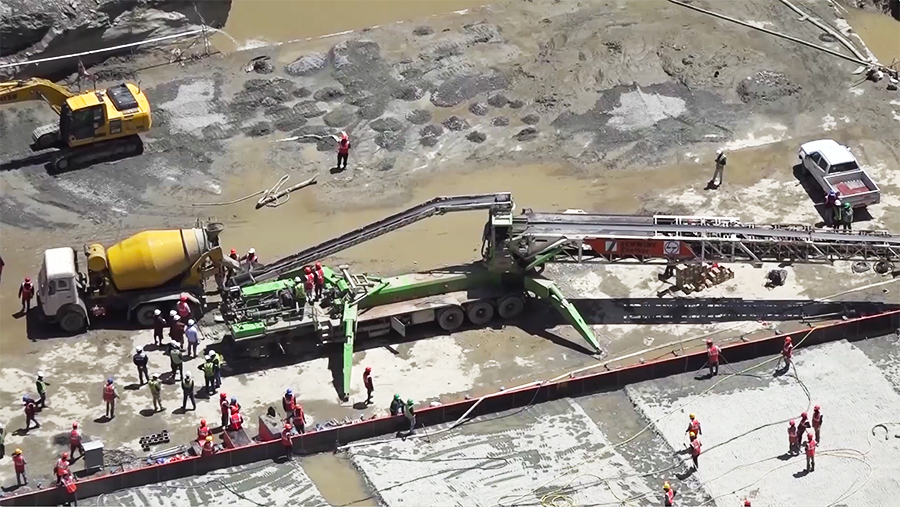
“Two governments, the government of India and the government of Bhutan, have put in rigorous efforts with experts working together tirelessly, and ultimately, last year, in July, 2025, we could come to a solution to resume dam construction. So, today, we are putting the first bucket of concrete into the dam,” said Gem Tshering, Energy and Natural Resources Minister.
The construction of the Punatsangchhu-I was initiated in 2008, with major components such as the headrace tunnel, powerhouse, and transmission lines largely completed.
However, dam construction was halted due to severe geological issues, including recurring landslides and the gradual sinking of the right bank slope above the dam site.
This resulted in multiple delays for the project, which was initially scheduled for completion by 2016.
Major setbacks occurred in July 2013 and January 2019, forcing repeated revisions of the timeline. The project also missed the latest revised deadline of 2025, as the dam construction could not resume until now.
“While experts carried out the studies, the area was found to have sunk in 2016, as it had in 2013 and 2019. Upon detailed assessment, they found that the soil in the road area needs to be cleared to avoid potential risks to the dam. Another measure to stabilise the slope is the installation of pile foundations,” said Gem Tshering, Minister, Ministry of Energy and Natural Resources.
The minister also expressed optimism that there will be no damage or risk to the powerhouse and headrace tunnels during the time of main dam construction.
The project is funded by the Government of India, with 40 per cent as a grant and 60 per cent as a loan at an annual interest rate of 10 per cent. The estimated cost has increased significantly, from the initial projection of around Nu 35bn to over Nu 100bn.
The main dam construction work is being carried out by L&T Construction, one of India’s largest private construction firms. Currently, there are more than 500 workers, including staff on site, with numbers expected to increase to more than 2,000 in the future.
Changa Dorji, Wangdue Phodrang
Edited by Phub Gyem