
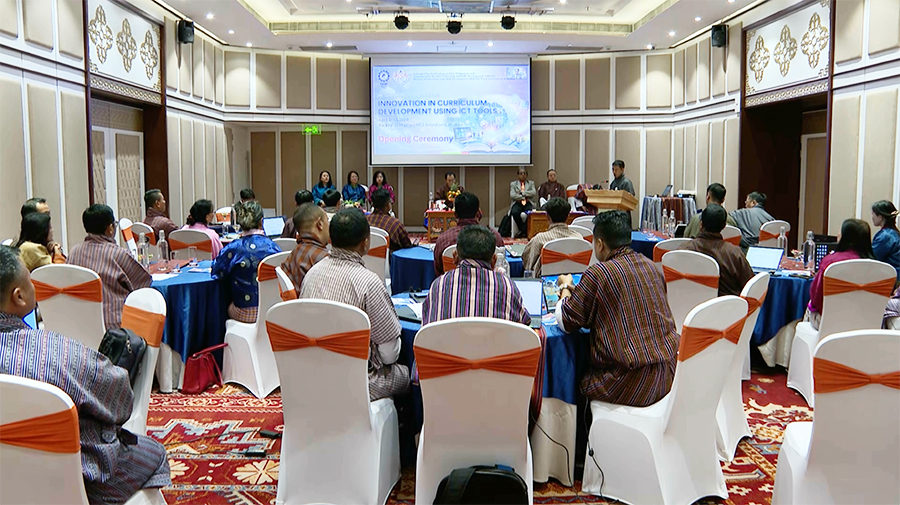
 The country is stepping up efforts to modernize its TVET sector using ICT tools and aligning it with labour market demands. A specialized training is underway in Thimphu to reduce curriculum development time, and equip students with the skills needed to thrive in today’s rapidly evolving workforce.
Currently, most of the curriculum development works are carried out manually.
However, with the use of ICT tools such as content creation software, learning management systems, collaboration tools, and assessment tools, the process can be improved.
Officials said the total time required can be reduced from taking months to just weeks, improving both efficiency and accuracy.
Moreover, the use of AI-driven research will also help make curriculum content more relevant to industry needs and support more comprehensive analysis.
Karma Dorji, the officiating chief programme officer of Department of Workforce Planning and Skills Development, MoESD said, “Previously, ICT was used mainly for documentation and printing during curriculum development. Going forward, we will use ICT tools throughout the entire process. For instance, this will help reduce the development time to about two weeks, compared to the usual one month.”
He added that using digital tools, simulations and online platforms help integrate actual industry practices into learning.
“TVET curriculum focuses on equipping learners with practical skills aligned with modern technology and evolving labour market demands. As a result, new skills continue to emerge while others become obsolete.”
The programme is expected to contribute to a more efficient and responsive TVET system, better aligned with evolving labour market needs.
Sangay Chezom