
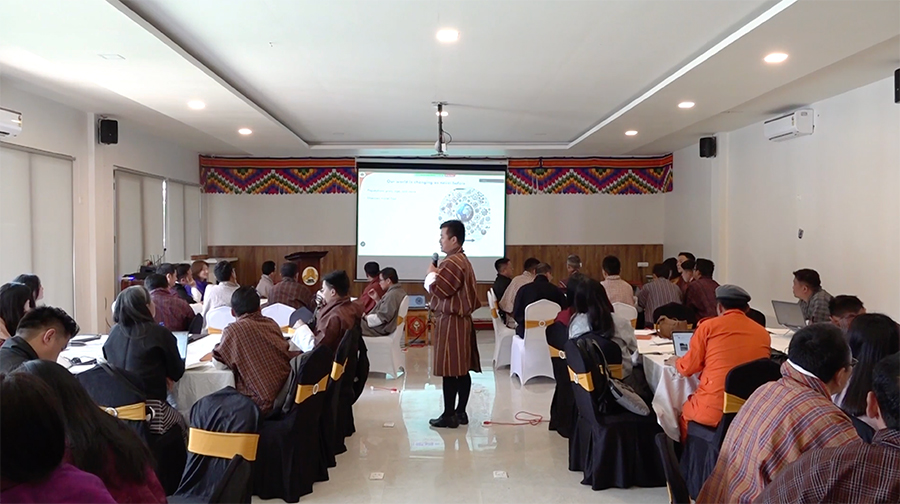
 Bhutan is stepping up its preparedness for health emergencies. The Ministry of Health is training officials and running a simulation in Paro to test how the Health Emergency Operations Centre functions during a crisis.
Health officials and emergency responders were trained on emergency management, coordination, and information-sharing systems.
They also identify gaps in coordination, communication, and overall response.
“Once you do a simulation, the advantage is you can see how well the plan went. You can also see how the procedures went, and then the participants will also be able to identify the positives, the pluses, where some course correction actions are required. So, you can see how well the plan and the procedures worked in that particular emergency,” said Dr Sugandhika Perera with the South-East Asia Regional Office, WHO.
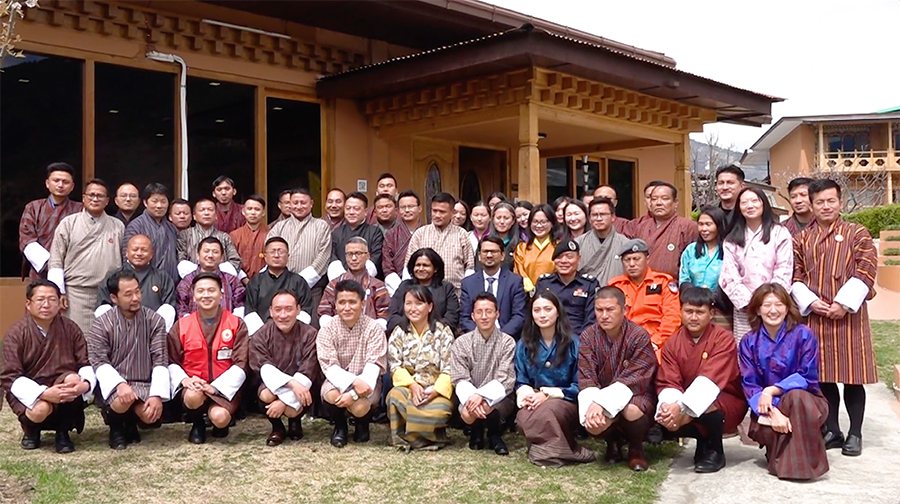 The Ministry of Health is leading the training to assess how the Health Emergency Operations Centre functions during a crisis. The centre serves as the country’s main coordination hub for public health emergencies.
In recent years, Bhutan has faced several public health challenges. The COVID-19 pandemic required lockdowns, mass vaccination, and close coordination, while outbreaks of dengue and other mosquito-borne diseases highlighted the need for stronger surveillance and faster response.
Officials say managing such emergencies requires coordination beyond the health sector. Agencies responsible for disaster management, security, border control, and public information all play a role.
Dr Sugandhika Perera said, “Emergencies begin and end in communities. So, while we sometimes prepare at the national level, the sub-national capacities can vary quite a bit. So, you really have to see how you can strengthen the capacity across the country at the sub-national level, because your strength is as strong as your weakest point.”
Officials say the findings from the exercise will help refine procedures and strengthen Bhutan’s preparedness.
“With this training, we are planning to test our standard operating procedure for activation, operation and deactivation of the health emergency operation centre. And so, when we have all these documents readily available and applicable with trained personnel, I think the response will be smoother, and the command will be all clear when we respond to future public health emergencies,” said Rinzin Gyalpo, an assistant programme officer with the Department of Public Health.
With regular training and clearer systems, Bhutan’s response to health emergencies is expected to become faster and more effective in the future.
Karma Samten Wangda, Paro