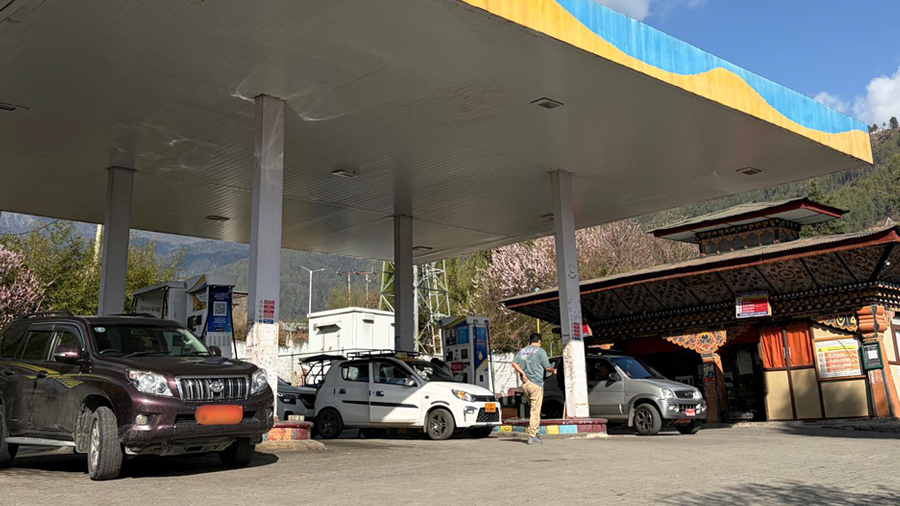
 People across the country woke up to a shocking new reality at the pumps. In Thimphu, fuel prices hit record highs this morning. The diesel price increased by nearly Nu 38 per litre, petrol by Nu 22, and LPG by Nu 74, showing just how steep the spike has been.
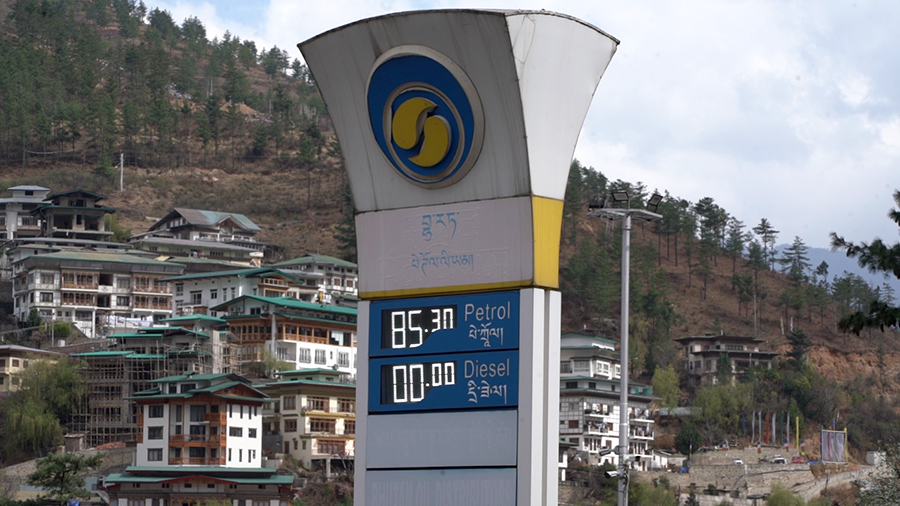
The LED display at the Lungtenzampa fuel station, designed to show only four digits, couldn’t keep up with reality. Diesel prices soared past five digits for the first time this year, leaving the screen blank and commuters stunned.
According to the Ministry of Industry, Commerce, and Employment, the latest revision is based on invoices received from India, Bhutan’s sole supplier of petroleum products.
The diesel now costs Nu 108 per litre, petrol Nu 85 per litre and LPG Nu 1,131 per cylinder in Thimphu.
“For drivers like us, our taxi is our main source of income. With fuel prices rising so sharply, I’m not sure how we will manage to support our families. On behalf of all drivers who depend on their vehicles for a living, I urge the authorities to consider reducing the fuel tax,” said Kinley Wangyel, Taxi Driver, Thimphu.
“Whether we are shocked or not, Bhutan imports its fuel from India, which exports it to us. There is already an understanding between the two governments for subsidies, so the Bhutanese government should negotiate to ensure we receive them. Even if global issues, like the Iran-US tensions, affect supply, we’ve heard that Russia continues to trade fuel with India. My question is, why can’t Bhutan make use of its existing agreement with India?” said Rinzin Penjor, Resident, Thimphu.
Because Bhutan imports all its petroleum products from India, domestic prices directly reflect changes in India, where fuel rates are influenced by global crude oil markets. These markets have remained volatile, affected by geopolitical tensions and supply constraints.
Ministry of Industry, Commerce and Employment said that the surge is driven primarily by a sharp increase in global crude oil prices and the depreciation of the Indian rupee against the US Dollar. Brent crude oil, for instance, has jumped from around USD 70 to USD 106 per barrel in just two weeks.
More than half of India’s crude imports transit through the Strait of Hormuz, which is currently affected due to the ongoing conflict in the Middle East, adding to supply uncertainties.
Despite the steep increase in Bhutan, fuel prices in India have reportedly remained stable. The ministry said India often keeps fuel prices the same at home, even when global prices go up.
The extra cost is covered by oil companies to protect consumers. On the other hand, when prices drop internationally, rates are not immediately reduced as companies recover previous losses.
Samten Dolkar
Edited by Tandin Phuntsho