
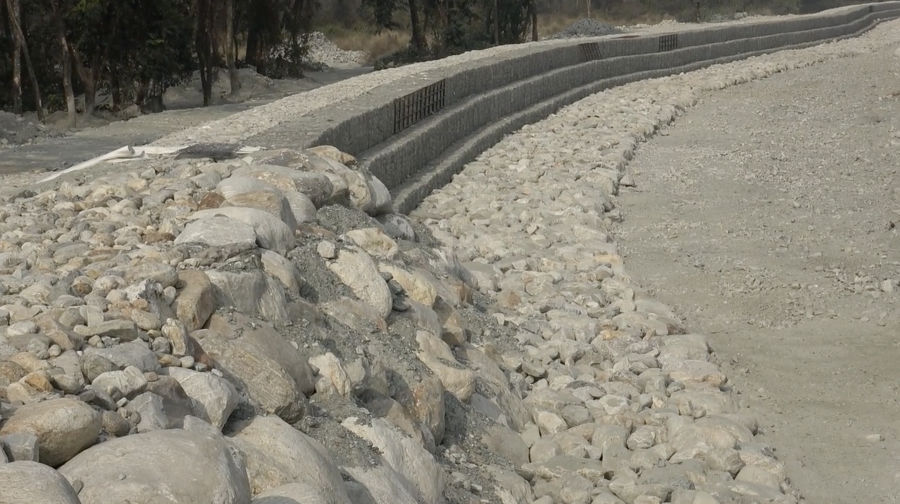
 Residents living along the Shetikhari River in Gelephu say they finally feel a sense of relief as major river protection works progress steadily. For decades, flash floods threatened homes, farmland, and livelihoods, especially during the monsoon season. Now, with the Gelephu Flood Protection Project underway along four major rivers in Sarpang, communities say hope is replacing fear.
For years, residents living along the Shetikhari stream in Gelephu faced repeated flooding during the monsoon, forcing families to worry about their homes, crops, and safety.
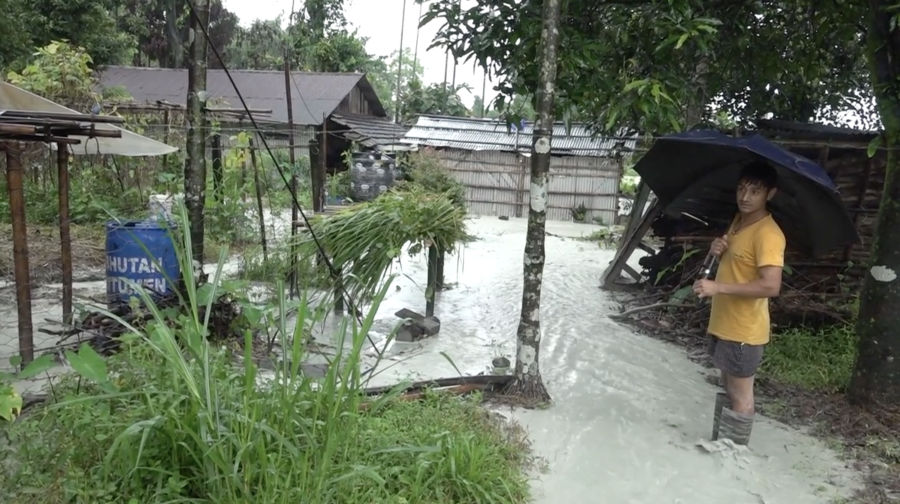
Today, that fear is slowly being replaced with confidence, as a major flood protection project begins to deliver visible results.
“With the monsoon approaching, we no longer feel the fear we used to. Earlier, at this time of year, we would already be anxious, worrying about heavy rains and possible flash floods. We have never seen such strong walls before, and we are confident they will keep us safe,” said Leela Devi Deurali, Resident, Shetikhari, Sarpang.
“With the construction of these walls, we are hopeful that we will no longer have to live in constant fear. We believe the river will not trouble us the way it did in the past, especially during the monsoon,” said Kharananda, Resident, Shetikhari, Sarpang.
“These walls will help protect our crops, which were often damaged by flash floods in the past. It also means we won’t have to evacuate our homes whenever there is heavy rainfall,” said Devi Chand Deurali, Resident, Shetikhari, Sarpang.
Beyond Shetikhari, the project covers critical sections along the Mao River, Thewar stream near Shershong School, and Jogi stream near the army camp in Pelrithang, all historically prone to flash floods.
According to the Ministry of Infrastructure and Transport, three of the four major stretches are now complete, bringing overall physical progress to about sixty per cent.
Officials say flooding in the past was worsened by gaps in earlier flood protection measures, including an undersized culvert that restricted water flow, protection works built in sections rather than as a continuous system, weak foundation support, and uncoordinated sediment removal.
This time, authorities say the approach is science-based and integrated, with continuous riverbank protection, improved scour prevention, and coordinated sediment management supported by drone surveys and monitoring systems.
For now, work continues along the critical stretches of the Mao River, where construction is progressing cautiously due to strong river discharge. Authorities say the project remains on schedule for completion in September 2026.
With three major stretches already completed and the remaining works progressing steadily, Gelephu appears better prepared than ever to face the monsoon. For residents here in Shetikhari, these reinforced riverbanks are not just concrete structures; they represent security, stability, and the hope of living without fear when the rains arrive.
Passang Dorji/Karma Wangdi, Gelephu