
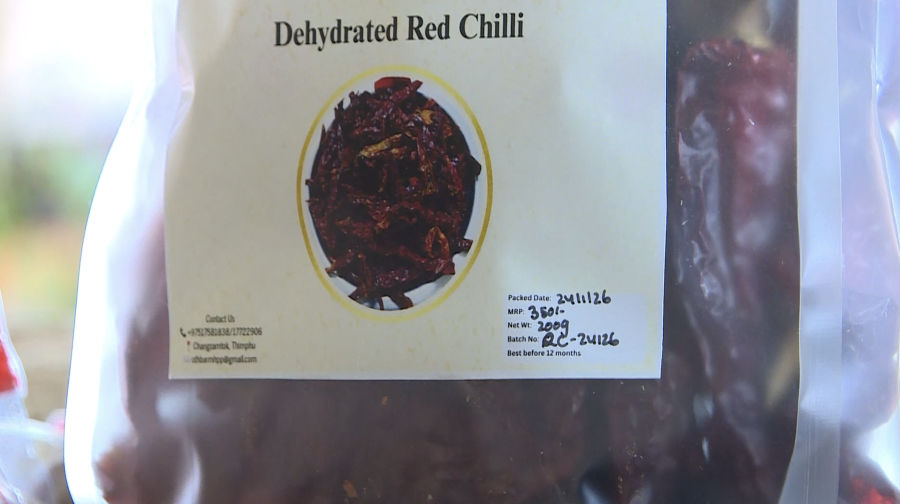
 A recent study by the Competition and Consumer Affairs Authority (CCAA) has found that locally produced food items in the market may not be displaying accurate shelf-life information. The study found that most cottage and small-scale food producers in the country rely mainly on experience to decide the shelf-life of their products rather than scientific tests. The study highlights risk to consumers and the need for more training, better access to testing, and clear national guidelines.
The study, conducted among 54 food processors in Thimphu, found that 98 per cent of producers do not use scientific testing. Instead, they rely on experience, observation, advice from others, or usual practice when setting expiry dates.
The study shows that while many producers have basic education, their knowledge of food science, particularly in areas of food safety, quality, and nutrition, is limited.
Only 31 per cent of producers had received formal training in food processing. None had been trained on shelf-life determination.
The study found that all producers label their products with production and expiry dates.
The study also explains that different food types have different risks. Fried foods can support bacterial growth due to moisture. Oil-based foods can go bad due to oxidation. Some baked goods spoil faster when they contain moisture or cream. Moreover, fermented and pickled items with poor processing can cause safety hazards.
The study also highlighted some of the challenges faced by the food processors in adopting scientific methods of shelf-life determination. It found that more than 90 per cent have no access to laboratory testing services. Half of the producers do not have enough technical skills to use scientific methods.
“Without lab testing, we have to experiment on our own. For example, when we make ezay, we package it and leave it for observation to see how long it lasts before getting spoiled. In the process, some of our products also end up getting wasted,” said Phurpa Gyalmo, Manager, Othbar Processing and Packaging, Thimphu.
To address these issues, the study recommends developing national guidelines with simple, product-specific shelf-life protocols. It also suggests setting up affordable laboratory testing services for small producers.
The study further recommends targeted training on basic food science.
The study highlights that improving shelf-life determination is necessary to protect consumers and support the growth of the country’s cottage and small-scale food industry.
Sangay Chozom
Edited by Yeshi Gyaltshen