
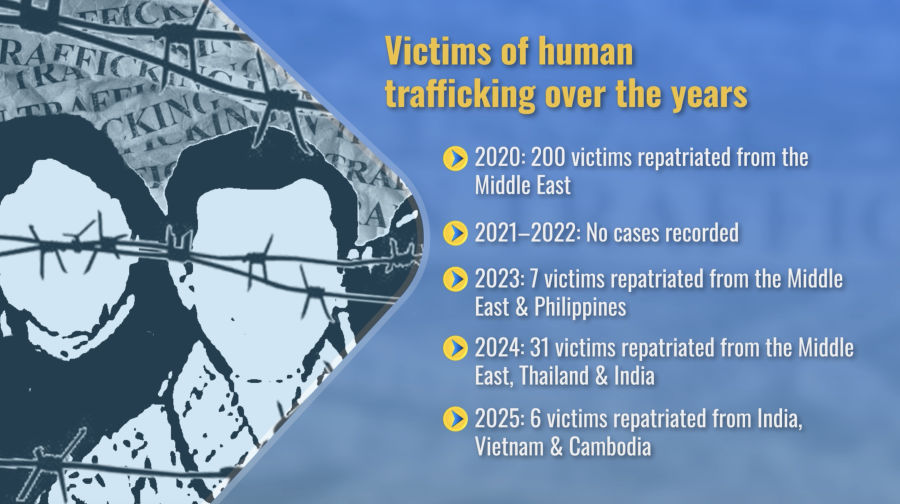
 Cases of human trafficking in Bhutan have declined in recent years, according to the Department of Law and Order. From about 200 victims in 2020, the numbers dropped to just six last year. Authorities attribute the reduction to tighter monitoring of overseas employment processes, stricter regulation of recruitment and placement firms, and enhanced border management and awareness programmes.
In 2020, 200 Bhutanese, identified as victims of human trafficking, were repatriated from the Middle East.
No cases were recorded in 2021 and 2022.
However, in 2023, seven victims were repatriated from the Middle East and the Philippines. The numbers rose in 2024, with 31 victims brought back from the Middle East, Thailand, and India. Last year, the figure declined again to six, with victims repatriated from India, Vietnam, and Cambodia.
According to the Department of Law and Order, most victims fall prey to overseas jobs advertised on social media or through unregistered recruitment agents.
“Individuals are promised job opportunities in developed countries, after which large sums of money are collected for so-called employment processes. Instead, they are taken to destinations different from what was promised and forced to do work other than what they agreed to, often for lower wages. Such exploitation amounts to forced labour and constitutes human trafficking,” said Karma Dorji, Officiating Director General, Department of Law and Order.
He added that human trafficking usually involves sexual exploitation and forced labour, with mostly women being affected.
Following recent reports of an education consultancy providing unauthorised job placements, an official said education consultancies are not authorised to offer overseas employment and urged individuals to remain vigilant.
According to the Penal Code (Amendment) Act of Bhutan 2021, a person is guilty of human trafficking if they recruit, transport, transfer, harbour, or receive someone by force, coercion, fraud, abuse of power, or payment for exploitation. Exploitation includes sexual exploitation, involuntary domestic servitude, forced labour, child labour, and trafficking of human organs.
The Penal Code grades the trafficking in persons as a fourth-degree felony with a prison term of three to five years.
Tashi Dekar
Edited by Yeshi Gyaltshen