
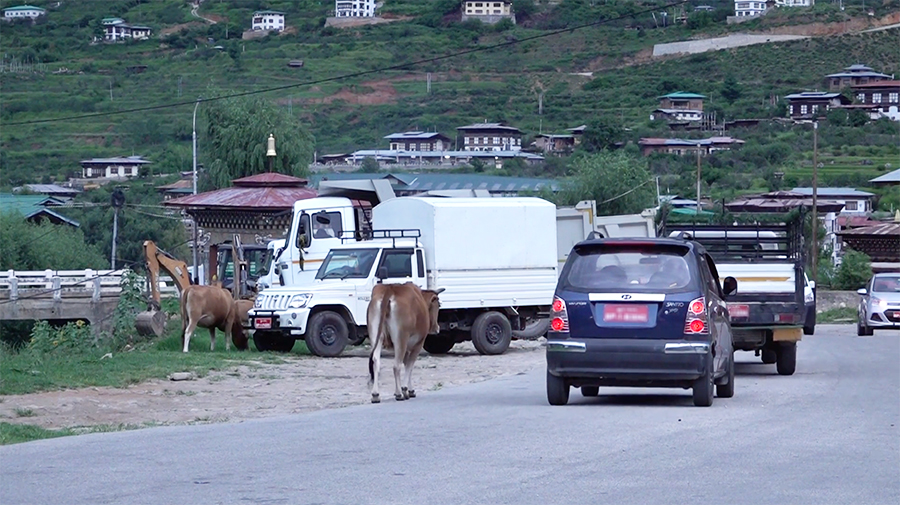
 Paro District Administration is moving ahead with plans to electronically trace cattle ownership as authorities intensify efforts to curb stray animals. With the Dzongkhag Tshogdu having already endorsed the measure, the livestock sector is now testing microchipping and engaging local government on awareness programmes. The system, now being worked on by the livestock sector, is intended to hold cattle owners accountable and reduce crop damage and road safety risks.
The matter was discussed during the last Dzongkhag Tshogdu while deliberating on measures to curb issues arising from the increasing number of stray cattle in the district.
Local leaders endorsed the introduction of a microchipping system as a long-term preventive measure to trace ownership and discourage the abandonment of ageing or unproductive cattle.
Gem Tshering, Dy. Chairperson of Paro Dzongkhag Tshogdu said, “During the Dzongkhag Tshogdu, all members voted in favour of introducing microchipping for cattle. Fines will be imposed on owners who abandon their cattle when they become old or unproductive, in accordance with existing rules. The system will help identify owners. It will also ensure accountability and encourage people to take better care of their cattle.”
 Following the decision, the livestock sector, in collaboration with the local government, has begun awareness consultations across all gewogs on stray cattle and other stray animals.
While ear tags remain the most practical option, livestock officers say microchipping would be more reliable if proven safe.
Loden Jimba, Principal Livestock Officer of Paro said, “Ear tags make it easier to determine whether cattle have owners. However, if the microchip remains stable inside the animal’s body and works as expected, microchipping is more convenient. It stays with the animal even after death. It is also difficult to remove or destroy.”
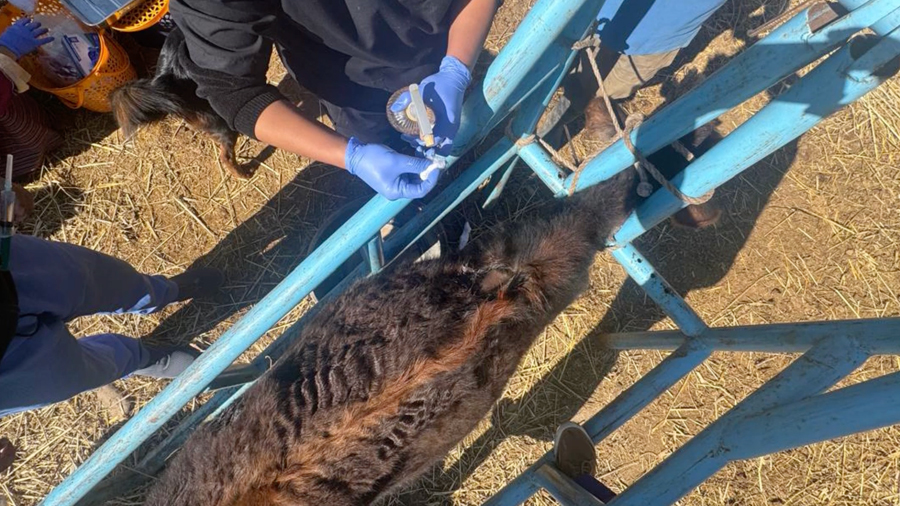 The sector has also initiated a feasibility test by microchipping a calf to assess the suitability of the technology for large animals. Officials say the test will complete one month on 9th February, after which the animal will be examined to see whether the chip has shifted or remains fully functional.
While ear tags are cheaper at about Nu 35 per animal compared to Nu 250 for microchips, local government representatives have raised concerns over tags being lost, removed, or transferred.
The Principal Livestock Officer added that “Once the feasibility test is completed, we plan to hold a meeting with the local government. The discussion will focus on whether to proceed with microchipping or continue with ear tags. In terms of cost, microchipping around 5,000 cattle would cost approximately Nu 1.2 M. However, in terms of reliability, microchipping is more effective than ear tags.”
According to Paro police, Paro recorded 16 vehicle-animal collisions along the Lamgong-Nemjo highway stretch in the past five years. Livestock officials also reported a fatal attack by cattle.
Once the feasibility study is complete, the district livestock office will present its findings to the local government, which will then decide whether to proceed with microchipping or use ear tags to identify cattle.
Karma Samten Wangda