
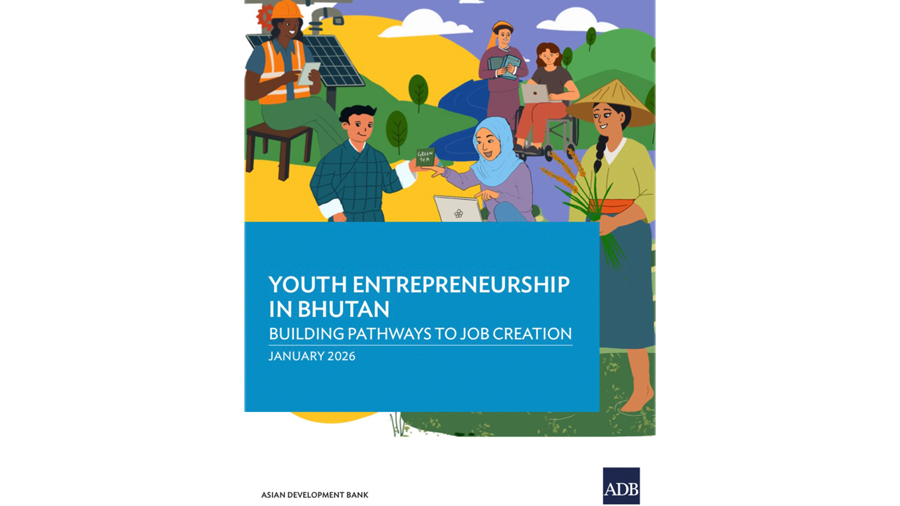
 For many young Bhutanese with business ideas, starting and growing a business is not just about creativity and hard work; it is also about access to finance. A new national report has found that Bhutan is the only country in South Asia where all bank loans require collateral, a system that makes it especially difficult for young entrepreneurs without land or property to secure funding.
The report, “Youth Entrepreneurship in Bhutan: Building Pathways to Job Creation,” warns that the country’s strict lending framework has created a “collateral trap”, preventing promising young entrepreneurs, especially those without land or property, from scaling their businesses beyond the survival level.
Across South Asia, banks typically require collateral for loans, but not always.
The regional average stands at 76.8 per cent, allowing room for unsecured or partially secured lending.
Bhutan, however, stands alone at 100 per cent, making land or property a non-negotiable requirement.
In Bhutan, land and buildings remain the primary acceptable forms of security assets that most young people do not possess.
Thinley Choden, a consultant with the ADB said, “Requiring 100 per cent collateral is a big problem for entrepreneurs because entrepreneurs don’t come with assets. They don’t necessarily come with properties they can mortgage to unlock larger capital sizes.”
According to the findings, the collateral requirement is a major reason why youth-led enterprises in Bhutan remain small-scale and short-lived.
While government and development partners have invested heavily in entrepreneurship training, start-up challenges, and ideation programmes, the report identifies a critical financing gap at the growth stage.
This creates what experts call a ‘missing middle’, where start-ups can get small grants to begin, but struggle to access the bigger loans needed to grow and create jobs.
Thinley Choden said, “When you start up, you have grants. But as the business grows, you need larger ticket sizes. If you don’t get other kinds of non-collateralised investments, it becomes very hard to grow.”
To address the issue, the report calls for a shift in Bhutan’s financial system, away from collateral-based lending and toward a modern, revenue-based financing model.
“Revenue-based financing is collateral-free. A business repays a percentage of its monthly revenue, and over time, as the business grows, the loan is repaid,” said Thinley Choden.
Beyond revenue-based models, the report recommends establishing partial credit guarantees to reduce risk for banks. It also suggests leveraging the upcoming 60 million US dollar Greater Bhutan Entrepreneurship Corridor fund to provide venture capital and equity financing.
The report stresses that financial inclusion of youth is no longer optional as Bhutan prepares for a post-LDC economic transition.
Kinley Bidha & Namgay Dema