
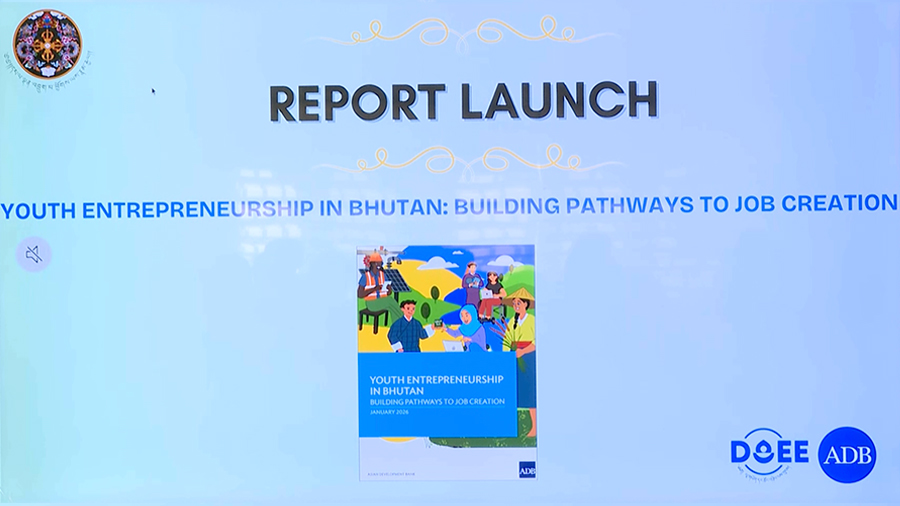
 In towns and villages, young people are opening shops, selling food, and running small businesses. Many do so out of necessity. A report on Youth Entrepreneurship in Bhutan finds that many young people turn to business because they lack other employment options, not because they have identified market opportunities. This has led to an estimated loss of more than Nu 2.7bn every year to Bhutan’s economy during the period 2018 to 2022.
“Youth Entrepreneurship in Bhutan: Building Pathways to Job Creation report shows that between 2018 and 2022, the number of young people interested in starting a business increased sevenfold.
However, most of these ventures were driven by limited employment opportunities rather than market demand.
These youth-led businesses are termed as necessity entrepreneurship, where individuals turn to self-employment due to a lack of alternative income sources.
“A necessity entrepreneur is someone who has no choice, who cannot find a job or work they want to do, but still needs an income. So, out of that situation, they started a business. An opportunity entrepreneur, on the other hand, is someone who has the intention and an idea to start a business,” said Thinley Choden, Consultant, Asian Development Bank.
Many of the businesses are started by youths who are not studying, not working and not learning any job skills at the moment.
“In Bhutan, we have many necessity entrepreneurs because youth unemployment is high. Even when young people have skills, they are often unable to find jobs, and when they do find employment, many times they are not satisfied with the work culture or the job itself. In addition, there are several structural issues,” said Thinley Choden, Consultant, Asian Development Bank.
According to the report, if necessity-driven entrepreneurs had been supported to transition into opportunity-based businesses, it could have contributed 1.4 per cent to the GDP
Data from the report shows that necessity-driven entrepreneurs earn less than opportunity-driven entrepreneurs.
While necessity entrepreneurs reached an average of Nu 28,000 in 2022, opportunity entrepreneurs earned more, reaching nearly Nu 34,000 per month. However, the challenge remains in supporting necessity entrepreneurs to scale up.
Currently, the country does not have an entrepreneurship strategy to address these gaps.
The Ministry of Industry, Commerce and Employment is working on a national entrepreneurship strategy which would support business grow.
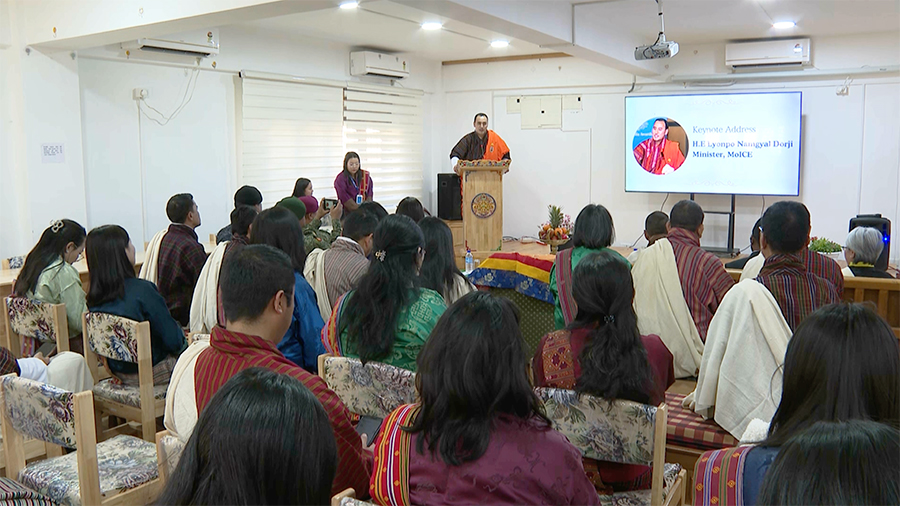 “The department has initiated handholding support for entrepreneurs. We are working on designing tailored capacity-building programmes and targeted interventions for entrepreneurs at different stages,” said Chumo Wangmo, Chief Finance Officer, MoICE.
For now, strengthening support for business growth and productivity will be critical in enabling youth-led enterprises to contribute more meaningfully to the economy.
Kinley Bidha
Edited by Sangay Chezom