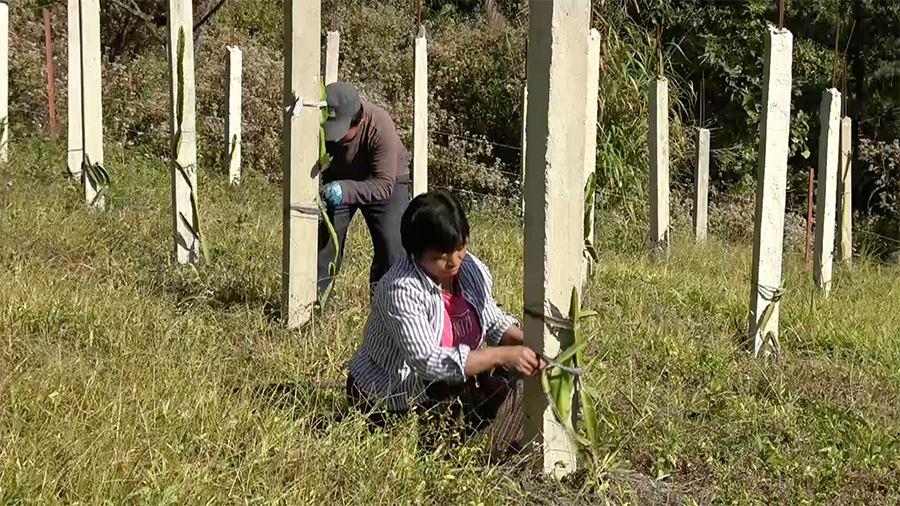
 As climate change continues to affect traditional orchards, farmers of Yarjaywung Chiwog in Pema Gatshel are turning to new alternatives. With orange trees drying up over the years, a group of farmers has come together to plant dragon fruit, hoping to secure a more stable future for their livelihoods.
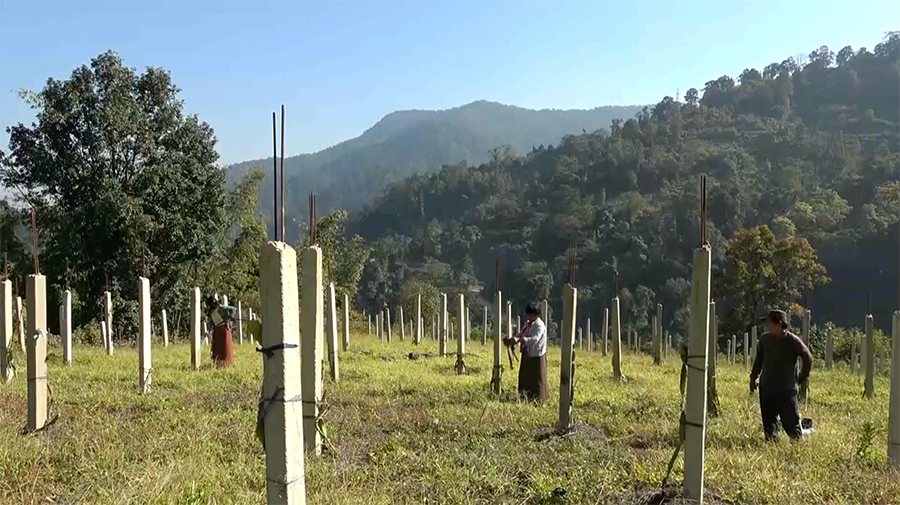 What was once an orange-growing belt is now witnessing a fresh beginning. In Yarjaywung Chiwog, farmers have launched a mass plantation of dragon fruit after their orange trees gradually dried due to changing climatic conditions. The group, comprising six members, has cultivated nearly one acre of land, making it the largest dragon fruit orchard in the district.
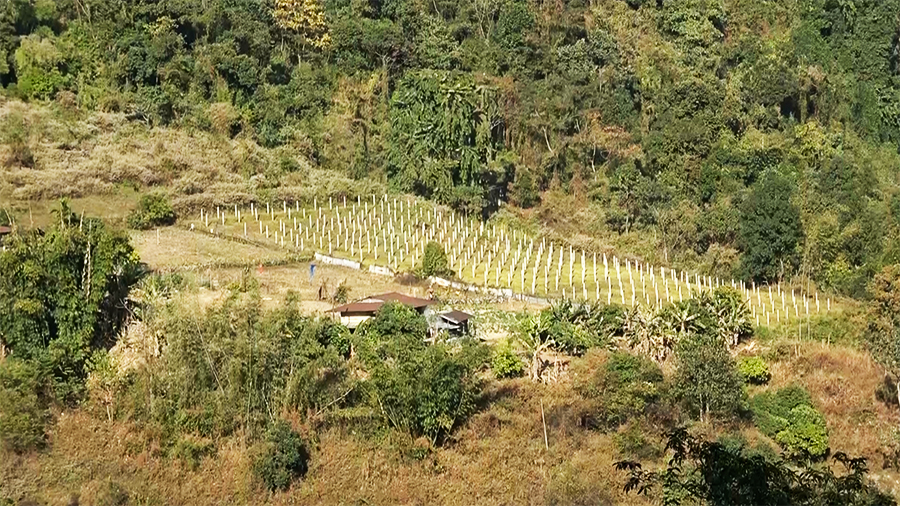 In the initial phase, more than 200 dragon fruit plants have been planted. Although the plants will take a few years to start bearing fruit, the group remains optimistic about the long-term returns. According to the farmers, the initiative was planned with the upcoming Gelephu Mindfulness City in mind. With the mindfulness city taking shape, they hope to tap into the growing market demand by supplying fresh dragon fruit to Gelephu in the future.
“Some villagers had already planted a few dragon fruit plants and saw that they were growing well. So, we decided to expand it on a larger scale, especially with Gelephu Mindfulness City coming up. If this plan becomes successful, we also hope to support other villagers,” said Jigten Wangchuk, the group leader.
The gewog administration has supported the initiative by supplying saplings and materials required to construct posts for the plantation, while also encouraging farmers to diversify their crops.
For the farmers of Yarjaywung Chiwog, the dragon fruit plantation is more than just a shift in farming; it marks a shift in mindset. From dried orange orchards to climbing cactus posts, the fields now reflect resilience, adaptation, and renewed hope.
Thinley Dorji, Pema Gatshel