
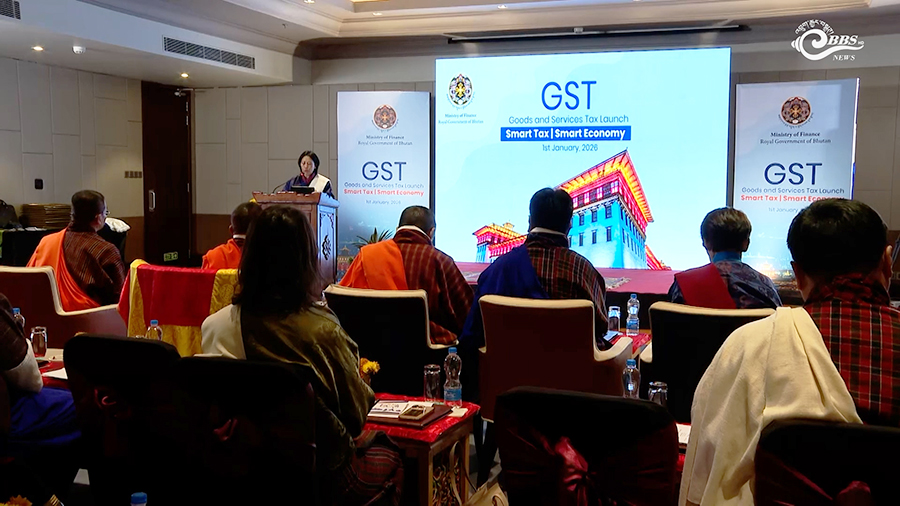
 Bhutan officially rolled out Goods and Services Tax today. The new GST regime replaces the existing sales tax structure with a single 5 per cent consumption tax on most goods and services. However, many still seem confused about the taxation.
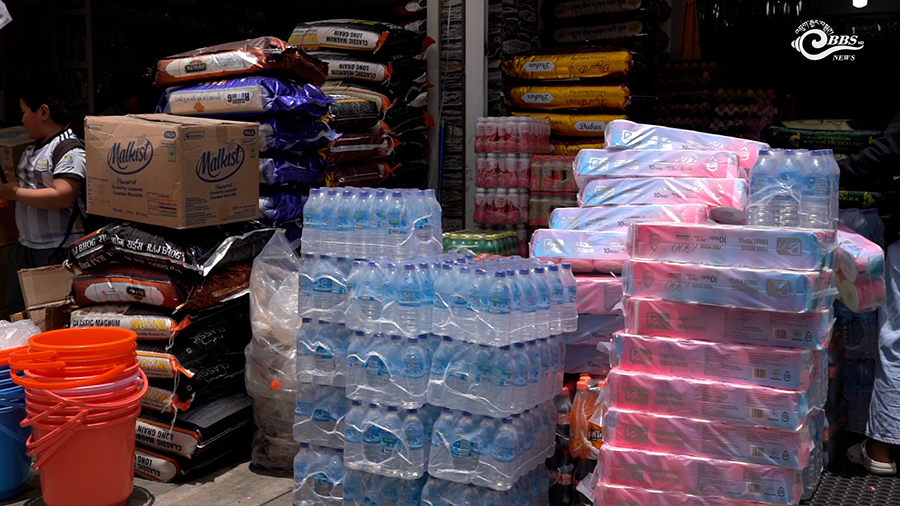 All everyday goods and services are now subject to GST. However, essential items such as rice, salt, cooking oil, sanitary napkins, wheelchairs, and key services like education, health, and select financial services remain exempt.
In addition, GST can only be levied by businesses with an annual turnover of 5 million ngultrum registered with the Department of Revenue and Customs. Registered businesses should display their GST registration certificate at their premises.
 Unregistered businesses are not permitted to charge the 5 per cent GST to consumers on the sale transaction.
While some people have a basic understanding of GST, many remain uncertain about the system.
Sherab Dorji, a resident of Thimphu said, “The GST could be a problem for us, because in the end, we are the consumers who have to pay the tax. I feel that this 5 per cent tax could affect poor people.”
The rollout is taking place at eight Regional Revenue and Customs Offices across the country, including Thimphu and Phuentshogling.
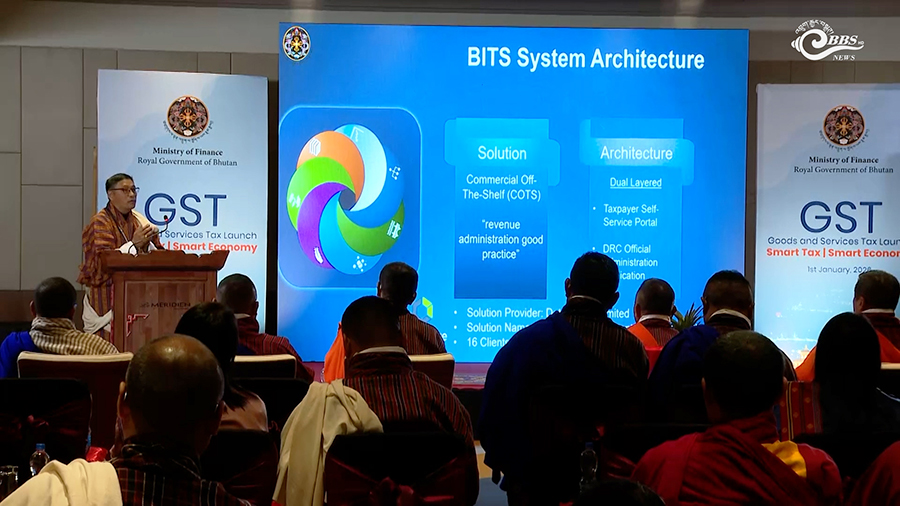 The GST rollout is supported by the Bhutan Integrated Taxation System (BITS), an online portal that enables businesses to register, file returns and make payments digitally.
 In Phuentshogling, the country’s primary trade gateway, a brick consignment was the first import cleared under GST at the mini dry port. Officials completed all customs formalities, including entry procedures, submission of the import declaration, document verification, tax calculation, physical inspection, and tax payment. Once these were completed, the consignment was successfully released.
Business owners said that although the system may be challenging initially, they hope it will improve transparency, accountability, and efficiency.
“It will definitely be helpful for the country as well as the people. There will be transparency. Another thing is that everything is going to be online; every cash-related task has to be routed through a proper channel. Every income and the tax amount will be clear, thereby benefiting the country at large,” said Minjur Dorji, the proprietor of the Gayjur Construction Private Limited in Phuentshogling.
While officials hope the new GST will bring transparency and efficiency, many consumers remain uncertain about the system. Questions about which items are taxed, how much they will pay, and how it affects daily expenses are still on people’s minds.
Kinley Bidha & Kinley Dem
Edited by Sangay Chezom