
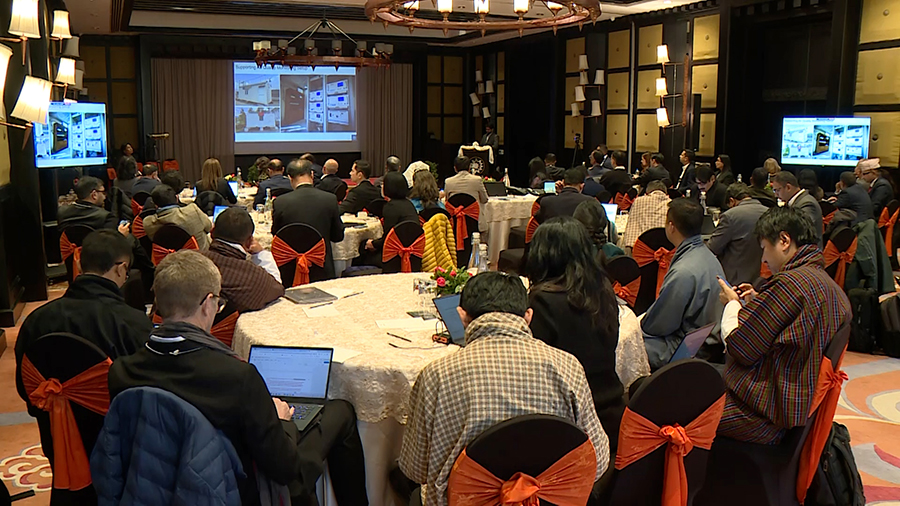
 Countries sharing some of the world’s most polluted airsheds, Bangladesh, Bhutan, India, Nepal and Pakistan, are discussing coordinated actions to improve air quality. The countries are exploring measures such as cleaner energy, improved waste management and stronger legal enforcement.
Air pollution remains a persistent, transboundary challenge across the region, threatening public health, economies and ecosystems.
Major sources of pollution include crop residue burning, vehicle emissions and household cooking practices.
Governments have introduced various measures to address the problem, but progress has been uneven. As a result, experts are calling for stronger regional coordination.
Leaders and experts met in Thimphu for a two-day Third Regional Science, Policy and Finance Dialogue on Air Quality Management.
The discussions focused on promoting electric vehicles, shifting from coal to cleaner energy, strengthening emission monitoring, improving waste collection and recycling, and enforcing stronger legal frameworks.
Pema Gyamtsho (PhD), the director general of ICIMOD said, “Through these, we hope to reduce air pollution, the diseases it causes, and the economic effects, in five or ten years. It causes a lot of harm to our environment too, and we hope to solve these issues.”
He said regional cooperation is vital to tackling the issue.
“Regional cooperation is very important because air pollution is a trans boundary issue. The polluted air does not stop at our borders and crosses across jurisdictions. The source of pollution could be somewhere else, but the impact is elsewhere. The countries need to get together. So, we need to take an airshed approach.”
With polluted air ignoring national borders, perhaps only united regional action can deliver cleaner air and a healthier future.
Deki Lhazom
Edited by Sangay Chezom