
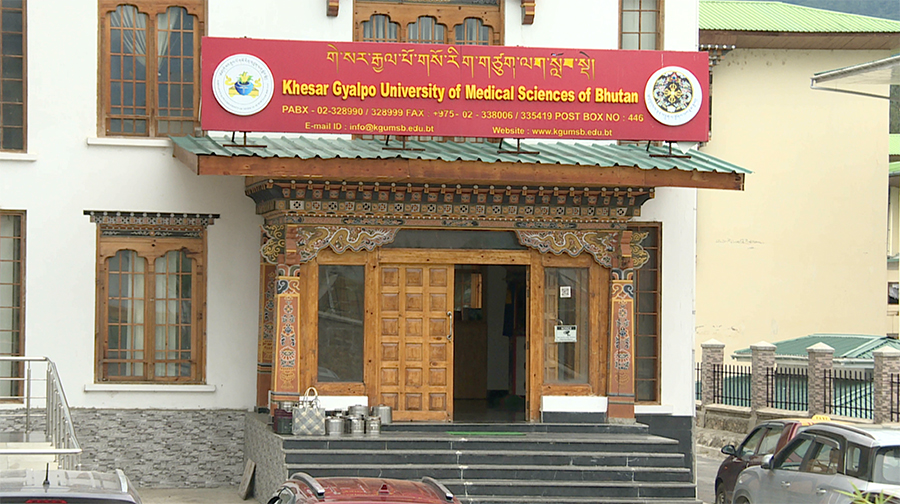
 After five years of Japanese technical assistance, the Khesar Gyalpo University of Medical Sciences of Bhutan (KGUMSB), has officially taken full ownership of the country’s national medical education system. The 2020-2025 JICA project for strengthening the quality of medical education in Bhutan helped establish Bhutan’s first MBBS programme and strengthen research capacity, among others. Its completion marks a major step in strengthening Bhutan’s health workforce and advancing the country’s goal of Universal Health Coverage.
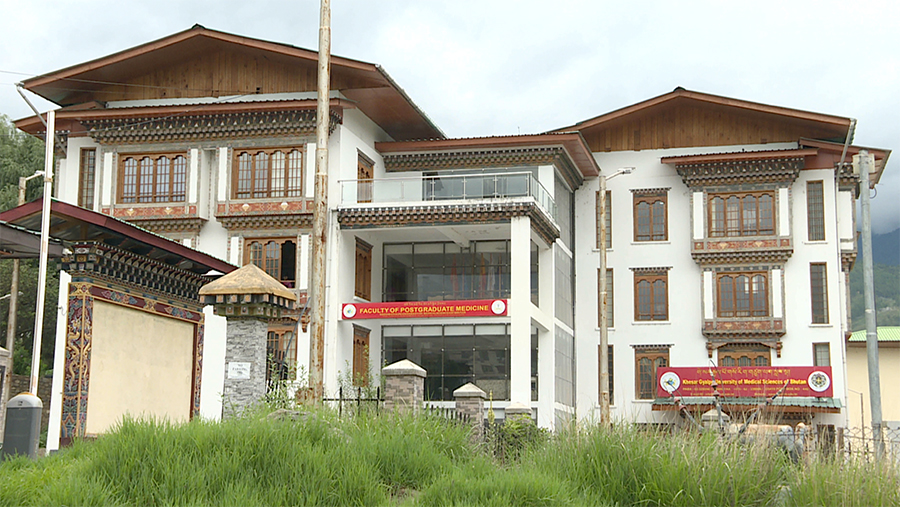 Officials say all planned outputs were delivered through the project, despite major disruptions caused by the COVID-19 pandemic.
Key achievements include the creation of Druk Sokchop, Bhutan’s national emergency and resuscitation training system, with more than 500 trainers certified nationwide.
Simulation-based education has been integrated into most health training programmes, ensuring students practice first on simulators before working with real patients.
Digital learning also expanded significantly, with online and blended courses increasing rapidly and over 185 faculty and hospital instructors trained in virtual teaching.
The project strengthened research capacity, institutional quality systems, and ICT infrastructure at KGUMSB and regional referral hospitals.
Bhutan’s first MBBS programme, launched in 2023, was also supported through faculty development and international training exposure.
“The biggest improvement is the quality of the healthcare system as a whole, not only the equipment and facilities, but also the human resources. This project has created a comprehensive structure for developing medical human resources across Bhutan, and we hope it will continue to grow nationwide,” said Yoichiro Kimata, Chief Representative, JICA Bhutan Office.
According to the university, it will need strong partnerships with the government and other stakeholders to continue advancing medical education and ensure the progress achieved is sustained.“Now that the JICA partnership has ended, we need very strong collaboration with the government and other stakeholders to continue developing medical education in the country. The simulation training, ICT infrastructure, and faculty development provided through this project have drastically improved both student learning and patient safety. We want to ensure this progress continues,” said Dr Kuenzang Chhezom, Registrar, KGUMSB.
While JICA’s technical assistance formally ends today, the systems, skills, and structures built under the partnership are expected to benefit Bhutan’s health sector for generations.
Namgay Dema
Edited by Sonam Pem