
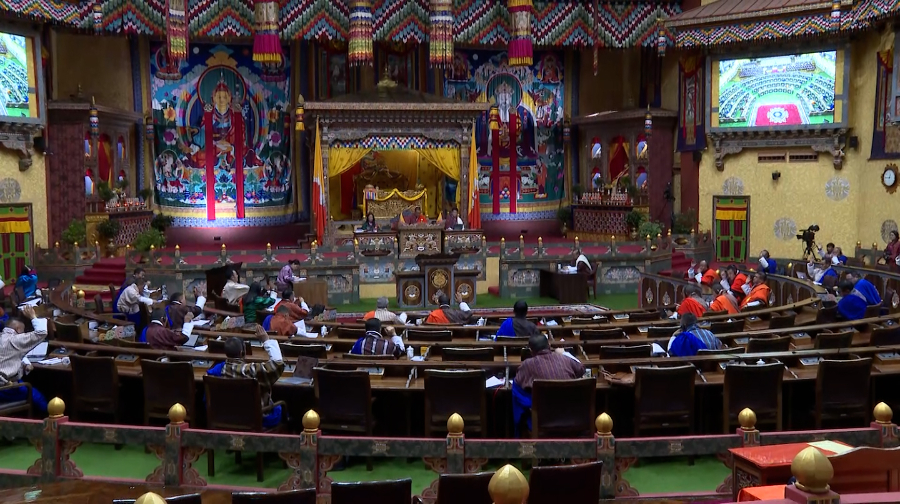
 The National Assembly has endorsed tougher penalties for tobacco-related offences and a ban on the import and distribution of flavoured tobacco products. However, the House dropped the proposed blanket ban on vapes and e-cigarettes while adopting the Tobacco Control (Amendment) Bill of Bhutan 2026.
Under the proposed amendments, penalties for tobacco-related offences will increase, although the National Assembly reduced several fines proposed by the National Council last summer. The revised fines, however, remain higher than those under the Tobacco Control Act of Bhutan 2010.
For instance, anyone caught smoking outside designated areas will face a fine ranging from more than Nu 6,000 to over Nu 10,000. The National Council had proposed a maximum fine of Nu 90,000 for the same offence.
The House also dropped the proposed blanket ban on the import and sale of vapes and e-cigarettes. Instead, members endorsed a ban on the import and distribution of flavoured tobacco and tobacco products, including flavoured vapes and e-cigarettes.
Several members raised concerns about the growing popularity of flavoured tobacco products among young people.
According to the latest trade statistics, Bhutan imported more than 400,000 units of e-cigarettes and vapourisers last year, almost double the number imported in 2024.
Education and Skills Development Minister Yeezang De Thapa said vapes are harder to detect than conventional cigarettes because they have little odour and often come in pleasant flavours.
“We can detect when someone has smoked due to the smell. Then, we can also instruct children not to use tobacco. However, with vapes, it’s much harder to tell if someone is using them because they lack a strong odour and often have pleasant flavours. We might not even be aware of their usage until they end up in the hospital,” she said.
Kuenga, a member of the National Assembly’s Social and Cultural Committee, said retaining provisions to regulate vaping would benefit young people and make monitoring easier, even without a blanket ban.
“Even if vaping is to be controlled rather than banned, retaining this law will benefit the youth the most. It can also make control and monitoring easier,” he said.
The Bill will now be sent to the National Council for review. Kuenga said the two Houses could discuss any unresolved issues during the next joint meeting.
The National Council initiated the amendment last summer to strengthen tobacco regulation, enforcement and penalties.
Singye Dema
Edited by Sangay Chezom