
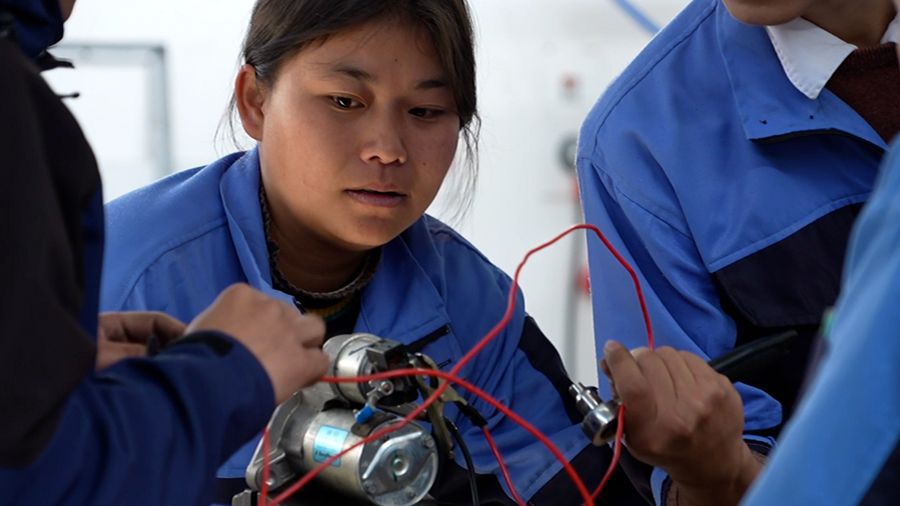
 Studies have highlighted the need to better align vocational training with labour market demands. According to the Bhutan Labour Market Assessment Report, only 67 per cent of TVET graduates found employment within one year of completing their training. In response, technical training institutes are introducing new courses in areas where employers need skilled workers.
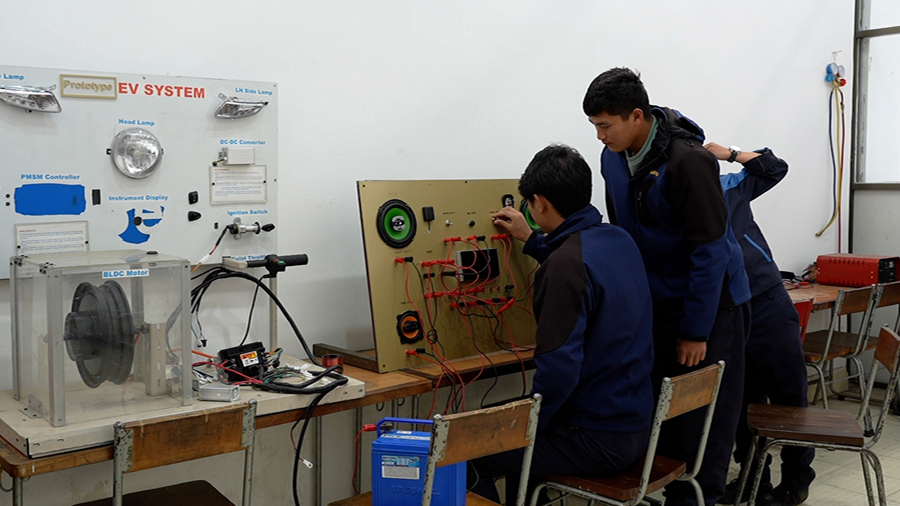 Trainees at the Technical Training Institute in Thimphu are learning auto electrical skills. They repair and maintain the electrical circuits and components of vehicles.
As more electric and hybrid vehicles appear on roads, demand is rising for skilled workers who can repair and maintain them. Auto electrical skills alone are not enough.
The institute is now upgrading a course. Next year, it will introduce an Autotronics course that teaches trainees to diagnose and repair the electronic systems in modern vehicles.
A 2025 government feasibility study of Bhutan’s emerging EV sector projected demand for more than 187 EV mechanics over the next two years. The study also found that many businesses struggle to find trained technicians.
Sangay Dorji Ghishing, Auto Electrical Trainee, said Autotronics places greater emphasis on sensors, electronics and electrical systems. “With more electric vehicles (EVs) entering the market, I think fuel-powered vehicles will gradually disappear. So, there will be greater demand for skills related to sensors and electrical systems,” he said.
An Assistant Lecturer at the institute, Kuenzang Tobgay said the institute currently offers 12 courses. By early next year, it plans to introduce two more: Autotronics at BQF Level 3 and a Diploma in Digital Animation. “We have also recently introduced two new courses in Automobile Technology and Heating, Ventilation and Air Conditioning. The trainees enrolled in these programmes will graduate by the end of December this year.”
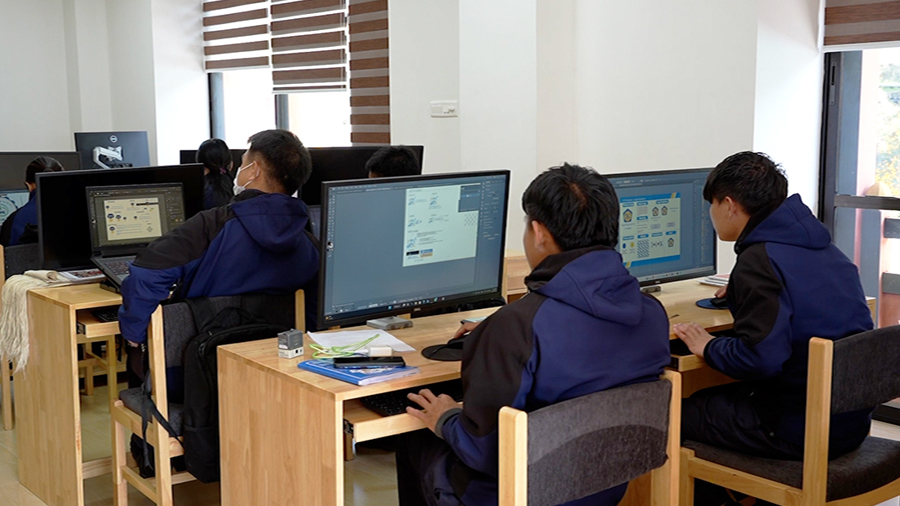 The institute will also be teaching Digital Animation from next year.
Pema Thinley, a trainee at the Institute, said Digital Animation is in demand in the banking sector, as banks need videos for marketing. “Government agencies also require animation videos to create awareness about health, e-learning and other areas,” he said.
Tandin Gyeltshen, Graphics Design Trainer, said Digital Animation offers good opportunities for young people. “It is widely used in advertising, marketing, commercials and entertainment. I believe there will be growing opportunities for those who pursue this field,” he said.
Meanwhile, Technical Training Institute Samthang in Wangdue Phodrang will introduce courses in Lighting Technology, Hair and Beauty Therapy at BQF Level 3, and online Hair and Beauty Therapist Level 2 next year.
Training Director of TTI Samthang, Ugyen Dorji, said the institute is planning to introduce a course for tow truck drivers and operators. “For example, when an electric vehicle breaks down, we cannot simply push it. It needs to be picked up and transported to a garage or workshop for repairs. Pushing it could damage the vehicle. So, we need people trained to operate tow trucks and handle such situations,” he said.
The institute also plans to expand its training programmes to include filmmaking, music production, scriptwriting, automotive trimming, and crane and forklift operation.
TTI Samthang says the new programmes will expand vocational training opportunities. But their effectiveness will ultimately depend on how well the skills they teach match the needs of employers and the opportunities available to trainee graduates.
Pelden Wangchuk
Edited by Sangay Chezom