
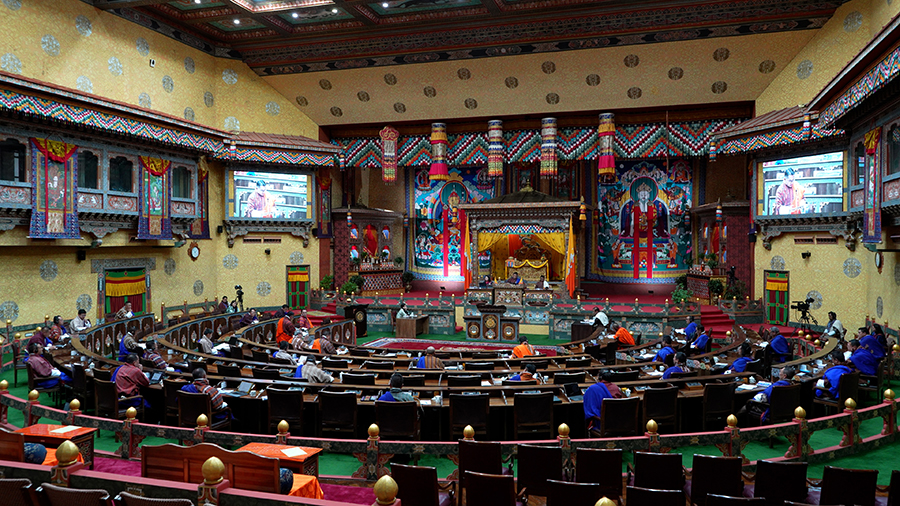
 The Jabmi (Amendment) Bill 2026 says the Bar Council of Bhutan must provide free legal services to indigent persons. But that provision is now in limbo, as members of the National Assembly try to settle the final wording. Some MPs say the council should have the discretion to decide whether to provide the service.
Today at the National Assembly, the debate centred on whether providing pro bono services should be mandatory or discretionary.
Members proposed replacing the word “shall” with “may”. That would give the Bar Council the discretion to decide whether to provide the free legal service.
Loday Tsheten, MP of Gangzur Minjey, said that given its functions, the Bar Council of Bhutan is generally profit-driven, so it may not be fair to legally mandate it to provide pro bono services.
“The Bar Council should have the discretion to decide whether or not to provide free legal services. So, in the provision, the word ‘may’ should be used instead of ‘shall’,” he said.
Sonam Dorji, Drukjeygang Tseza MP, said there is no practice of providing salaries to the Bar Council, and it is not feasible for the Government to do so. He said this could also create an obligation for the Government to provide salaries to others, and that on this basis, they decided not to provide a government salary to the Bar Council.
“However, it would be contradictory to mandate the Bar Council to provide its services free of charge. Therefore, providing pro bono services should not be mandatory but discretionary. This would make the law fairer,” he said.
Meanwhile, others argued that the obligation should remain mandatory, given the financial support provided by the State.
Namgyal Dorji, Minister of Industry, Commerce and Employment, said the word “shall” must be retained instead of being changed to “may”, and that the existing provision is clear, particularly with the funding support from the State.
“Having reviewed the existing provision, we believe it should remain as it is,” he said.
Kuenga, Chairperson of the Legislative Committee, said the Constitution mandates that every person has the right to consult and be represented by a Bhutanese Jabmi of their choice, which makes the role of Jabmis very important. He said this is why the committee proposed retaining the existing wording, along with a proposal for an annual budget from the Government. He added that there are now suggestions to change “shall” to “may”.
“If this change is made, there is a possibility that the Jabmi Tshogdey may not provide the service if it is not feasible,” he said.
Some other MPs said that if pro bono services are made mandatory, they should also cover vulnerable groups, alongside indigent persons.
Tashi Tenzin, Radhi Sakteng MP, said including vulnerable groups alongside indigent persons would greatly benefit those who need pro bono legal services.
“This would also help in framing the rules and regulations under the Act in the future,” he said.
However, none of the proposals, including keeping pro bono services mandatory, received enough support from the House.
The House has directed members to discuss the provision in an internal meeting. It will be presented tomorrow, before the Bill is adopted.
Tashi Dekar
Edited by Sangay Chezom