
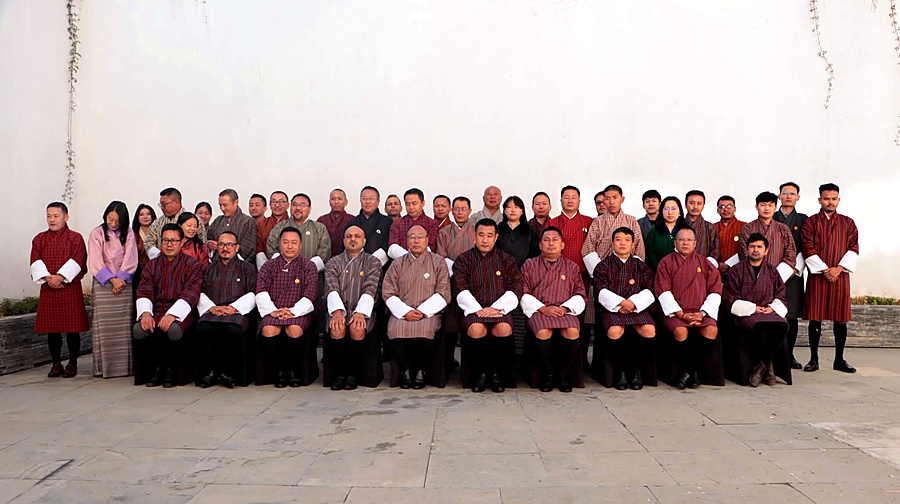
 With the Pay Revision Bill up for deliberation during this session of Parliament, could officials working at high altitude also see better allowances and benefits? This was among the concerns raised during a dialogue between parliamentarians and the National Centre for Hydrology and Meteorology (NCHM) in the capital earlier this week. The discussion also highlighted the need to strengthen Bhutan’s weather forecasting and disaster preparedness systems.
The dialogue also discussed Bhutan’s changing climate, future climate projections and the need to strengthen weather forecasting and early warning systems to improve disaster preparedness.
Karma Dupchu, Director General of NCHM, said the dialogue aimed to brief parliamentarians on the country’s past and present climate conditions, as well as future projections, to support policy decisions and socioeconomic development planning.
He said timely and reliable early warning systems are critical as climate-related disasters become an increasing concern.
Recent disasters, including floods in Gasa and Punakha, have highlighted the need for better preparedness, coordination among agencies and greater public awareness.
Birendra Chimoria, MP, National Council, said people across the country’s 20 districts and 205 Gewogs could face different types of disasters, including glacial hazards, cloudbursts, floods and artificial lake outbursts.
He said public awareness programmes, including documentaries, could help people better understand disaster risks and prepare for emergencies. He also called for consistent messaging to avoid confusion caused by information coming from different agencies.
Meanwhile, NCHM officials highlighted the challenges faced by staff working in high-altitude and hazardous areas. These include inadequate daily allowances, limited insurance coverage and difficulties accessing technology and communication facilities.
Karma Dupchu said these concerns need further discussion, including during parliamentary deliberations.
Parliamentarians acknowledged the challenges, saying better compensation is important to retain skilled and experienced staff, particularly those working in difficult terrain and harsh conditions.
Lamdra Wangdi, MP, National Assembly, said staff remuneration should reflect inflation and market rates. He said adequate compensation is necessary to retain technically skilled personnel and recognise the difficulties associated with working at high altitudes.
He added that parliamentarians are ready to support the concerns and deliberate on the issues during the coming winter session.
As the winter session of Parliament begins, the concerns raised by NCHM officials could form part of the broader deliberations on the Pay Revision Bill.
Strengthening the country’s early warning systems will require not only improvements in technology but also adequate resources, support and protection for the officials responsible for operating them.
Devika Pradhan
Edited by Sonam Pem