
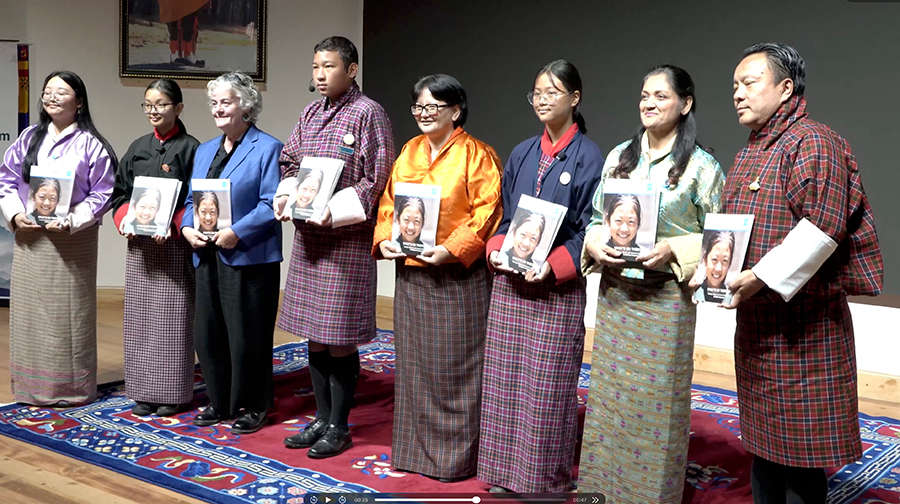
 More adolescents in the country are now aware of signs of stress. If the findings of the OnMyMind campaign are any indication, many of them are also willing to seek help. The campaign officially concluded today as part of the PEMA Symposium underway in Thimphu. The Pema Secretariat, Education and Skills Development Ministry, and UNICEF initiated the campaign four months ago.
Recognising stress is the first step to asking for help. The campaign’s pulse survey, which is a short survey, showed that most respondents (69.1 per cent) under 20 could identify the signs. However, 18.2 per cent could not say.
The survey covered 3,721 adolescents and 1,681 parents and caregivers.
But besides being able to identify the signs, the campaign recorded an increase in children contacting support services of The PEMA Secretariat. The monthly average recorded a 16 per cent increase. It rose from 5.6 between January and May to 6.5 from June to September.
“When we look at the statistics and the experiences shared by students, especially school-going children, it gives decision-makers a better understanding of their concerns and perspectives. We can see that many children have started opening up, seeking counselling and reaching out to The PEMA Secretariat for support. While they know where to seek help, sometimes they do not know when to seek it,” said Karma Wangchuk, Chief Programme Officer of MoESD.
With young people unsure when to seek help, the campaign worked on it in stages over four months.
In the first month, students were equipped to understand their emotions, build resilience, and seek support through the Helping Adolescent Thrive programme. In the second month, parents and caregivers, who shape the environment adolescents grow up in, were engaged to nurture listening, empathy and balanced expectations.
The final months focused on service providers, including teachers, counsellors, school wellbeing focal persons, and health workers, to detect early signs, strengthen referral pathways and respond with care.
Overall, the campaign reached out to around 5,400 (5402) adolescents and caregivers.
Dasho Dechen Wangmo, Head of The PEMA Secretariat, said, “I’m not saying there are no platforms. There are many. The collaboration between the education ministry, UNICEF and PEMA on a programme called What’s on Your Mind has created a valuable platform for young people to talk about their wellbeing, emotions and how they feel.”
For now, the campaign has encouraged more open conversations and increased contact with support services. But supporting young people’s mental health requires continued effort beyond the campaign.
Singye Dema
Edited by Sonam Wangdi