
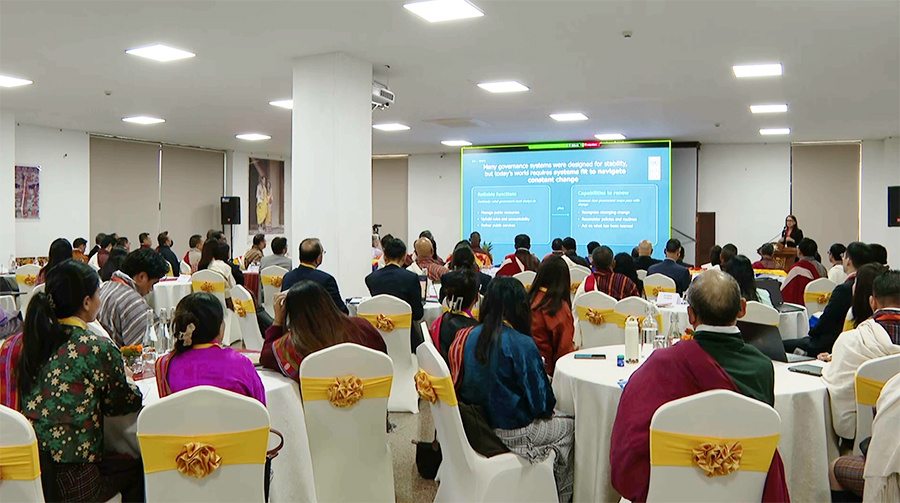
 Governments need to anticipate and prepare for rapid changes in technology, climate, demographics and the global economy. This was discussed at the two-day Regional Dialogue on Future-Ready Governance in Thimphu, which brought together government officials and experts from seven Asian and Pacific countries to exchange experiences on building more adaptive and responsive governments.
Experts at the dialogue said governments need to look beyond immediate problems and anticipate challenges before they emerge. They discussed the importance of adapting institutions and improving public service delivery as circumstances change.
Caitlin Wiesen, Acting Resident Representative of UNDP, said the pace of change and the overlapping issues governments face mean many are not well prepared to deal with them.
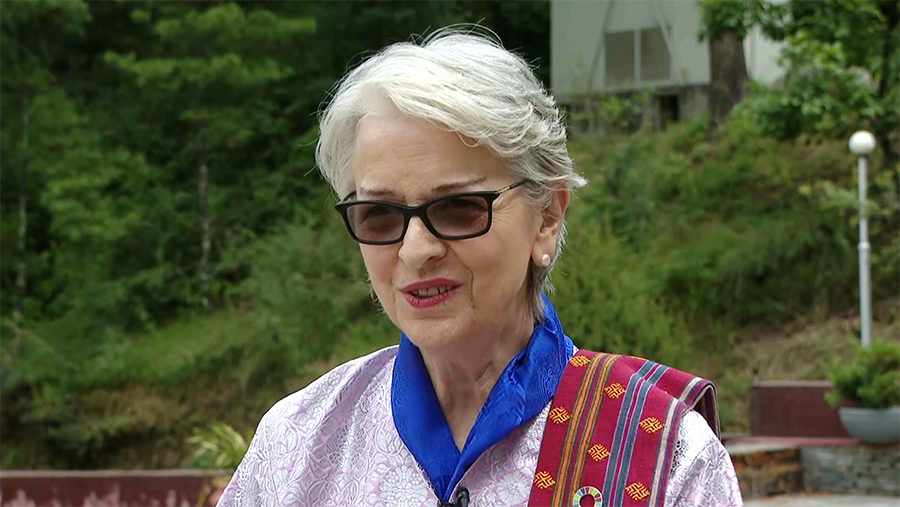
“Future-ready governance is important for Bhutan, and it’s important for all governments at this stage. We find that the rate and pace of change and the overlapping issues that come all at once mean that many governments are not well prepared to handle these,” she said.
She said while there have been major advances in poverty reduction and Asia has become an engine of growth, health crises such as COVID-19 have shown how events can have an influence beyond borders and require governments to rethink how they govern.
The discussions also looked at Bhutan’s approach to long-term, people-centred development through Gross National Happiness. The session explored how GNH can contribute to resilient development and how its principles are applied in policy and governance.
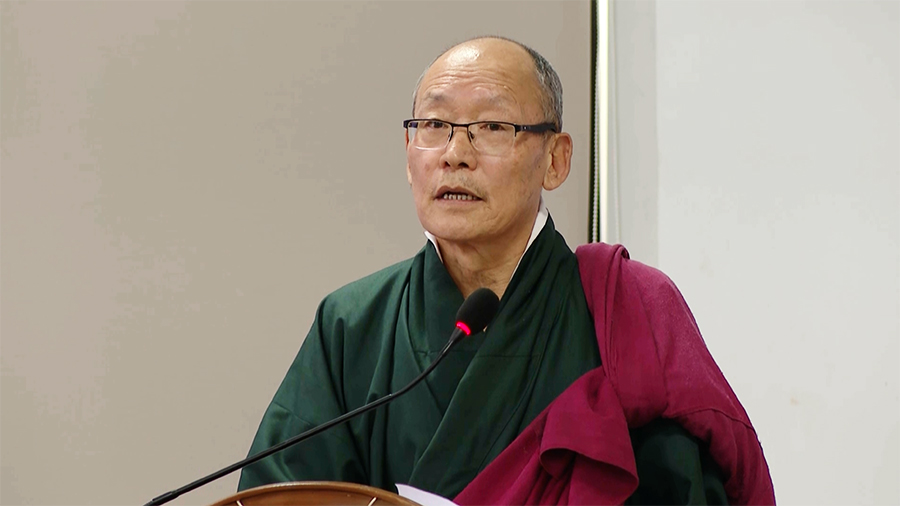
Dasho Karma Ura, President of the Centre for Bhutan and GNH Studies, said the GNH framework addresses challenges including ecological collapse, cultural erosion and the dissolution of communities.
“GNH’s conceptual framework is quite extensive, addressing many challenges that previous speakers mentioned. Modernity’s problem of ecological collapse, cultural erosion, and the dissolution of community is a major thing that’s happening, but is absolutely crucial for happiness.”
Experts from Bhutan, Singapore, Samoa and Thailand also discussed how governments can use foresight and long-term thinking to inform decisions today.
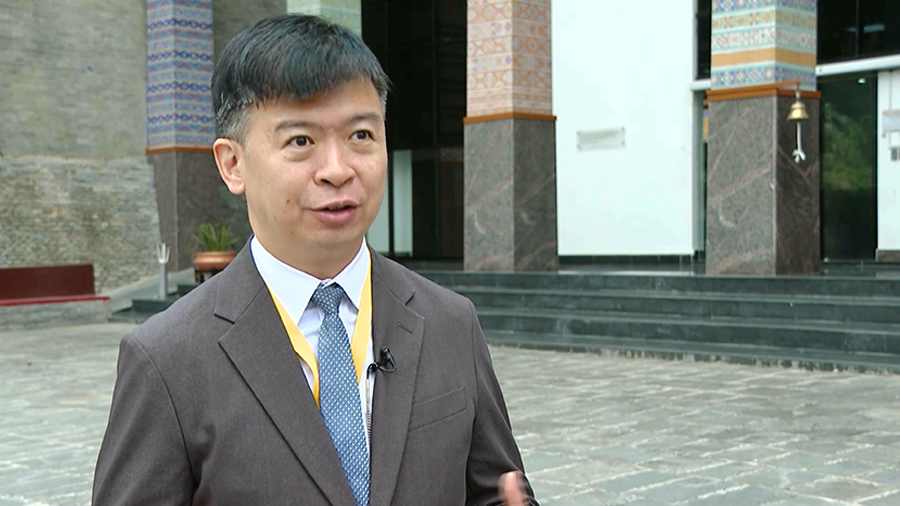
Wu Wei Neng, CEO of Chandler Governance Group, said governments need to conduct research, environmental scanning and analysis to understand what could happen in the future.
“Governments need to understand the future. They need to conduct research, environmental scanning, and analysis to understand what might happen in the future. So, we call this anticipation, the ability of government to tell or to understand what might happen,” he said.
He added that governments need to be able to adapt plans, policies, systems and budgets in response to changing trends and circumstances, while also acting with speed, responsiveness and inclusivity.
Experts said governments need to consider what could happen next and prepare for different possibilities. For Bhutan, this means strengthening the way policies are planned, tested and adjusted as circumstances change.
Kelzang Chhophyell
Edited by Sonam Pem