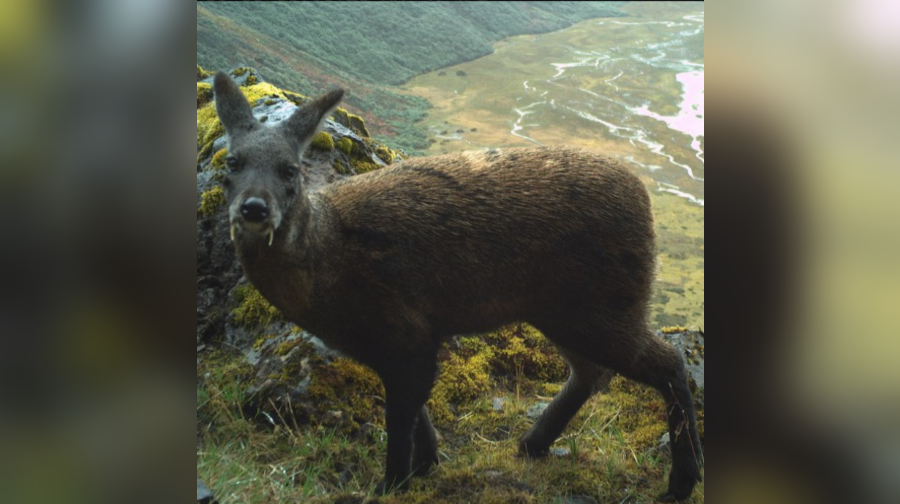
Forestry officials have completed what could be one of Bhutan’s most extensive surveys of musk deer to date. The nationwide survey is expected to provide a clearer picture of their population, distribution and habitat. Forestry officials are now analysing the data collected from the field.
Nearly 500 camera traps were deployed across almost 2,400 square kilometres of alpine forest in an effort to better understand the status of musk deer in the country. More than 400 forestry officials were involved in the effort, which is part of the Prevention of Extirpation of Musk Deer in Bhutan project, launched in August last year.
According to the WWF Bhutan’s recently launched annual report, the information is expected to help identify key musk deer habitats and areas associated with poaching. The report says it could then guide where conservation and anti-poaching measures need to be strengthened.
Rarely seen and found mainly in remote forest areas, musk deer are among Bhutan’s wildlife species facing significant threats. Considered the prey species for the snow leopard, musk deer is one of the most poached mammals in the country.
Officials say the demand for their musk pods used in traditional medicine and the perfume industry has contributed to illegal hunting. Besides, the animal faces habitat degradation and destructive poaching, particularly in remote and less-monitored forest areas.
Musk deer is also listed as endangered under the International Union for Conservation of Nature Red List of Threatened Species. It is protected under Schedule I of Bhutan’s Forest and Nature Conservation Act 2023.
Meanwhile, the Prevention of Extirpation of Musk Deer project is looking beyond monitoring and enforcement. The four-year initiative plans to support alternative livelihood opportunities for communities. By 2029, the project aims to reduce poaching pressure in priority musk deer habitats by at least 50 per cent.
Devika Pradhan
Edited by Sonam Wangdi