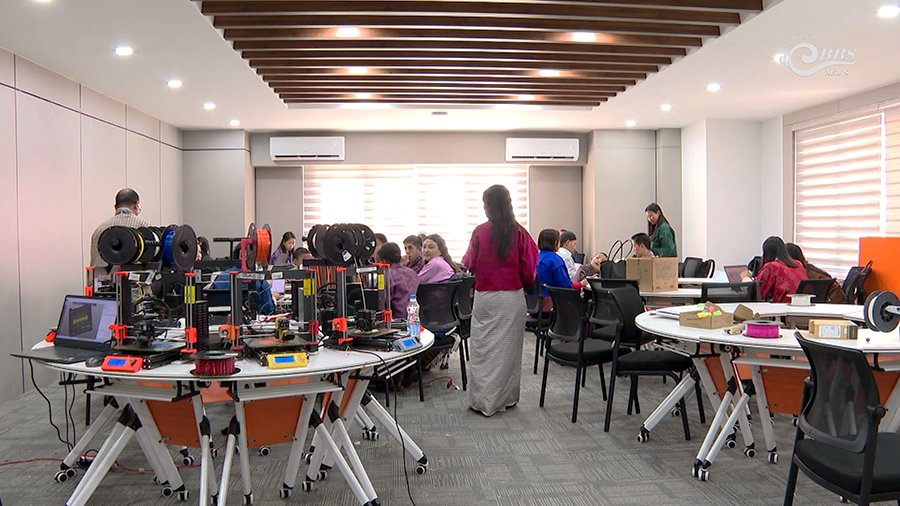
 For a person living with a disability, everyday tasks can be challenging. It is not necessarily because the person cannot do it, but because the tools around them are not always made with them in mind.Over the past four days, that gap became the starting point for something different. At the Inclusive Makeathon, need knowers, the people who live with these challenges every day, sat down with engineers, teachers, and international experts, not to receive a ready-made device, but to help build one designed only for them.
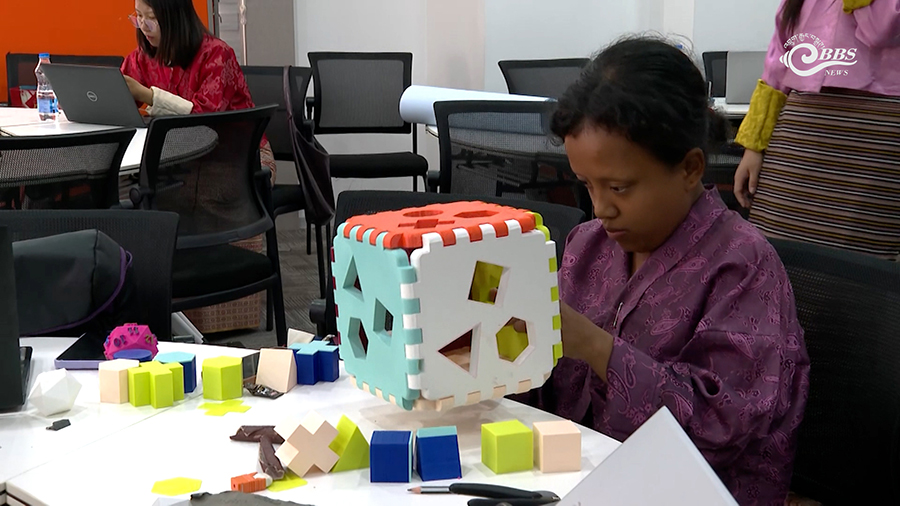
For 18-year-old Tshering Lhamo, recognising colours and patterns can be challenging.
But here, what looks like a simple matching game is part of a prototype designed around how she learns and interacts.
“First of all, it is colourful, and it is square in shape. It has patterns, and it’s fun to play with. When writing, I have to remember the spellings, and I have to write it down. I enjoy the shapes.”
Tshering is one of the need knowers brought into the Inclusive Makeathon, not simply to receive an assistive device, but to help participants understand what kind of solution could work for her.
It is an approach built around solving one problem at a time. Instead of designing a generic device for a disability, participants first identify the individual’s challenge, understand their needs, and only then build a prototype around that person.
“So as an advisor, I am trying to help a diverse group of people where there are teachers. where there are experts in prototyping, where there are the real stakeholders who are facing the problem and their parents. So the entire group is sitting together, and we are trying to identify the problem faced by the disabled person. And now we are trying to design something which will make the problem a solution and will help them in carrying out their day-to-day task in an easy way,” said Professor Harshit K Dave, S.V. National Institute of Technology, Surat, India.
And for Chogyal Dorji, a student at Drukgyel Lower Secondary School, the solution is much simpler, but just as personal.
“This time I asked for a thread to flush the toilet. Until now, my mom helped me flush the toilet all the time. Now I will be able to do it myself. I have also asked for a 3D-printed tool to keep my phone on the wheelchair.”
For parents, small adaptations like these can mean something much bigger: greater independence for their children.
“If my son can become independent as a person, even if he is able to eat by himself or hold a pen, it would help him a lot. Right now, it’s difficult for him to even hold a pen,” said Tshering Dema, a parent in Paro.
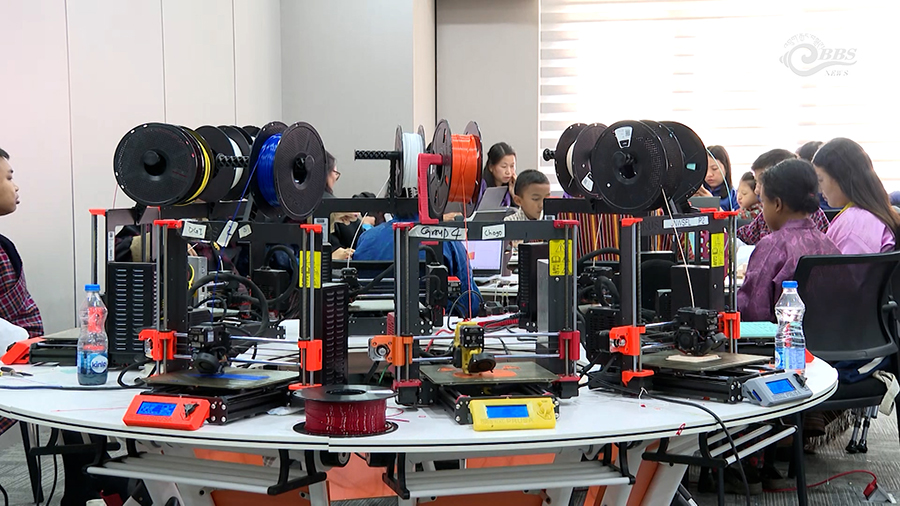 But for these personalised solutions to reach beyond the four days of Makeathon, two things will need to fall into place: the skills to design them locally, and a system to deliver them.
“One thing is that when we come here, since the Inclusive Education coordinator or teachers who are educating the children with disabilities do not know how to design and how to prototype, we give them ideas and we bring the need knowers, but it will be more helpful if they could train some of the teachers or the IE coordinators in designing,” said Tshering Yangzom, Inclusive Education Coordinator, Drukgyel Lower Secondary School, Paro.
Turning individual prototypes into solutions that reach students beyond the Inclusive Makeathon is the bigger challenge. According to the Asian Development Bank, building a system to make these solutions available beyond the Inclusive Makeathon will be equally important.
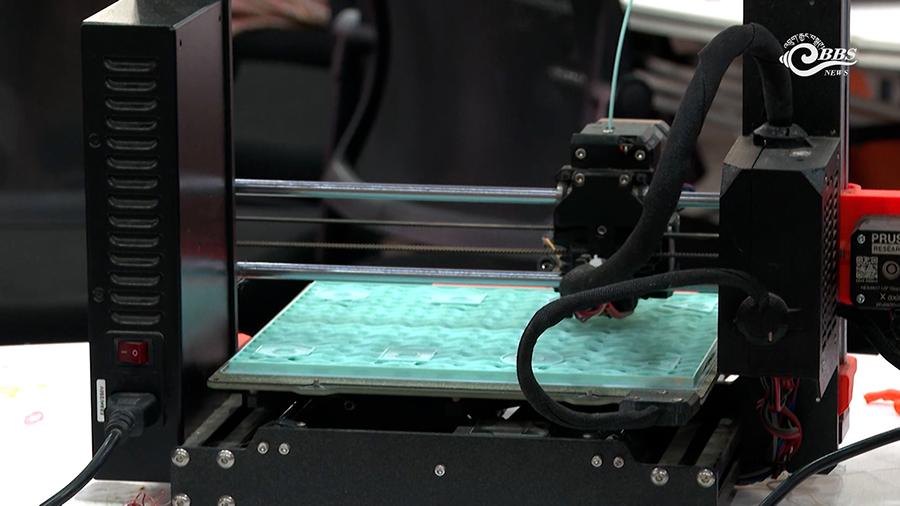
“To make it sustainable, we have to come up with a new government system or program to distribute small to distribute those small pieces of assistive devices to SEN schools. So, it’s not going to be a large quantity, which is traditionally very difficult to manage by the government program system. But there must be a way, such as a pre-selected vendor to register the distribution of the 3D printed products,” said Ryotaro Hayashi, Social Sector Economist, ADB.
Of the prototypes developed by the nine groups of need knowers, the top three were selected to be refined into finished products.
The SEAT project by the Thunder Dragon Team took the first position. The project, Sensory Engagement and Attention Tooling, is a multi-functional desk and chair setup for children with ADHD. It helps them stay focused, manage sensory needs and develop better learning habits.
Likewise, the Druk Inclusive Innovators and the KinTenDo came in second and third position, respectively.
Around 100 participants took part in the four-day event, comprising need knowers, SEN teachers, fabricators, and international experts. The first Inclusive Makeathon was organised in 2024.
This year’s Makeathon also marks the 40th anniversary of diplomatic relations between Bhutan and Japan, with funding support from the Japan Fund for Prosperous and Resilient Asia.
 Meanwhile, this time, nine groups of need-knowers found answers to some of the problems they live with every day. But that momentum must be gained. After all, for those who were not in the room, the question remains: who designs their solution, and when?
Sonam Yuden
Edited by Sonam Wangdi