 Foreign investment in Bhutan is slowly moving beyond hydropower. The number of approved FDI projects rose to 21 last financial year, with more projects coming in manufacturing and services. While hydropower still accounts for almost all of the investment value, the government says the growing number of projects in other sectors could help create jobs, boost exports and diversify the economy.
For years, hydropower has been at the centre of foreign investment in Bhutan. However, increasingly, foreign investors are looking at other parts of the economy too.
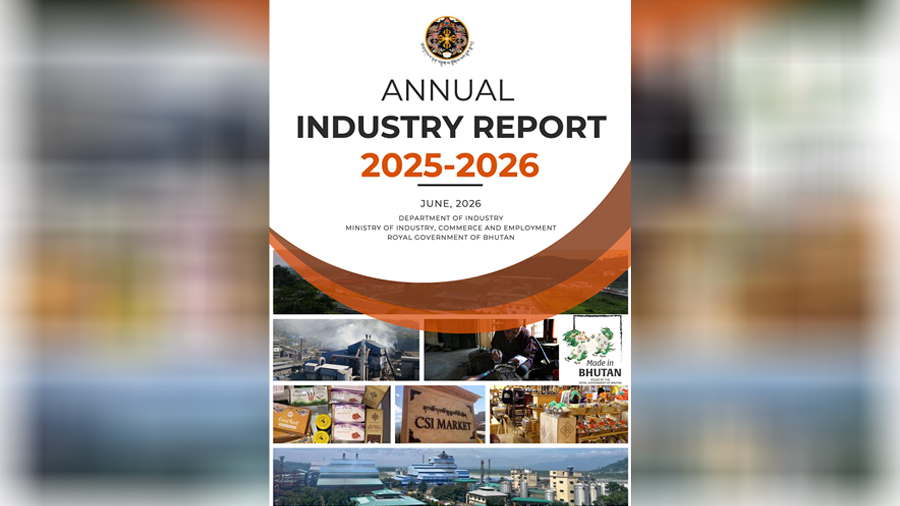
According to the Annual Industry Report 2025–2026, the government approved 21 foreign investment projects in the last financial year. This is up from 17 the previous year and eight in 2022–2023.
19 of the 21 projects were outside hydropower, with combined investments of about Nu 3.1bn. The report says the increase was driven largely by growth in manufacturing and services.
FDI approvals in production and manufacturing increased from eight projects in 2024-2025 to 10 last financial year. In services, approvals increased from nine to 11.
Projects such as the Greenovation Centre and Himalayan Agarwood are among the FDI-backed investments.
The Department of Industry says the number of projects shows that foreign investment is gradually expanding beyond hydropower, even though hydropower continues to dominate the overall investment value.
Two hydropower projects account for 162.5 billion ngultrum of the total 165.6 billion ngultrum in approved investment.
The FDI approved projects are expected to create around 700 jobs.
The department says, “We have identified priority sectors with strong investment potential, such as tourism, agribusiness, ICT and digital services, manufacturing, renewable energy, education, and high-value niche industries, and have investable project pipelines for most of the sectors.”
The department is promoting these opportunities through international investment summits, overseas roadshows, investor outreach programmes, and close engagement with Bhutanese embassies and international partners.
Meanwhile, the FDI Rules and Regulations 2025, introduced in August last year, have also eased several requirements for foreign investors.
The Department is also working to improve the investment climate by streamlining approval processes, strengthening aftercare services, improving the Invest Bhutan portal and addressing regulatory and operational challenges faced by investors.
However, the number of FDI Registration Certificates issued fell from 62 to 33 during the same period. The Department says the value and number of approved projects still indicate continued investor interest in Bhutan.
With manufacturing and services accounting for a growing share of FDI projects, the Department says Bhutan is making progress towards attracting investment beyond hydropower. However, the latest figures also show that hydropower continues to have a major influence on the overall value of foreign investment coming into the country.
Sonam Yuden
Edited by Sangay Chezom