
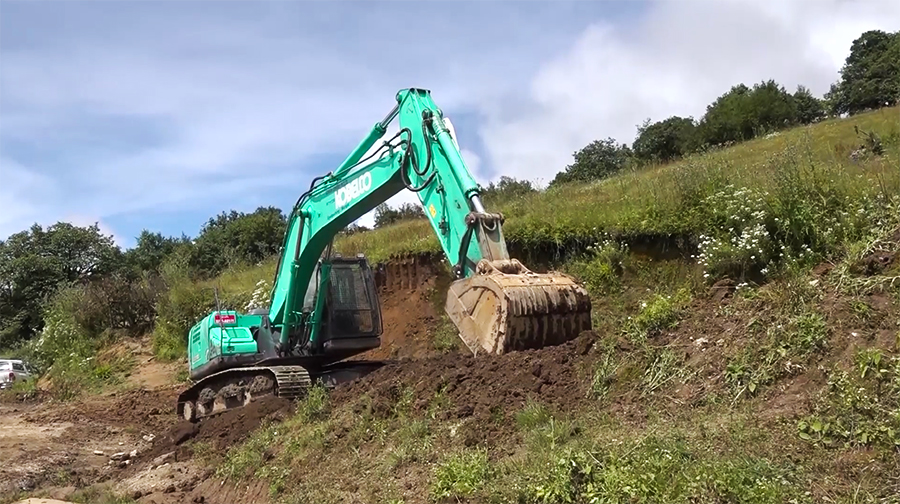
 For the people of Lunana, getting essential goods home can mean a five-day journey from the nearest road point, with horses carrying everything from food to household supplies. During winter, heavy snowfall makes the journey even more difficult. Now, a new road is being built towards Lunana. Once completed, it will shorten the journey by about a day and bring the community closer to motorable road access.
The road to Lunana is finally moving closer. Construction of a 15-kilometre stretch began with the inauguration of the Lunana Dzongkhag Road at Raminang-Uesana Chiwog yesterday.
The government is investing more than Nu 411 M in the 30-month project.
The Department of Surface Transport’s Regional Office in Lobesa is implementing the project, with construction being carried out by a private contractor.
The road would mean shorter journeys for both people and pack animals.
At present, the nearest motorable road ends at Raminang-Uesana. From there, people have to walk for about five days to reach their communities. The new road is expected to reduce the walking journey by about a day.
Essential items have to be carried by horses from the nearest market. The cost increases with the distance, while winter conditions can make the journey even more difficult.
Lhedi Tshogpa Phub Tshering said, “Once the road connection reaches up, we can hire a DCM together with five or six households to transport our goods. Currently, we pay Nu 1,500 per horse per day to carry our goods. In the future, five or six households will be able to travel together by hiring a DCM for around Nu 5,000 to Nu 6,000”.
“Half of my people live in Uesana village. They have to transport all their essential items from here by horse. This road connection will benefit our people one hundred per cent, as there is not even a single child who does not use this road,” said Norbu Tshering, Raminang-Uesana Tshogpa.
Shang-Threga-Wachey Tshogpa Phub Dorji said, “If this 15-kilometre-long road reaches Jaziphu, all our people will be able to use yaks to transport their goods from the road head. We can unload our goods directly from the vehicles and transport them further using our yaks. This will greatly benefit the people.”
This is not the first attempt to extend the road towards Lunana. A nine-kilometre stretch was constructed up from the Goen Tshephu road junction to Raminang in 2016.
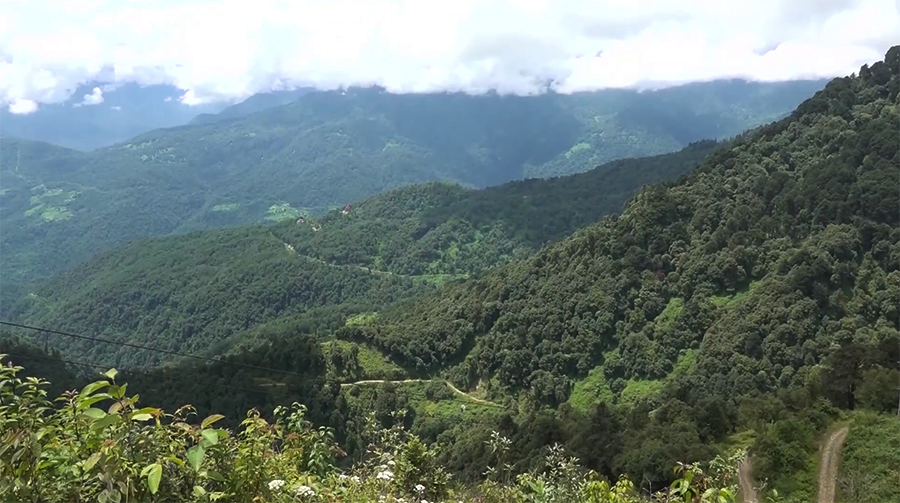 According to officials, a 30-kilometre alignment was surveyed from Raminang. However, the project will construct roughly half of the surveyed alignment.
Until the road reaches Lunana, helicopter services remain an important lifeline for the community.
Lunana Gup Kaka said it is expensive to travel by helicopter. “We have to pay Nu 56,000 per trip. Only around 40 per cent of the people can afford the helicopter fare, while the remaining 60 per cent cannot. Therefore, if the road could reach even halfway to the destination, it would bring immense benefits to our people.”
“The government provides a 50 per cent subsidy on helicopter fares for the people. As a result, the government spends around Nu 20 M in a year on the subsidy, ” said Pema Drukpa, a Khamaed-Lunana MP, Gasa. “Therefore, this road will not only benefit the people but also help to reduce the government’s expenditure on helicopter subsidies in the future.”
For generations, distance has been a part of everyday life in Lunana. Now, the road is slowly closing that distance, and people hope that one day, the road will reach their doorstep.
Changa Dorji, Gasa
Edited by Sangay Chezom