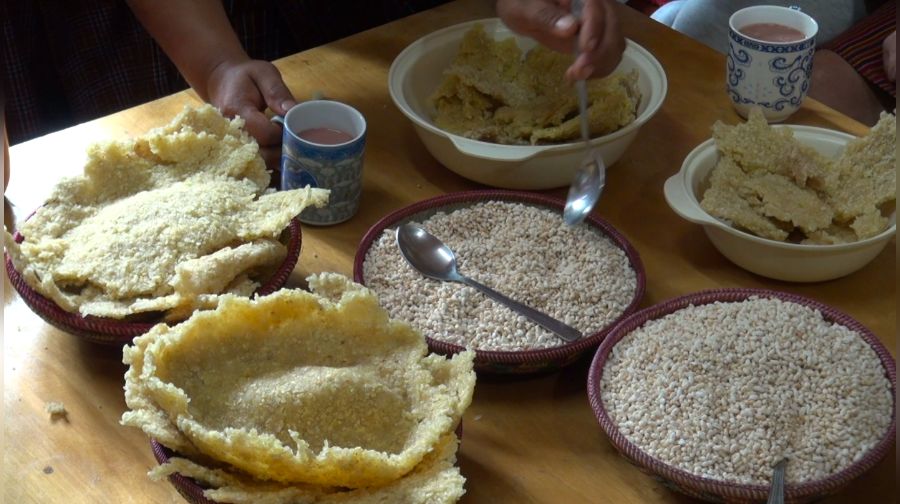
 Farmers in the lower part of Radhi Gewog in Trashigang are now preserving Handa Tengma. It is a traditional beaten rice made from the local Pho Bara variety. Once prepared mainly for special occasions, the delicacy is now being promoted beyond the community. Farmers are now seeing potential for wider markets, including Gelephu Mindfulness City.
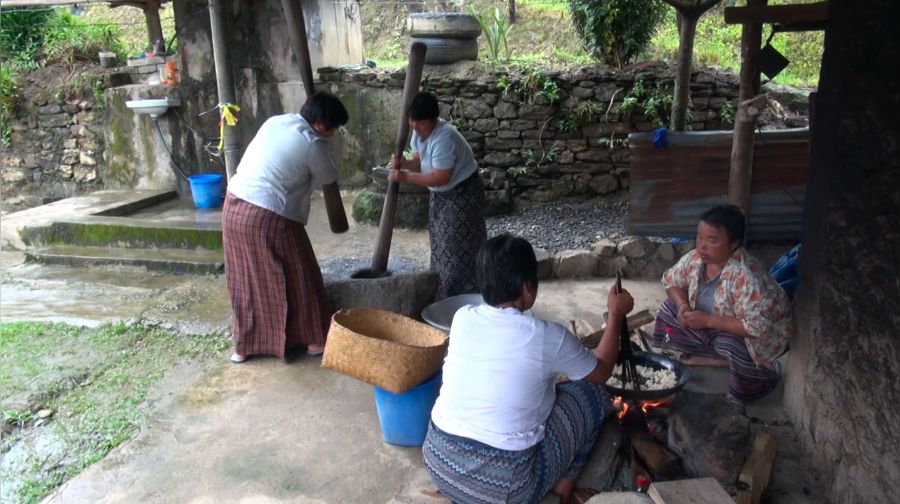
Pho Bara, a local rice variety, is used to make Handa Tengma. The rice is washed and soaked overnight before being roasted with mustard oil. Once golden, it is flattened using traditional pounding tools. Farmers say the process requires skill to achieve the right taste and texture.
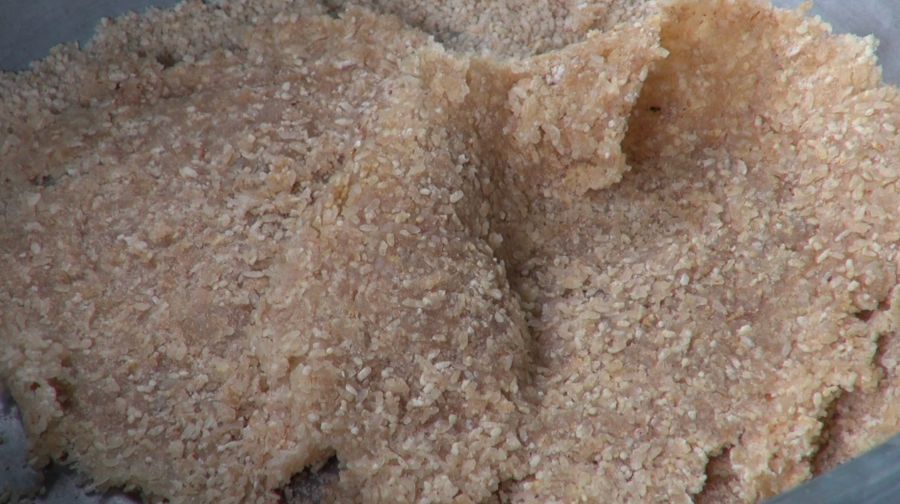 “Getting the right taste and texture requires careful preparation. The amount of oil and heat must be controlled to prevent the rice from burning,” said Sonam Dema.
Kinzang Yeshi said, “Handa Tengma is one of our special local offerings. We traditionally offer it to special guests, including Rinpoche and members of the Royal Family.”
Handa Tengma is often enjoyed with butter tea. Pho Bara is mainly grown for making zaw and Handa Tengma because of its oily texture.
 Farmers showcased Handa Tengma for sale at the flower festival in Sheytemi, Merak, earlier this year.
“More people are now aware of Handa Tengma after we showcased it at the flower festival. We have started receiving orders and plan to cultivate more rice,” said Cheni Zangmo, a farmer.
Kinzang Yeshi said, “Handa Tengma is one of Radhi’s unique products. We hope to promote it further and eventually export it to Gelephu Mindfulness City with government support.”
They now hope growing demand will encourage more households to cultivate Pho Bara and help take Hunda Tengma to wider markets. Currently, a kilogram is expected to cost around Nu 600.
Today, only about 40 to 50 households grow the rice variety in Radhi. However, low yields and the small number of farmers cultivating Pho Bara remain a challenge.
Sonam Darjay, Trashigang
Edited by Passang