
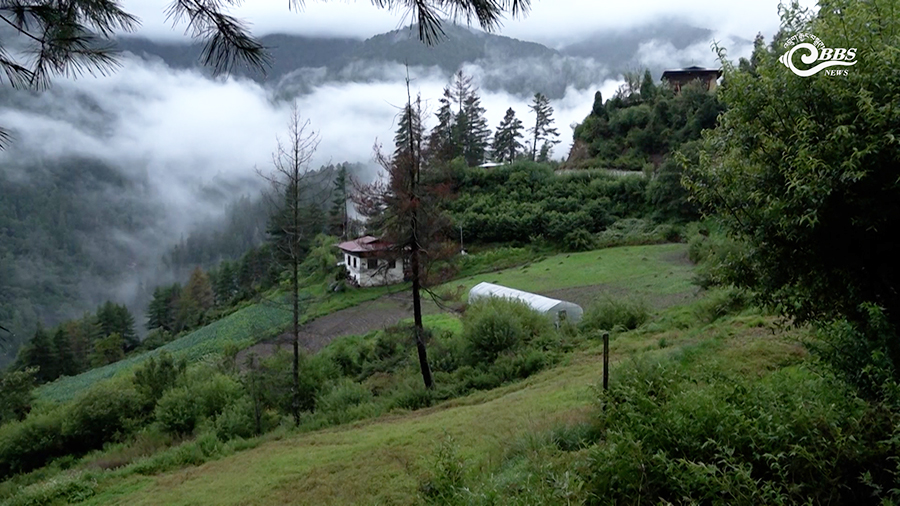
 Three households in Bachakha Village, on the Haa-Paro border, are caught between two districts. Their homes and land fall in Paro’s Naja Gewog, while their census is registered under Samar Gewog in Haa. This unusual administrative arrangement has made it difficult for them to access basic government services and support.
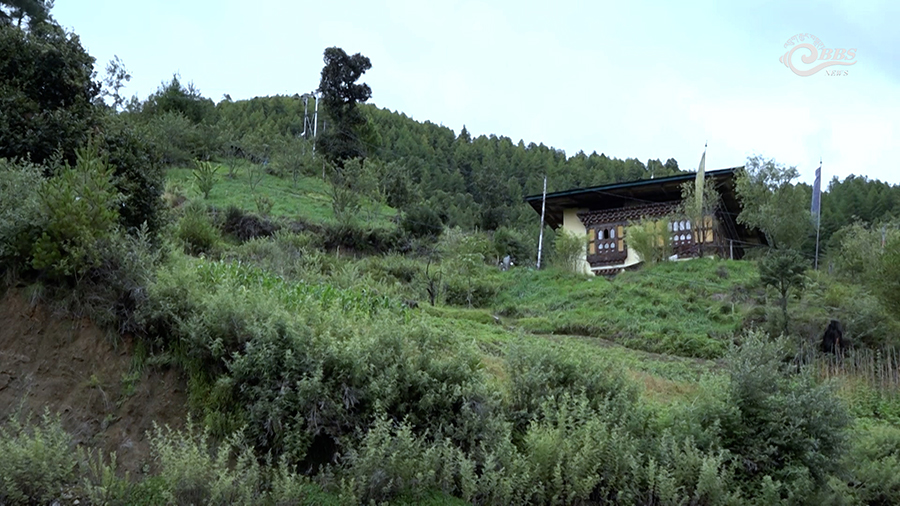 For these three households near the Haa gate, the district boundary is more than just a line on a map. The residents say they have been part of the Samar Gewog community for more than 30 years.
From woola to preparations for the recent Haa Moenlam Chenmo, they take part in community activities under Samar Gewog. However, when it comes to government services, they say administrative mismatch leaves them at a disadvantage.
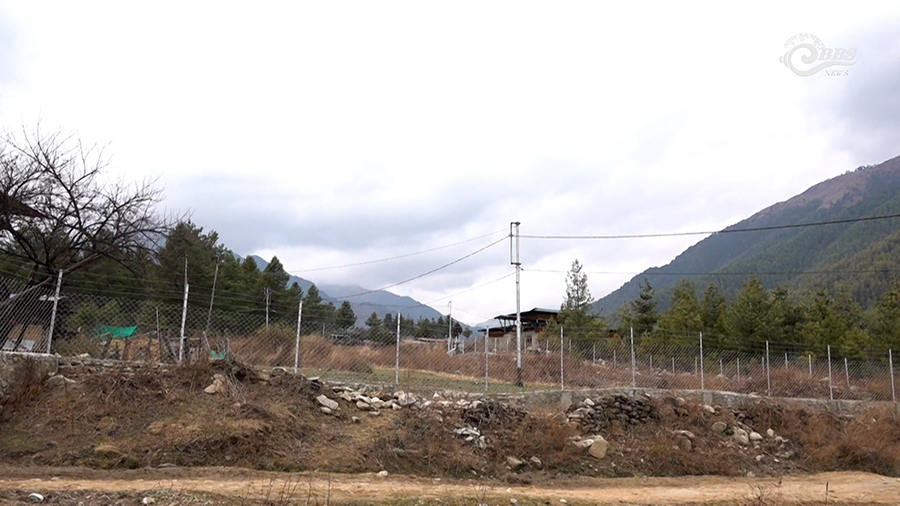 The issue became apparent when the Haa Agriculture Sector provided chain-link fencing to households in the area, leaving the three households out.
“We are at the end of Samar Gewog. Now that all the other farms are fenced, the wild animals are coming to our farms because they are the easier targets. We have our census in Haa and our land in Paro, so we feel like we have nowhere to turn to for help,” said Rinzin, a resident of Bachakha Village.
“Even before the fencing, wild animals were already destroying our crops. Now that more than 60 households in Shari Chiwog have been fenced, the animals are coming here because the other farms are protected,” said Hodo, another resident of Bachakha Village.
According to the residents, the problem goes beyond fencing. They added that they even had to pay for excavator fuel themselves while constructing the road to their homes.
They also share a water source with Shari Chiwog but had to arrange their own pipes and water storage.
“We have problems with drinking water. The three households have to arrange our own water supply. We have made an improvised water tank, and it supplies water to our households through the pipes we installed,” said Hodo, a resident of Bachakha Village.
The households have continued to rely on Samar for community support because that is where they are registered.
“The three households have been taking part in community work and other volunteer activities in Shari Chiwog, and they also pay taxes to Samar Gewog. But when we were going to fence the farms, we were told that Haa’s budget could not be used for land in Paro. So, the situation for these three households has become difficult,” said Sangay Dorji, Samar Gup, Haa.
However, according to Naja Gewog, the three households have always carried out developmental activities through Samar Gewog and have never approached Naja Gewog for such support.
At the district level, the Paro Engineering Sector said the district is also unsure which gewog should take responsibility for development works in the area.
The Haa Dzongda said the district has not received any formal complaint from the three households. He said if they come forward, the administration is willing to discuss the matter with Paro and, if necessary, take it up with the National Land Commission.
Until the responsibilities of the two administrations are clearly established, the households say they will continue to face difficulties accessing government support available to their neighbours.
Karma Samten Wangda, Haa
Edited by Sonam Pem