
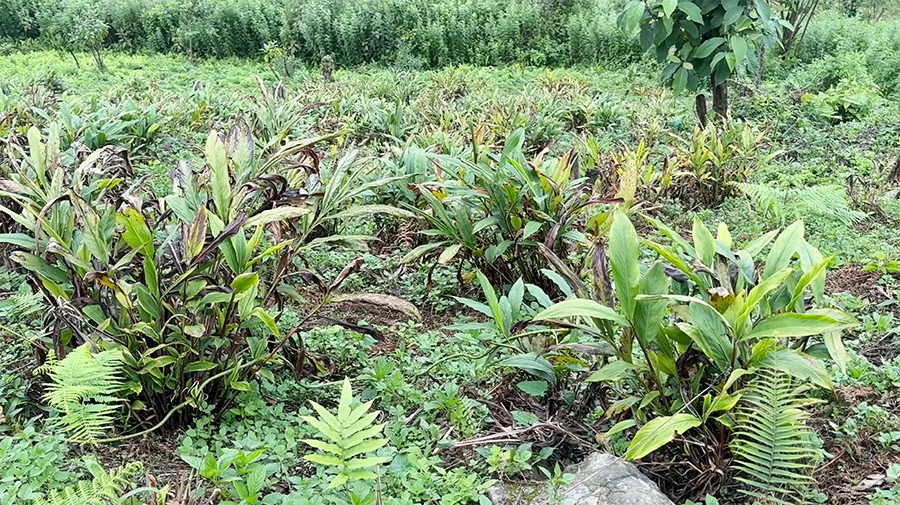
 Cardamom is the main source of income for people of Dagsa village in Gongdu Gewog in Monggar. However, pests and diseases have affected production since 2024, forcing many farmers to seek alternatives. Today, they are now turning to intercropping, with ginger emerging as a promising new cash crop. Intercropping is the agricultural practice of growing two or more different crops on the same land at the same time.
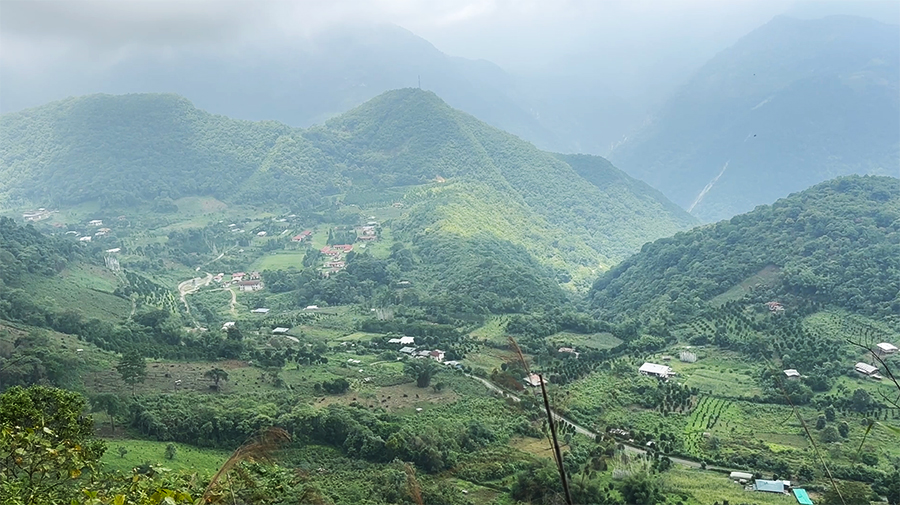 Cardamom plantations blanket the lush Dagsa valley, with almost all 63 households in Dagsa-Kumadzong Chiwog depending on the crop for their livelihood. Despite the challenges, many farmers continue to invest in their orchards while diversifying their farms.
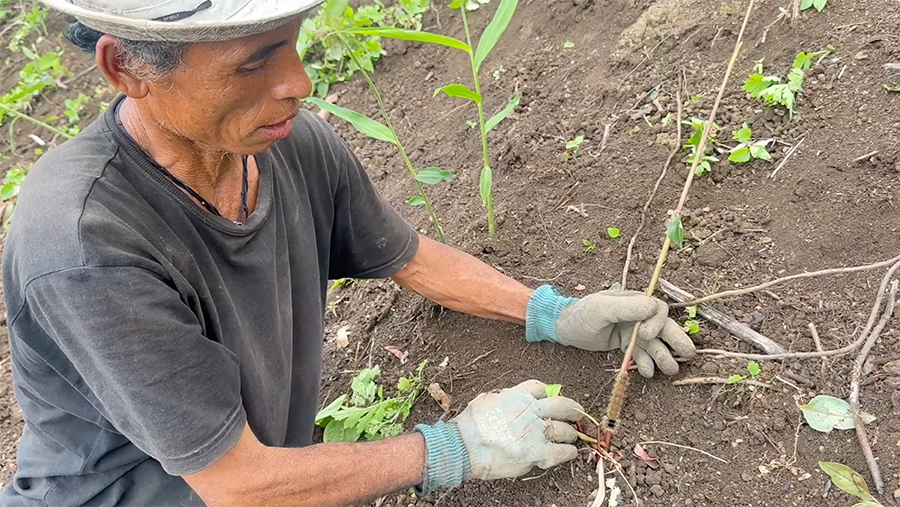 One of them is 53-year-old Kezang Wangdi. He recently cleared more than two acres of family land to expand his cardamom orchard. At the same time, he has started growing ginger between the cardamom plants, hoping the additional crop will provide a reliable source of income just like the spice.
Kezang Wangdi said, “Although most of my cardamom plants were infested and wilted last year, I still earned over Nu 100,000. Cardamom continues to fetch a better market price than ginger and other crops, but its future remains uncertain as pests and diseases steadily reduce yields. That is why we are now adopting intercropping to secure additional income if cardamom returns decline further.”
Others are adopting the same approach. Farmers say ginger thrives under conditions similar to cardamom, making it a suitable intercrop. Although cardamom remains far more profitable, farmers say growing ginger alongside it provides a safety net. During the last harvest, cardamom fetched over 1,500 ngultrum per kilogram, compared with about 30 ngultrum for ginger. Intercropping helps reduce the risk when pests, diseases or market prices affect either crop.
Tshering Lhamo, a farmer, said, “I cultivated cardamom on more than an acre of land and earned over Nu 100,000 last year. This year, I expanded the plantation by nearly another acre. But production remains uncertain, as many plants begin to curl and wither once they mature. That is why we are turning to intercropping, hoping it will provide an alternative source of income if cardamom yields continue to decline.”
“This year, I cleared more than an acre of land to expand my cardamom plantation. I had planned to cultivate a larger area, but with age, I could only manage this much. Cardamom is still a good source of income, and we can earn more by planting more,” said Kencho Dorji, another farmer.
“In the past, oranges were our main source of income, but they declined. Then cardamom replaced them, and now it is also being hit by pests and diseases. Many of my plants were infested, so I had to uproot them. Now, half of my field is empty,” said Phurba Lhamo, also a farmer.
In the meantime, the gewog administration is keeping a close watch on the situation.
Gongdu Gup Tshewang Tobgyal, “We found that water shortages during winter contribute to some cardamom diseases. To address this, we secured Nu 6.5 M under the Climate Adaptation and Resilience for Local Governance and Empowerment programme for 2026–2027, with Nu 4 M earmarked for rainwater harvesting to support cardamom cultivation during the dry season.”
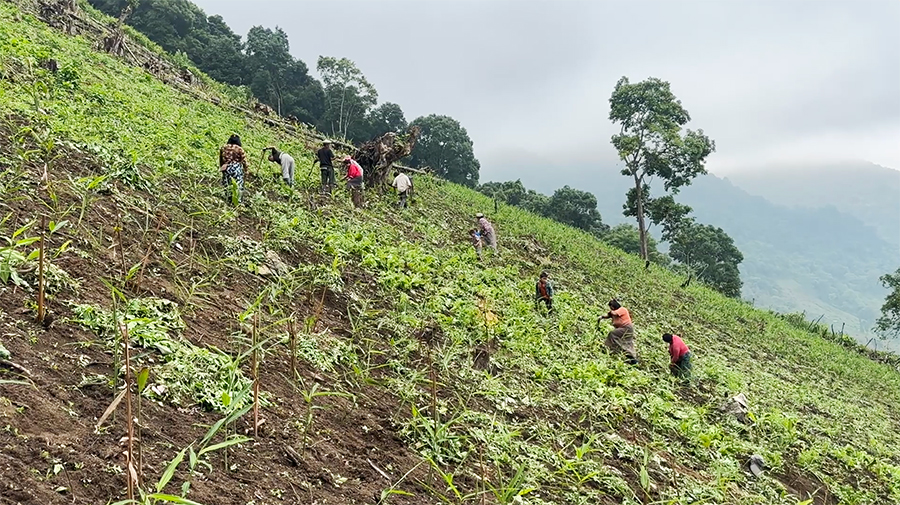 For Kezang Wangdi and many others, cardamom remains their primary source of livelihood, and they are determined to sustain it through every practical means. But their resilience continues to be tested by mounting climate-related challenges, including emerging diseases, pest infestations and prolonged dry spells.
Namgay Wangchuk
Edited by Passang