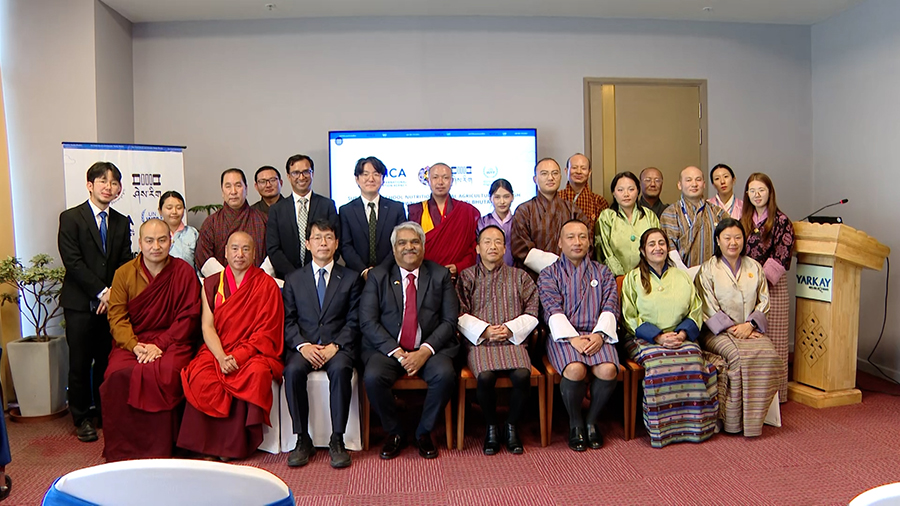
 Fifty schools and seven monastic institutions will soon see new or upgraded kitchen facilities, as part of efforts to improve access to nutritious meals. The initiative is part of the second phase of a partnership between the United Nations World Food Programme and the Korea International Cooperation Agency, which signed a USD 9.5 M agreement. The programme is expected to benefit more than 100,000 children nationwide.
For many students across the country, a hot school meal continues to depend on kitchens that are old and still run on firewood. But that is gradually changing.
Between 2019 and 2024, the first KOICA-supported project helped improve school feeding systems, upgrade kitchen infrastructure, and strengthen food safety standards across Bhutan.
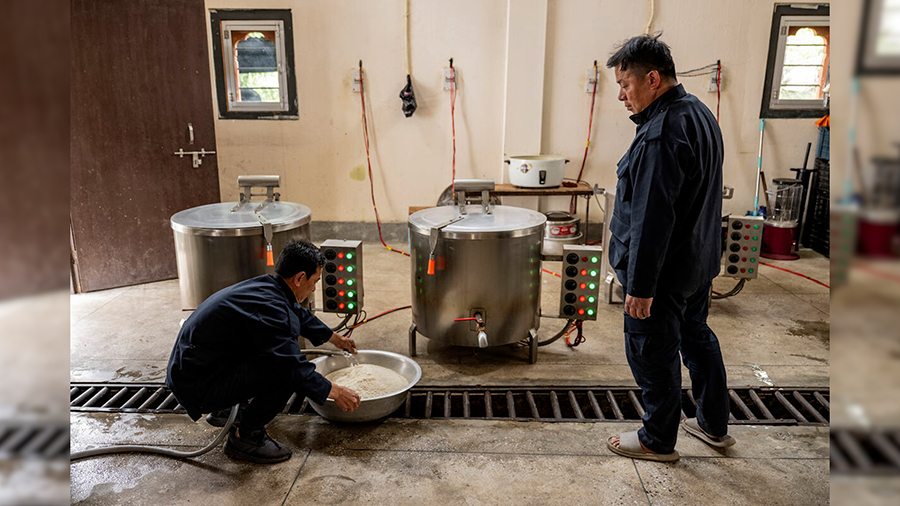 During Phase I, 15 schools received newly constructed kitchens and store facilities, while 36 schools were refurbished.
To support school agriculture and food self-sufficiency, 75 schools were provided with mini power tillers.
In addition, 49 schools were equipped with 122 electric cookers to improve cooking efficiency.
More than 400 school cooks across all 20 districts were trained in food preparation, nutrition, kitchen hygiene, and safe storage practices.
KOICA Country Director says the second phase will expand on these achievements by reaching more schools and deepening the impact.
Country Director of KOICA Bangladesh & Bhutan Jihoon Kim said, “The decision was based on success and trust. Phase one demonstrated remarkable results in improving student health and also increasing the local farmers’ incomes. That’s why we decided to continue this project. Through this project, we want to change from the supply-driven to the market-linked, between the local production and the school link.”
Sangay Chophel D, the chief programme officer of Health and Well Being Division under MoESD, said, “It’s not that we don’t have kitchens, we do. But about 80 per cent of them still run on firewood. With growing emphasis on climate-friendly practices and forest conservation, the education ministry is now moving towards modern kitchens powered by electricity. Cooking with firewood affects both health and cleanliness, making it difficult to maintain proper hygiene and increasing the risk of disease.”
At the same time, the initiative is designed to support local farmers and improve rural livelihoods by linking schools with locally sourced food supplies. This approach is expected to create a more sustainable food system while ensuring children receive fresh and nutritious meals.
Country Director of UN World Food Programme Bhutan said, “This programme brings a very, very integrated approach to the school feeding programme by involving not only the nutrition of the school-going children, but also connecting the farmers and the farmers associations which are close to the schools that we’ll be working and providing nutritious products to be able to be used within the school for that one. This not only gives the school-going children a nutritious meal, but also gives access to the market for the farmers in the region. Once they have a guaranteed market for the number of months the school is open, they will have an incentive to be able to grow those vegetables and other products to be able to supply to schools.”
More than 2,000 farming households will also be supported with tools, training and skills required to be better producers, farm business owners and rural entrepreneurs.
Samten Dolkar