
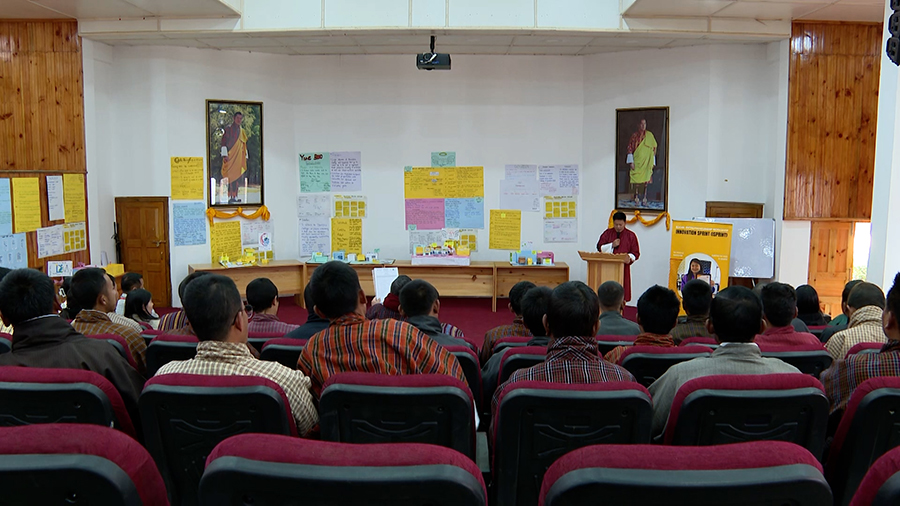
 From cold storage facilities for farmers to door-to-door services, young minds at Mitshey Yarab Lamzang are proving that innovation can start anywhere, even in a rehabilitation centre. 26 participants immersed themselves in an innovation workshop that challenged them to reflect, collaborate, and imagine solutions for real community problems.
 The participants are recovering from addiction, and their faces are not shown to protect their privacy
During the five-day I-sprint or Innovation Sprint Social Entrepreneurship training, they learned to identify community challenges, analyse root causes and turn ideas into viable social enterprises.
They also gained basic financial literacy and marketing skills.
 The participant immersed themselves in developing business ideas, making financial decisions and assessing market viability.
One team proposed Go Green, a cold-storage facility designed to help farmers preserve their produce and reduce reliance on imported, chemically treated vegetables.
Another team, Druk Wings, pitched a door-to-door service offering everything from car washing to electrical repairs.
A participant said, “When we think of starting a business, we think it’s just about finding a location and setting up a shop, assuming customers will come. But it’s not like that. I learned that before starting a business, we must first identify a problem, and then plan solutions step by step.”
Another participant said, “I learned about social entrepreneurship and how such business models benefit society. I also learned how actually to plan a business. In the future, I plan to bring the Druk Wings business model to life and provide services that save people time.”
According to the programme coordinator, these capacity-building initiatives play a vital role in rehabilitation.
Dago Palden, the project focal for Innovate Bhutan said, “It’s an intervention in their rehab pathway. What we observe is that the young adults in rehab lose their confidence. They really might not even have such focus in life. So such intervention, besides everything that’s done in the rehab, also gives them more confidence and also gives them a purpose in life.”
In a space often associated with recovery and restraint, these young individuals found confidence, direction, and self-belief. What began as a training may well become a turning point toward rebuilding lives through purpose-driven innovation.
Kinley Bidha, BBS