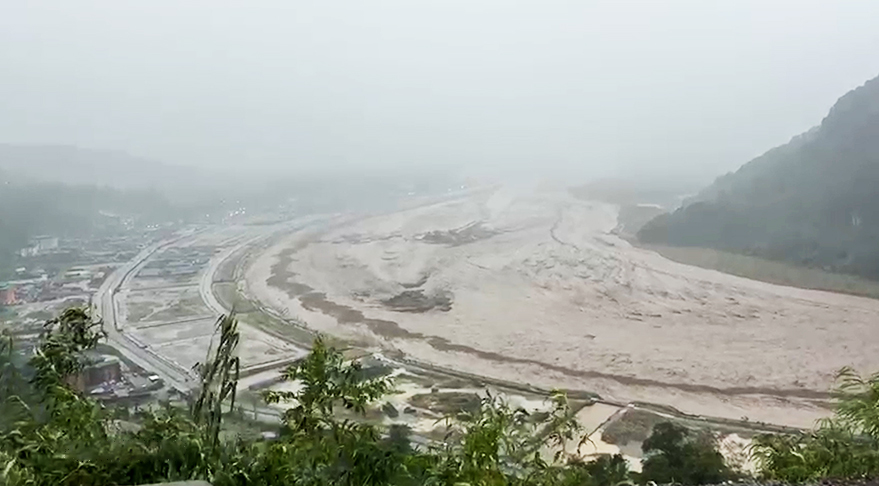
 Among the climate-induced disasters, flash floods remain one of Bhutan’s most serious climate threats, with impacts on health, livelihoods, and the economy expected to rise sharply. According to United Nations Development Programme Bhutan, by the 2030s, flood-related losses is projected to reach four per cent of the country’s Gross Domestic Product. The monsoon restoration of roads and bridges alone costs government in millions of ngultrum every year.
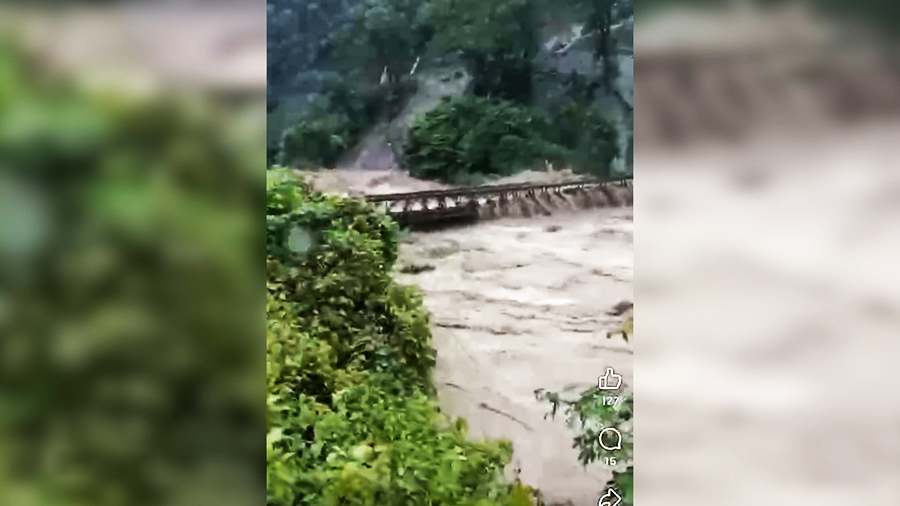 The recent extreme rainfall, flash floods, and landslides events across Bhutan in October last year, damaged 29 bridges.
Of these, 22 bridges were completely washed away, while seven sustained varying degrees of damage, severely disrupting connectivity and transport.
Moreover, roads, farmland, and residential structures were also damaged.
While no major human casualties were reported, two persons lost their lives in Haa and Wangdue Phodrang and one still missing in Haa. The southern and western regions, particularly Samtse, Chhukha, Haa, and Dagana were among the most severely affected.
According to the United Nations Development Programme Bhutan’s assessment of climate-induced loss and damage report, monsoon restoration of existing roads and bridges have increased from Nu 142.1 M in 2021-2022 to Nu 300.9 M in 2024-2025 financial year.
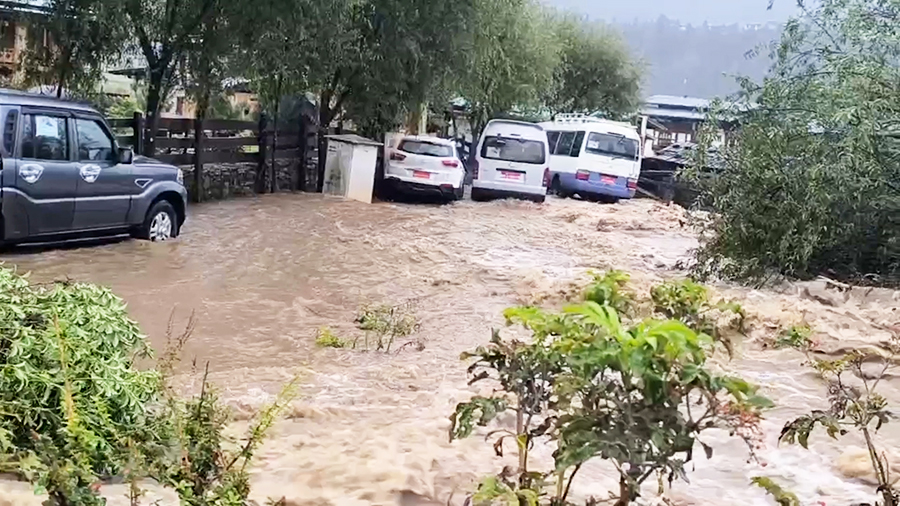 The reported stated that farmland and infrastructure located along river basins are especially vulnerable to heavy monsoon rains and glacial lake outburst floods (GLOFs).
Currently, more than 7,700 people are affected by floods each year, a figure projected to increase to over 10,000 by 2030.
The report also states that GLOFs pose one of the greatest climate risks to Bhutan.
The country has over 700 glaciers and nearly 2,700 glacial lakes, with 17 considered potentially dangerous.
Moreover, glaciers are receding rapidly, leading to the formation of unstable lakes and increasing flood risks downstream.
Climate projections indicate stronger and more erratic monsoon rains, with more rain falling in shorter, extreme bursts rather than evenly through the season.
The report also projects that landslides are also expected to become more frequent as rainfall intensifies.
Additionally, windstorms have caused repeated damage in highland areas, while forest fires are emerging as a major and growing threat, with climate change making fires more frequent and severe across Bhutan’s forests.
Slow-onset hazards such as glacier retreat, droughts, and drying water sources are already affecting water security.
Out of more than 7,000 water sources nationwide, dozens have dried up and many more are at risk.
While summer rainfall may increase, winter droughts are expected to worsen, particularly in southern and eastern districts.
According to the report, the probability of heatwaves is also projected to rise sharply by the end of the century.
Thimphu is particularly exposed to increases in heat waves.
By 2040, over 95 per cent of its residents are projected to experience temperature increases of 1-1.5 degree Celsius, with worst-case scenarios suggesting a rise of 3.5-4 degree Celsius by the end of the century.
The assessment recommends the establishment of a national Loss and Damage Framework, supported by a centralised data repository, to systematically capture, analyse, and monitor climate-induced losses and damages across sectors and regions. Such a framework would provide the foundation for evidence-based decision-making and enable the identification and implementation of priority interventions.
Similarly, the report underscores the need to operationalise priority Loss and Damage interventions that prevent, minimise, and address both economic and non-economic losses and damages, particularly at the local level where impacts are most acutely felt.
The report calls for strengthened financial mechanisms to enhance the measurement and accounting of climate-induced Loss and Damage, and to support the implementation of targeted interventions.
Scaled-up financing will be key to reinforcing Bhutan’s national capacity to respond to escalating climate risks and to safeguard development gains in line with the country’s long-term resilience and wellbeing objectives.
Phub Gyem