
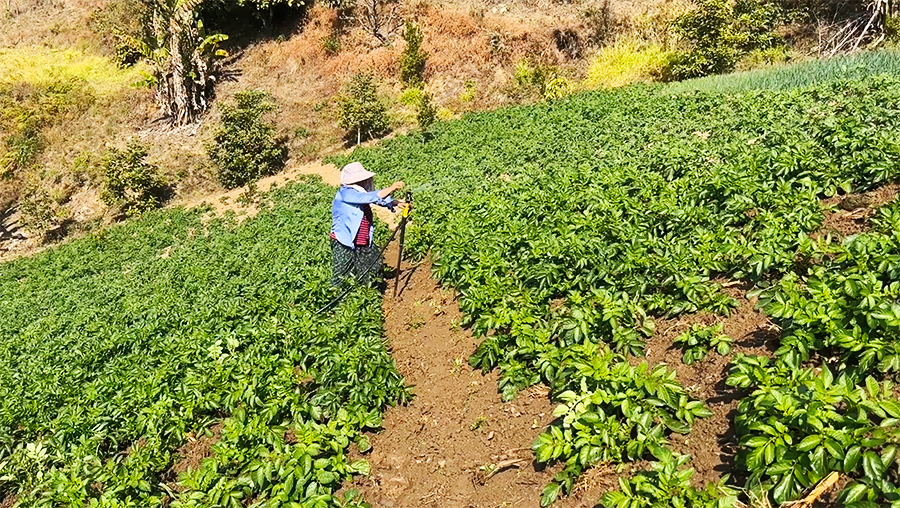
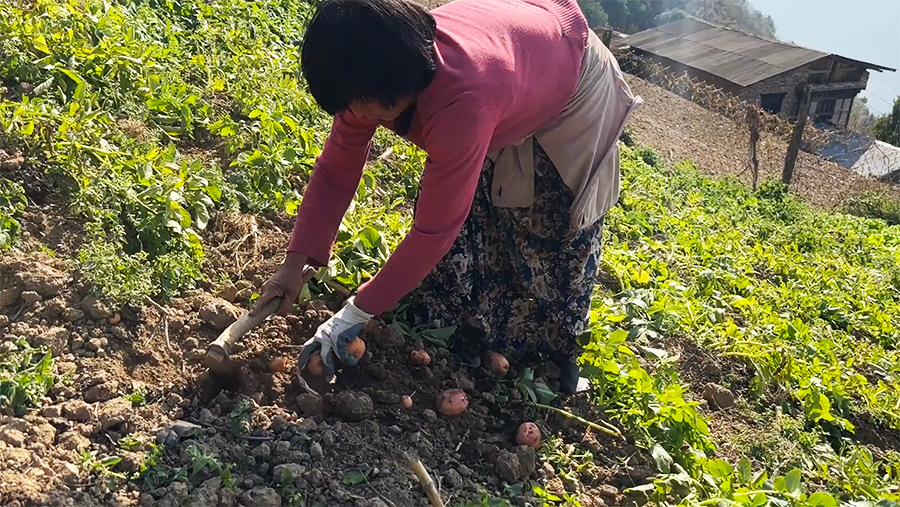
 This winter, women of Chulabi Village in Chali Gewog, Monggar are busy cultivating and harvesting potatoes, an unusual sight during a season traditionally marked by dry fields and less workloads. A growing and lucrative winter potato market is driving the change. Introduced three years ago, commercial potato farming has rapidly transformed livelihoods. Initial harvests generated good cash returns, motivating farmers to expand production and scale up output.
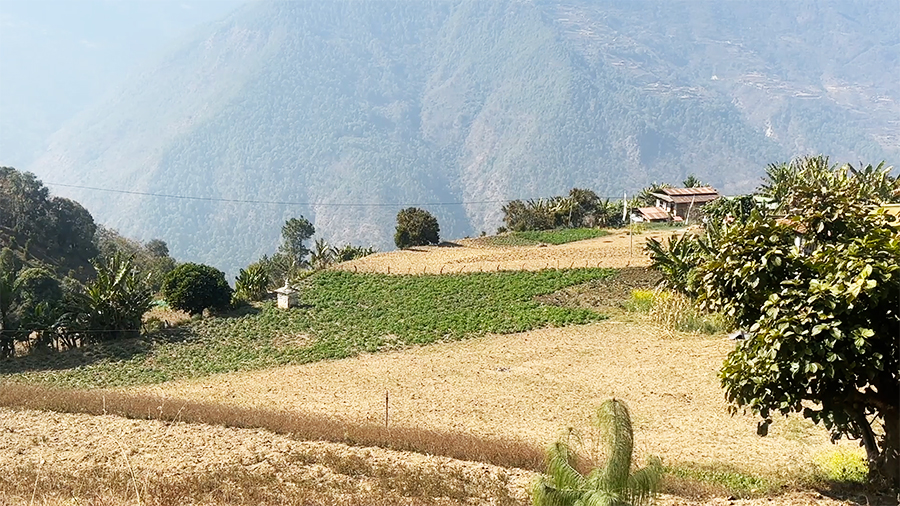 In the picturesque village of Chulabi, much of the land lies fallow, while other fields are lush with vegetables. A closer look reveals rows of potatoes alongside cabbage, broccoli, and other vegetables that are the main source of winter income.
 Once grown on a small scale for self-consumption, potatoes now dominate the fields and demand extra care at this time of the year, especially irrigation. Today, nearly all 14 households have taken up potato cultivation for commercial purposes.
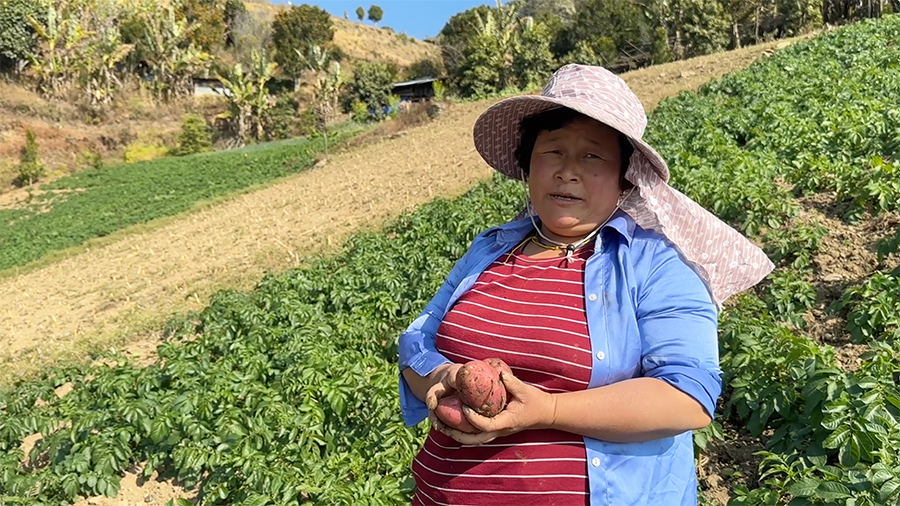
40-year-old Jampel Dema is busy tending nearly an acre of potato fields. This year, she has almost doubled her cultivation, using 10 sacks of seed. With harvesting expected early next month, she hopes the increased yield will translate into higher profits and greater financial security for her family.
“In the past, during the winter season, the fields were left empty, and we didn’t have much to do. Now, it is tiring, but at the same time fulfilling, as we earn income. It was only the year before last year that we started growing potatoes in winter. I began with two sacks of seed, and this year I cultivated 10 sacks.”
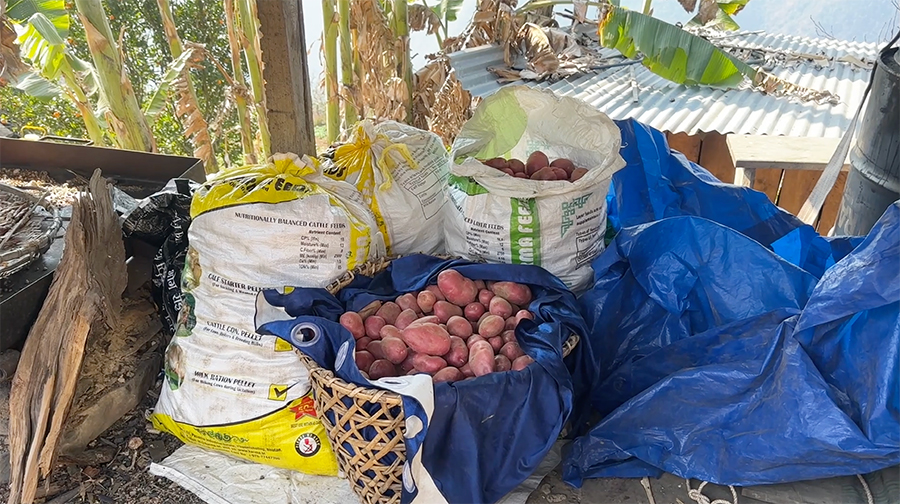 Likewise, 44-year-old Pema Wangmo, who cultivated potatoes a few weeks ago, is now harvesting her fields. She has already sold around 15 sacks of potatoes at the Monggar vegetable market.
“Last year, I made almost Nu 40,000 from selling potatoes during winter. I sold them for Nu 50-60 per kilogram, and there was no problem with buyers. This year, as of now, sales are not as easy. I recently sold almost 13 sacks of potatoes, each weighing 50 kilograms, but I was able to get only Nu 25 a kilogram.”
“Our main household income comes from selling vegetables and oranges. When there is no work at home, men usually go out for daily wage labour. We, women tend to the gardens and grow vegetables, then take our produce to sell in Monggar town,” said Ugyen Dema, Resident, Chulabi, Monggar.
However, potato cultivation comes with its challenges. Prices often drop as potatoes from other gewogs flood the market at this time of the year.
 Farmers said that procuring seed potatoes from Bumthang is both costly and tedious, with prices reaching Nu 25 per kilogram this season.
Despite these obstacles, double cropping of maize and potato is gaining ground in the chiwog. The practice involves cultivating two different crops on the same field in one season. It is proving to be both sustainable and profitable, maximising land use and strengthening household incomes.
Namgay Wangchuk, Monggar
Edited by Sonam Pem