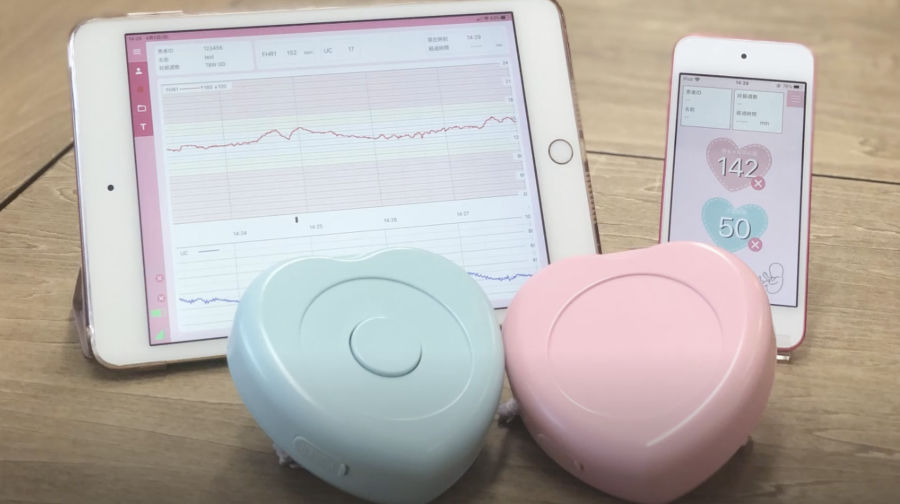
 Until recently, the distance between pregnant mothers and specialised care in rural areas in Bhutan made it difficult and time-consuming to get a conventional cardiotocography or CTG reading. However, the arrival of integral cardiotocography (iCTG) in 2021 has been life-changing for many rural women. The device was developed in Japan, and a three-year project with JICA brought the technology to Bhutan.
Unlike conventional CTG machines, the iCTG is a small, wireless and smart device. It can monitor both the baby’s heart rate and the mother’s uterine contractions.
Using digital sensors and software, the device continuously tracks these vital signs. The information can be checked instantly and shared with doctors from a distance, allowing timely decisions to protect both mother and child.
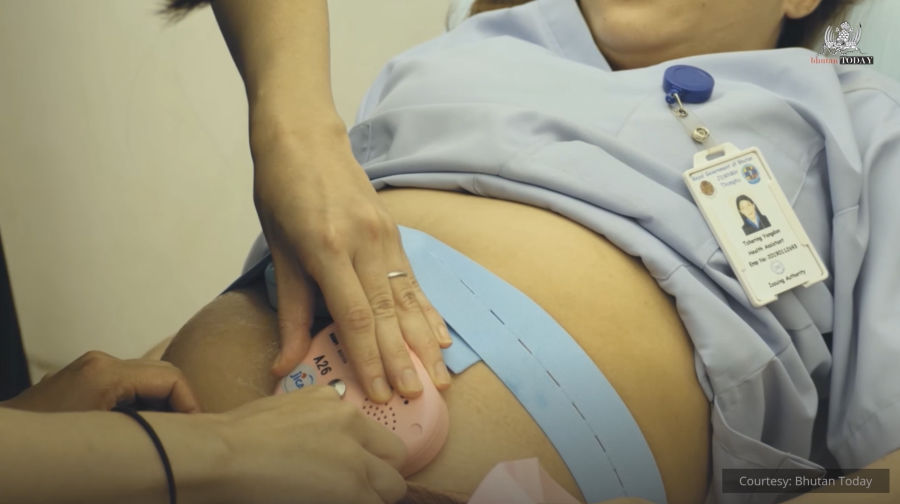
As part of the project, 84 iCTG devices have been deployed nationwide. Of these, 80 are currently operational in hospitals and primary health centres, while four are used for teaching and training.
“Originally, pregnant women in Bhutan could not come to Thimphu for the delivery, but with the iCTG, many pregnant women can stay in her hometown and receive the inspections. So far, in three years, 16,000 utilizations of the iCTG and 185 referrals for the high-risk pregnant women. So, as a result, the percentage of the baby mortality rate has dramatically decreased from 19 per cent to less than 5 per cent. This is a dramatic change in pregnant women,” said Yoichiro Kimata, Chief Representative, JICA Bhutan Office.
For health workers in remote areas, the impact goes beyond numbers. It has brought them confidence in monitoring pregnancies.
“I think for our health workers, it has given a sense of reassurance and confidence, especially for those health workers in the remote areas, where they can immediately reassure the pregnant mothers that their baby and they are doing fine through their iCTG. So, I think that has had a great impact since the integration of iCTG within the health system,” said Karma Tenzin, Sr. Programme Officer, NCD Division, Ministry of Health.
He added that iCTG is also integrated into the electronic patient information system for sustainability.
“I think iCTG has been implemented with the aspiration to ensure that we not only focus on the coverage, as we know that in the National Health Survey, we have made a remarkable achievement in terms of maternal and newborn health; however, the only challenge that the ministry is currently facing is also the quality of care. So through the implementation of iCTG as an intervention, it is also seen as a vision to help achieve the quality of care and help to reduce the preventable maternal and newborn deaths in the country,” said Karma Tenzin, Sr. Programme Officer, NCD Division, Ministry of Health.
The initiative was part of the project for Strengthening Maternal and Child Health by Telemedicine System Establishment, which has now ended.
Although the project has ended, the impact continues to echo in hospitals and health centres, especially in rural areas.
Devika Pradhan
Edited by Kipchu