
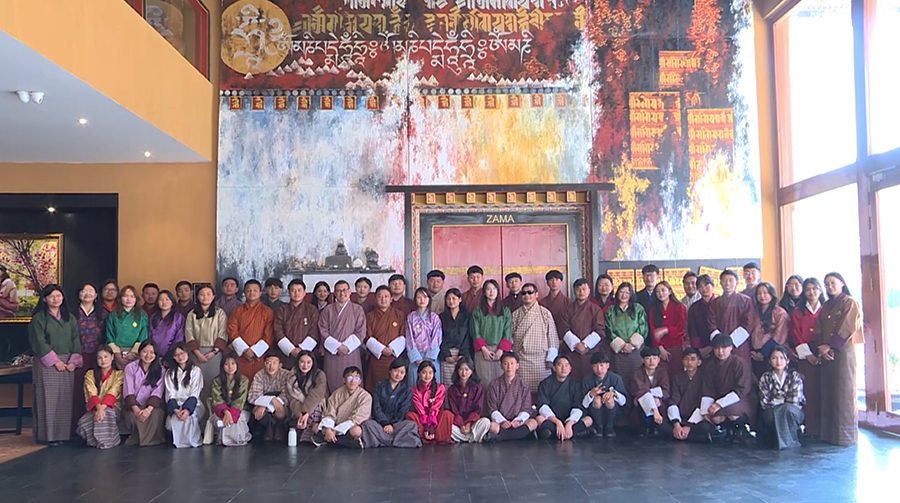
 As the generation that will inherit and live with the long-term consequences of environmental damage, youth voices are becoming increasingly important in climate action. Recognising that youth voices can provide fresh perspectives and drive innovative solutions to address climate issues, a day-long youth climate sensitization event was held in Thimphu today. During the event, over 50 young participants representing various youth networks in the country acknowledged that they can drive meaningful change by advocating for climate action.
Young, driven, and passionate about securing a climate-resilient future, these young Bhutanese say they can do more for climate action.
From waste management to advocating for climate law, these youth advocates have been actively engaging in addressing climate-related issues. And rightly so because a study by the United Nations found that children aged ten and under will face far more extreme weather in their lifetimes. With 1.5 degrees of warming, they’re expected to experience four times as many extreme events, and five times as many if warming reaches 3 degrees by 2100. Climate change is already affecting young people today, disrupting their education, job prospects, and overall well-being.
Jigme Tenzin from JSW School of Law said, “I believe that the highest percentage of the population presently engaging with social media is the youth. And if they were able to involve themselves with advocating for issues such as climate as well as other issues, then they would bring a bigger impact because they can start movements. They can start campaigns and we can see this throughout the world except for Bhutan.”
Jangchuck Dorji from Paro College of Education said, “When we pick waste, I think that’s the best advocacy we do. What I perceive is that people think that they just leave it there and they assume once it’s right outside their door, away from where they live, it’s not theirs anymore. Especially regarding waste and regarding climate, individuals really do not know that climate is a big issue.”
The Bhutan youth climate consultation report 2025 also acknowledges that youths are missing classes due to physical and mental burden caused by climate change, such as landslides.
Dechen Tshomo, Assistant Programme Officer, Programme and Youth Coordination Division, MoESD said, “What we found out was that what youth really wanted, and what youth shared is that they are not really just the passive observers of climate change. They can be contributors in climate action, and they say that they can do things at their own level.”
The event organised by the Ministry of Education and Skills Development, Ministry of Energy and Natural Resources, and UNICEF Bhutan highlights the importance of youth inclusion in decision-making and their contributions in shaping climate policies.
Singye Dema