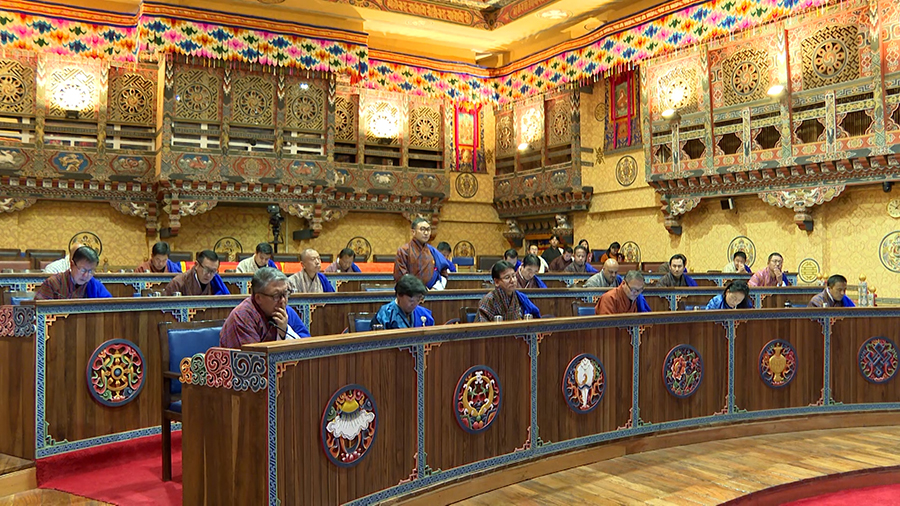
 During today’s National Council deliberation on the Free Trade Agreement between Bhutan and Thailand, MPs raised concerns over potential job losses and the impact on the country’s foreign currency reserves. While acknowledging the agreement’s benefits, they expressed concerns that tariff-free trade could increase imports, compromise quality, and affect sustainability. The Economic Affairs Committee, however, said the agreement is expected to create more jobs and boost reserves.
During the session, MPs asked whether the Economic Affairs Committee had discussed risks such as job losses from industry closures and the need for stronger support to ensure quality and sustainability in manufacturing. They also inquired about the plans and policies made to uphold the constitutional mandate of maintaining foreign currency reserves sufficient to cover at least one year of essential imports.
“If tariffs are removed, it could lead to fewer exports and a surge in imports. For example, a biscuit factory in Wangdue could be affected by the influx of imported biscuits, putting local factories and workers at risk and reducing job opportunities,” said Punakha MP Namgay Dorji, NC.
Trashigang MP Sonam Tobgyel said, “There is a risk that imports could exceed exports, leading to a build-up of imported goods such as clothing and food items in the country, at a time when Bhutan is already struggling to sell or export its own products. If quality and long-term sustainability are ensured, the agreement could ultimately benefit Bhutan.”
“As Punakha MP pointed out, many manufacturing industries that are already struggling could be forced to shut down, leading to job losses. Employment in the sector could decline by as much as 50 per cent over the next five years,” said Ugyen Tshering, Paro MP.
Sarpang MP Pema Tashi said, “The National Interest Analysis states that imposing low or no tariffs could lead to a surge in imports, resulting in an outflow of foreign currency reserves. Article 14, Section 7 of the Constitution of Bhutan requires the country to maintain a minimum level of foreign currency reserves sufficient to cover at least one year of essential imports. Given the analysis’s warning of a high outflow of reserves, how was this aligned with the constitutional requirement?”
In response, the committee chairperson said these concerns were thoroughly discussed with agencies already formulating plans, policies, and guidelines on what products to sell and how to improve quality, supported by budget allocations. He said this will enhance product quality, add value, and strengthen Bhutan’s export potential.
The chairperson of Economic Affairs, Tshewang Rinchen said, “Competing with Thailand, even as we import from them, will first help improve the quality of our domestically produced and manufactured goods. Second, the imposition of the goods and services tax will significantly benefit the country. Third, improved quality will enable us to export more, not only to Thailand, but also to existing trading partners such as India and Bangladesh, bringing in more foreign currency and strengthening our reserves.”
He added that the agreement is particularly important for landlocked countries like Bhutan, as it opens access to wider markets, allowing Bhutan to trade not only with Thailand but also with other ASEAN countries.
With the agreement ratified today, the House will adopt the agreement tomorrow.
Tashi Dekar
Edited by Kipchu