
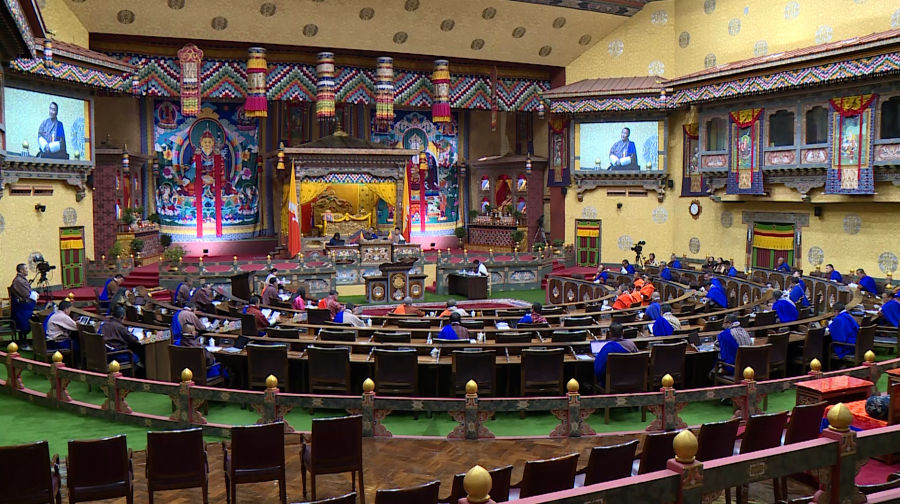
 Concerns over manpower shortage in education, health, and agriculture across the country dominated the National Assembly’s question hour session today. Highlighting declining service quality, reduced access to services, and overworked staff, MPs pressed the government on what they are doing to address the problem.
Of the five questions raised, three, including their supplementary questions, centred on manpower shortages.
The Thrimshing-Kangpara MP questioned the government on why many long-serving contract teachers and other contract staff have not received extensions, despite the government’s earlier pledge to regularise all contract employees.
Education and Skills Development Minister Yeezang De Thapa said the government introduced para-regular contracts in consultation with the Royal Civil Service Commission and extended the contract period to five years.
The minister said, “Para-regular contract employees are eligible for salary increments, allowances, professional development and transfer grants. They also receive provident fund, gratuity and home ownership benefits. The government has fulfilled its commitment by bringing contract teachers under the para-regular system.”
She said around 480 teachers are currently on extraordinary leave, and over 100 are on long-term studies. To fill the gap, the ministry has recruited about 600 additional contract teachers and is working to strengthen recruitment, improve retention, and streamline deployment.
Meanwhile, the Bongo-Chapcha MP raised urgent concerns over the lack of health professionals in Chhukha. He said Tsimalakha Hospital has been without a doctor for nearly a month, and Gedu Hospital continues to operate without a gynaecologist.
Several other MPs reported similar challenges.
Health Minister Tandin Wangchuk said that the shortage is prevalent across the country and that health worker deployment is being done based on criteria, including patient load and available services.
He said, “At the national level, the RCSC has approved 5,975 health professionals across 23 categories. Currently, we have 4,399 health workers, leaving a shortage of more than 1,500. Of the 244 RCSC-approved gynaecologist positions, we have only 207, which is a gap of 37. Similarly, out of 674 approved doctor positions, we have 631, a shortage of 43.”
The Drametse-Ngatshang MP also highlighted shortages of Livestock and Agriculture Extension Officials, saying the lack of staff is hindering service delivery and leaving farmers without basic livestock medicines or clinical support during emergencies.
Agriculture and Livestock Minister Younten Phuntsho said the ministry is providing community training in livestock management and recruiting additional officers as needed.
He said, “RCSC has approved a total of 492 Livestock and Agriculture Extension Officials. However, we currently have only 443, resulting in a shortage of 49.”
Meanwhile, Opposition Leader Pema Chewang urged the House to compile nationwide human resource gaps into a single report for the next session.
The opposition leader said, “The 13th Five-Year Plan has been ambitiously designed, but without sufficient manpower, its goals cannot be achieved. The people and the country will not benefit. The government could compile a consolidated report of civil servants involving the RCSC and local governments, which would be beneficial.”
Despite the shortages, ministers said recruitment and deployment are being strengthened, offering hope that schools, hospitals, and farms will soon have the staff they need.
Kinzang Lhadon
Edited by Sangay Chezom