
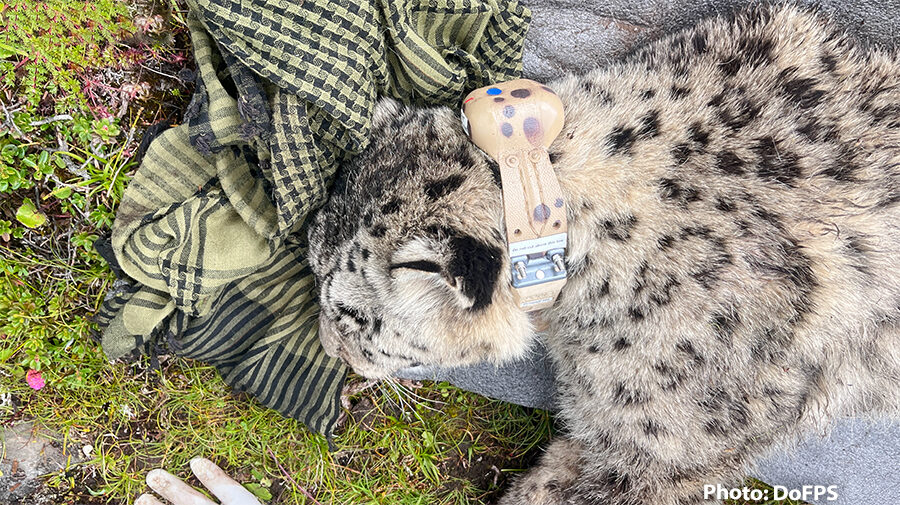
 The country is stepping up efforts to monitor and protect its elusive snow leopard population. Conservation officials are using GPS telemetry to track the animals’ movements in the country’s high-altitude landscapes, generating information expected to strengthen long-term conservation efforts. As part of a new project, one more snow leopard has been collared.
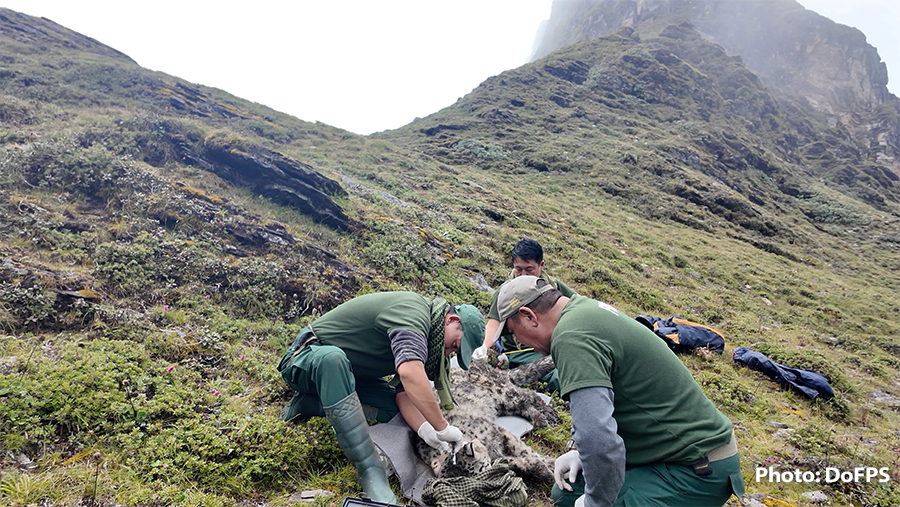 High in the mountains, a team from the Department of Forests and Park Services is carrying out a carefully coordinated operation.
The objective is to fit the snow leopard with a GPS collar that can transmit movement data and help researchers understand the animal’s habitat.
One snow leopard was fitted with a GPS collar during fieldwork in September this year, taking the total number of collared snow leopards to three since the initial project in 2016.
“To date, Bhutan has not conducted a comprehensive study on snow leopards’ movement ecology. GPS telemetry will help us understand how they move across landscapes and habitats and how they interact with their surroundings, including livestock and human communities,” said Tandin, Programme Specialist, Forest and Biodiversity, WWF Bhutan.
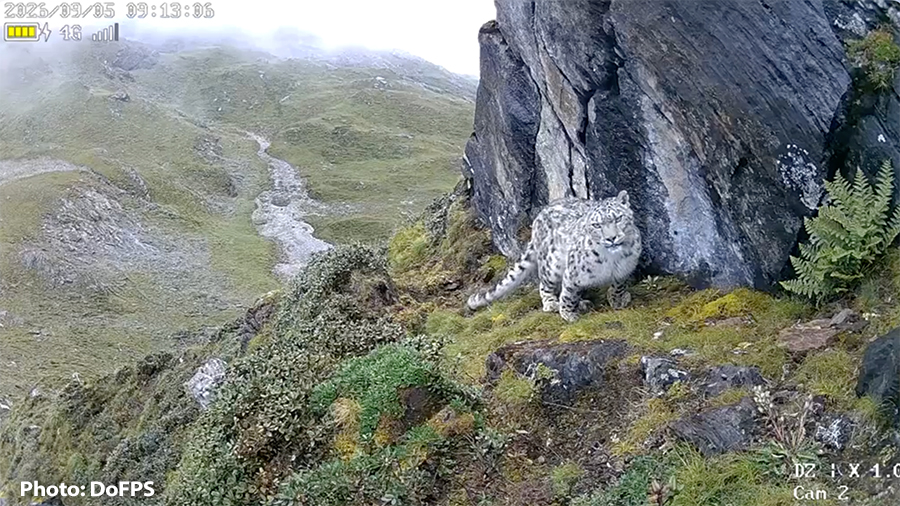 According to DoFPS and WWF Bhutan, GPS telemetry provides fine-scale, real-time ecological information that can support long-term conservation decision-making and community-based coexistence planning.
The data is expected to help fill critical knowledge gaps, including how snow leopards move across landscapes, their dispersal pathways, and how they interact with livestock.
It could also help researchers understand how climate change is affecting habitat connectivity.
The information could further support targeted measures to reduce human-wildlife conflict, particularly in areas where snow leopards and livestock overlap.
Officials plan to collar more snow leopards with the aim of building stronger scientific knowledge of the species.
“We want to collar more snow leopards. We successfully collared one this time, and we want to collar two more in the 2026–2027 financial year to increase our sample size. We need at least five snow leopards to obtain specific and accurate information about their home range, resource selection, and how they use the alpine habitats of Bhutan,” said Lungten Dorji (PhD), Senior Forestry Officer, Nature Conservation Division, DoFPS, MoENR.
According to the National Snow Leopard Survey 2022–2023, 134 snow leopards were confirmed in the country.
Globally, fewer than 8,000 snow leopards are estimated to remain in the wild. Found across 12 Central and South Asian countries, the species is listed as Vulnerable on the IUCN Red List. Understanding where they move, the habitats they depend on, and the challenges they face is essential to ensuring their continued survival.
As one of the top predators, snow leopards maintain healthy mountain ecosystems and serve as indicators of environmental well-being.
Kelzang Chhophyel
Edited by Phub Gyem