
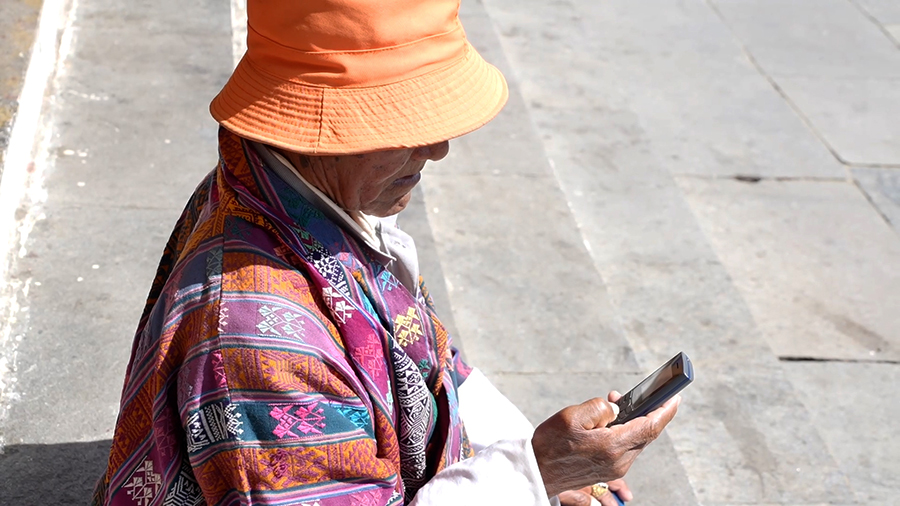
 As Bhutan moves towards digital public services, many elderly people continue to face difficulties using smartphones and accessing online services due to limited digital skills, language barriers and a lack of familiarity with technology.
From mobile banking to government services, digital platforms are making everyday transactions faster and more convenient. However, the shift to digital services has not been equally easy for everyone.
Gokay Pem from Wangdue Phodrang says mobile phones have many benefits, allowing people to communicate with others and access religious teachings and sacred sites from anywhere. However, she also acknowledges that mobile phones can have adverse impacts.
For many senior citizens, limited digital skills make it difficult to use mobile applications and access online services. Even basic functions, such as making calls or locating documents on a phone, can be challenging.
Data from Chhukha says she cannot use a mobile phone independently and only uses it to receive calls. When she needs assistance accessing services, she relies on her children for help.
Similarly, Tashi Pema from Chhukha says many elderly people struggle with basic phone functions and often depend on others to access documents and government services.
“We cannot even dial a number to make a phone call. Even if there are documents on the phone, we do not know how to navigate to them. We need to get help from someone who knows how to do it. We access government services by going to the gewog offices in person or by getting help from those who are digitally literate,” she says.
For some elderly people, language is another barrier. Paipo from Trashi Yangtse says communicating in English makes it difficult for those who speak only their local dialect to access digital services and prepare documents.
“Nowadays, even when we need to communicate, it is in English. Leaving English aside, I do not even know how to speak Hindi. We can only speak our local dialect. It is inconvenient for us to access government services and prepare documents,” Paipo says.
According to World Bank data, Bhutan had 50,329 people aged 65 and above in 2023, accounting for 6.4 per cent of the total population of 786,385. The share of the elderly population is projected to rise to nearly 16 per cent by 2050.
Meanwhile, the government’s digital literacy programme puts the digital literacy rate at 49 per cent.
People who face difficulties accessing digital services can still visit government offices or use toll-free numbers to seek assistance.
As more services move online, ensuring that elderly people and those with limited digital skills can access essential services remains a challenge.
Kelzang Chhophyel
Edited by Passang