
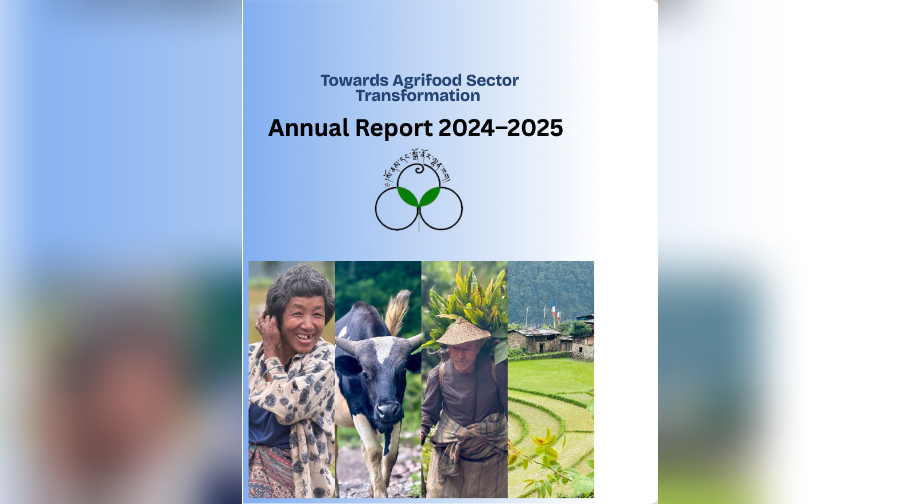
 The country is working to produce more food domestically. However, a significant share of what farmers grow is still being lost to climate-related events, human-wildlife conflict, pests and diseases. The Ministry of Agriculture and Livestock’s Annual Report 2024–25 shows that more than 6,000 tonnes of paddy, fruits, and vegetables were lost during the reporting period. While the government has introduced several measures to minimise such losses, protecting food after it is produced remains a challenge.
More food production does not necessarily mean more food reaches the table. The first year of the 13th five-year plan recorded an increase in the production of several major crops.
However, farmers also lost thousands of tonnes of crops before they could reach the market or contribute to the country’s food supply.
According to the Annual Report, more than 2,500 tonnes of paddy, equivalent to about 250 truckloads, were lost to human-wildlife conflict, climate-related impacts and other causes.
The country also lost nearly 3,000 tonnes of potatoes, or roughly 300 truckloads, and 612 tonnes of chilli, equivalent to about 60 truckloads.
The report also recorded losses of maize, tomato, beans and cauliflower. Climate change is one of the major challenges.
In April last year, hailstorms in eight gewogs of Tsirang damaged vegetables across more than 2,000 acres and affected over 58,000 fruit trees.The damage was estimated at around Nu 55 M.
In Wangdue Phodrang and Bumthang, frost and heavy rainfall also damaged potato crops, with some farmers reportedly losing up to 90 per cent of their crop.
Wild animals are another major threat to farmers’ harvests. To reduce these losses, the government is expanding chain-link fencing protecting nearly 10,000 acres of cultivated land.
The 13th Five-Year Plan has also allocated Nu 5.1bn to address wildlife depredation and reduce crop losses caused by wild animals.
Besides, the government has introduced measures such as climate-resilient irrigation, crop protection and a crop and livestock insurance scheme.
The national insurance scheme covers priority crops such as paddy, maize, potato and orange, as well as cattle, pigs and poultry.
For now, despite these interventions, increasing food production remains a challenge for Bhutan. And going by the annual report, equally challenging yet critical is protecting what farmers produce from the field to storage and the market.
Sonam Yuden
Edited by Sangay Chezom