 The national referral hospital plans to expand some of the Thromde Health Centres and do away with general outpatient services at the hospital by the end of next year. This is due to the increasing patient turnover at Thromde Health Centres, easing the congestion issue at the national referral hospital. Currently, Thimphu has seven health centres, with a few of them seeing about a hundred patients daily.
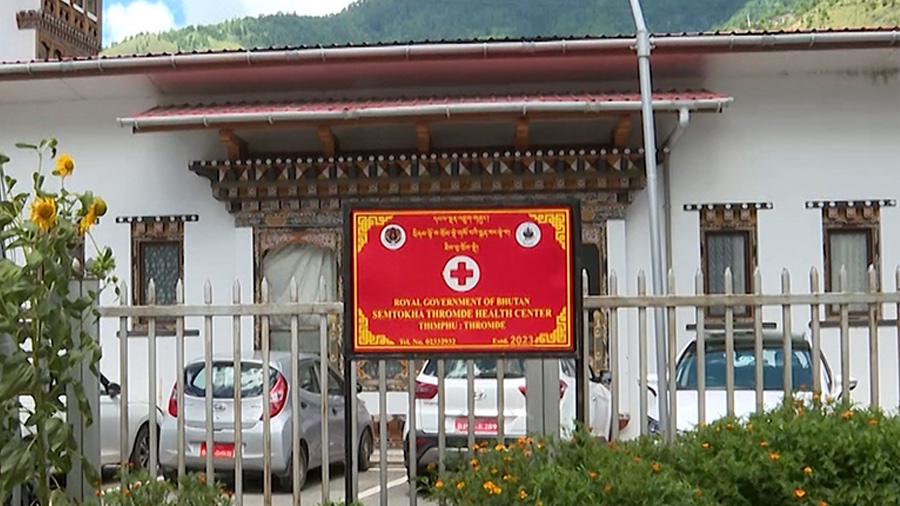
Thromde Health Centres are located at Babena, Debsi, Motithang, Dechencholing, and Semtokha, along with a flu centre at the Royal Bhutan Police ground and a small dispensary at Changjiji.
The hospital plans to construct a larger facility in Changjiji and expand the health centres at Babena and Motithang. This is to ease the overcrowding issue at the national referral hospital.
“We plan to strengthen the capacity in these facilities. Eventually, we want to have the general OPD cases dealt with in all these centres, which would be easy for patients because then they don’t all have to come to the national referral hospital. Secondly, they will be distributed across the thromde so that no one facility will be under pressure. And eventually, anybody who needs to come to the national referral hospital will do so only for specialised services,” said Dr Pem Namgyal, the President of JDWNRH.
Currently, these thromde health centres have at least one medical doctor stationed, along with health assistants, nurses, pharmacists, and laboratory technicians.
The centres provide services ranging from outpatient consultations to X-ray, maternal and child health care, immunisation, and medication refills for chronic diseases.
“The national referral hospital sees more patients, so it’s overcrowded. It is better here with improved services. We can easily get ultrasound services and blood tests here. For example, when we schedule an ultrasound at the hospital, we often have to wait for months. However, here we don’t face such long wait times. That’s why it’s more comfortable to come here than visit the national referral hospital,” said Khandu Wangmo, a residing in Thimphu.
Doctors at these centres said they are seeing an increase in the number of patients, highlighting the need to expand infrastructure.
“So, all these thromde health centres are helping in decongesting the workload at Jigme Dorji Wangchuck National Referral Hospital. So, I think there has been a surge in the number of patients, at least in the Babena area. When I joined in September, maybe there were around 100 patients. Now, on average, on a normal day, we see about 150 to 170,” said Dr Pelgay Jamyang, a General Physician stationed at the Babena Thromde Health Centre in Thimphu.
“NCD cases, such as diabetes and hypertension, are common among patients who come to the centre for refills. They also visit for ailments like common cold and diarrhoea. Occasionally, we see emergency cases as well. Previously, I managed a few patients, but now I see between 70 and 80 outpatients daily. Additionally, we offer maternal and child health services, among others and when we include these patients, about 150 individuals are coming to the centre every day,” added Dr Kinley Yangzom, GDMO at the Semtokha Thromde Health Centre.
Doctors added that the expansion will be especially beneficial to health workers to help them better handle patient workload. The hospital plans to deploy at least two doctors in these centres after expansion.
According to the national referral hospital, the construction of a bigger centre at Changjij is already ongoing, with Babena and Motithang expansion set to begin by next year.
“We projected maybe about 40 million to build that, which finance has given conditional approval for, on the condition that once we submit the drawings and the details of the construction of the structure, we’ll be able to get that. And then following that, this year I am going to focus on building the Chanjiji health centre,” said Dr Pem Namgyal.
He added that despite the number of patients that the centre receives, it might be difficult to expand the Semtokha Health Centre as the hospital is unable to acquire land owned by private individuals.
The expansion is expected to make healthcare more accessible for Thimphu residents, while reducing pressure at the national referral hospital.
As more services become available at the Thromde Health Centres, patients may no longer need to travel to the national referral hospital for minor illnesses.
Singye Dema
Edited by Phub Gyem