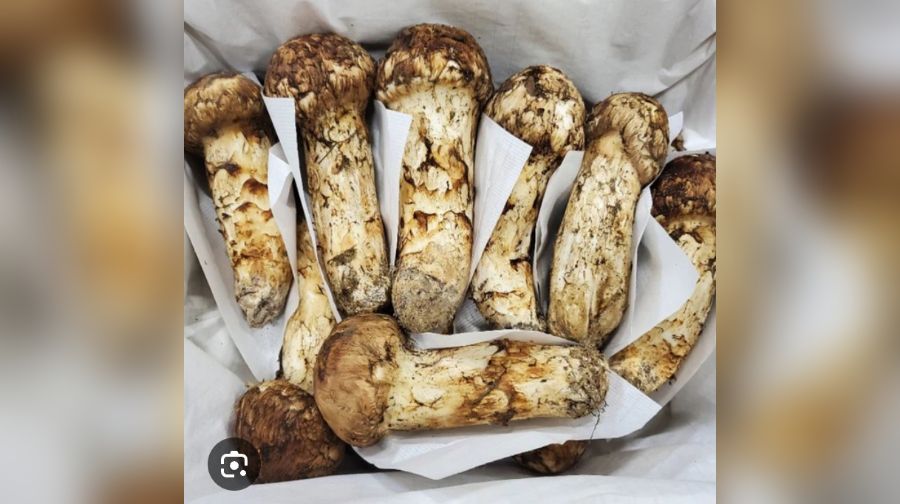
Matsutake is becoming an increasingly important source of income for farmers in Genye Gewog in Thimphu. While exporters have agreed on higher prices this year, mushroom collectors in the gewog say they can earn even more by selling their mushrooms directly at the annual Matsutake Festival.
For generations, matsutake has been a part of life in Genye Gewog. What was once collected mainly for personal consumption has now become a valuable source of cash for farmers.
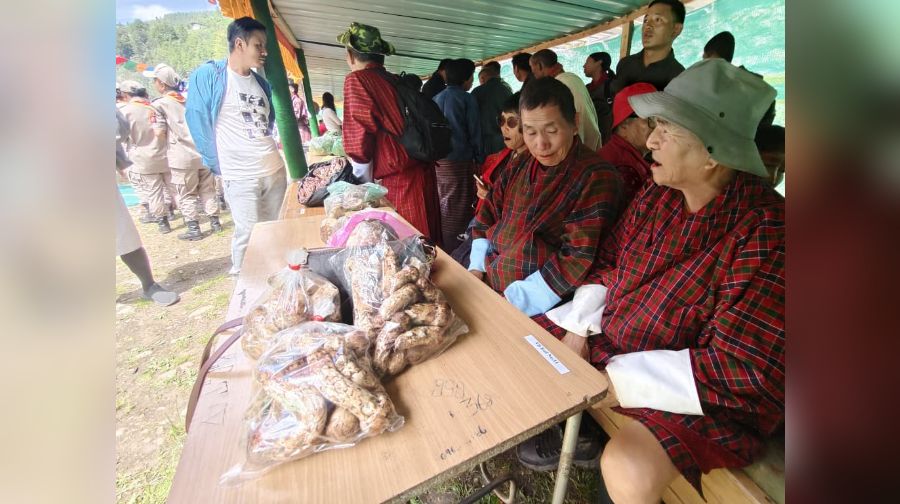 For 69-year-old Namgay from Tshochekha, matsutake has provided a significant income in recent years. He earned around Nu 300,000 in 2024 and about Nu 400,000 last year, making him one of the highest earners in the community.
The transformation in the mushroom trade is evident from its humble beginnings. Namgay remembers when matsutake was sold for just Nu 5 a kilogramme.
Namgay says, “Matsutake has existed since the time of our parents. We never thought of selling it. I took the mushroom to Wangchuktaba on my horse. When I took it there, no one was willing to buy it because they thought it might be poisonous.”
The mushroom trade has grown significantly since then, helping farmers meet household expenses and improve their lives.
“In Genye Gewog, people’s livelihoods have improved through Matsutake. We have used the income to buy roofs, as well as food and other household items. We depend on this source of income, and it has made our lives more convenient,” he says.
This year, exporters have agreed to pay Nu 2,000 per kilogramme for Grade A mushrooms and Nu 1,700 for Grade B. Both prices are higher than last year.
The number of exporters has also increased from three last year to seven this year.
The mushroom is also finding markets beyond Bhutan.
“Till last year, two of our friends used to export to Japan, and we also exported to Japan. This year, there are seven exporters in total, and some of them say they are exporting to Korea as well. Some of them say they will be sending mushrooms to Singapore as well. So far, Padma Gourmet and Foods has been exporting to Japan, and we will be sending mushrooms to Japan this year as well because we have a permanent importer in Japan,” says Tshering Wangchuk, Padma Gourmet and Foods’ manager.
But farmers say the highest returns are not necessarily coming from exporters. During the Matsutake Festival, some farmers are selling their mushrooms for around Nu 3,000 per kilogramme.
Farmer Tandin Dorji says, “During the annual Matsutake Festival, prices tend to increase, and buyers are willing to pay more for well-preserved mushrooms. In terms of convenience, it is easier for us to sell to Tshogpa members because mushroom collectors usually collect the mushrooms in the morning and sell them in the evening.”
For Genye’s farmers, matsutake is no longer just a forest product. It has become an important part of household income and the local economy, with growing demand creating new opportunities for the community.
Karma Wangdi
Edited by Passang