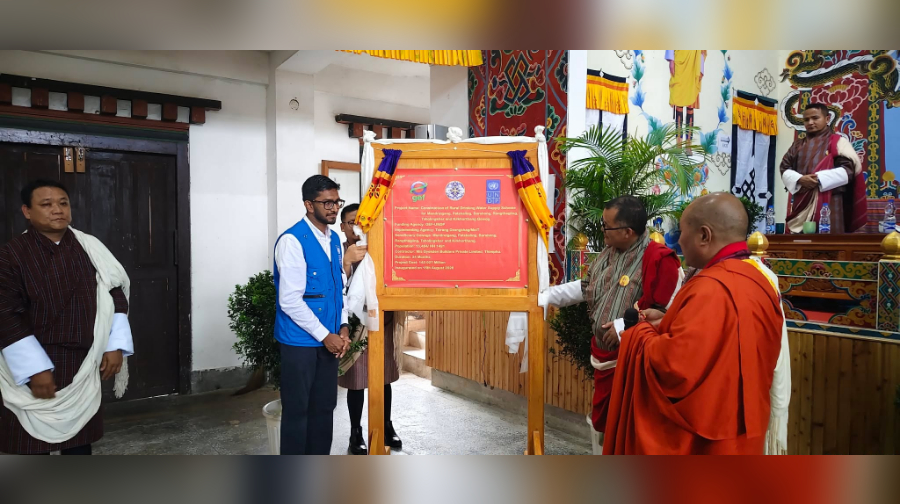
 For years, unreliable water supplies have affected households and farmers across six gewogs in Tsirang. Limited water meant families had to ration supplies for basic household needs, livestock and farming. A new climate-resilient water supply scheme is now expected to improve water security for around 13,500 people. The project has also helped farmers bring fallow land back into cultivation and increase agricultural income. The project was formally handed over yesterday.
 For many households in six gewogs, water has long been a scarce resource. Families have had to depend on limited sources and, in some communities, share water on a rotational basis.
“It is impossible to wash clothes, prepare meals, and clean our homes without water. It is much easier when we have a reliable water supply. We didn’t have a reliable water supply before and had to use water on a rotational basis among neighbours,” said Choden, a resident of Tsholingkhar Gewog.
Another resident, Lal Bdr. Thingh said, “The new drinking scheme will benefit about 50 households in our chiwog. We will no longer have to face difficulties during the dry season. We are thankful for the new drinking water scheme.”
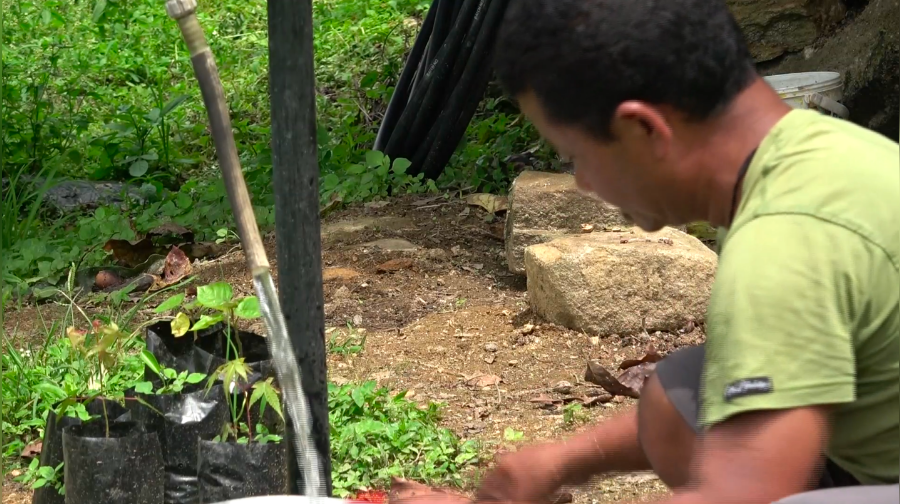 The new water supply scheme aims to address these challenges.
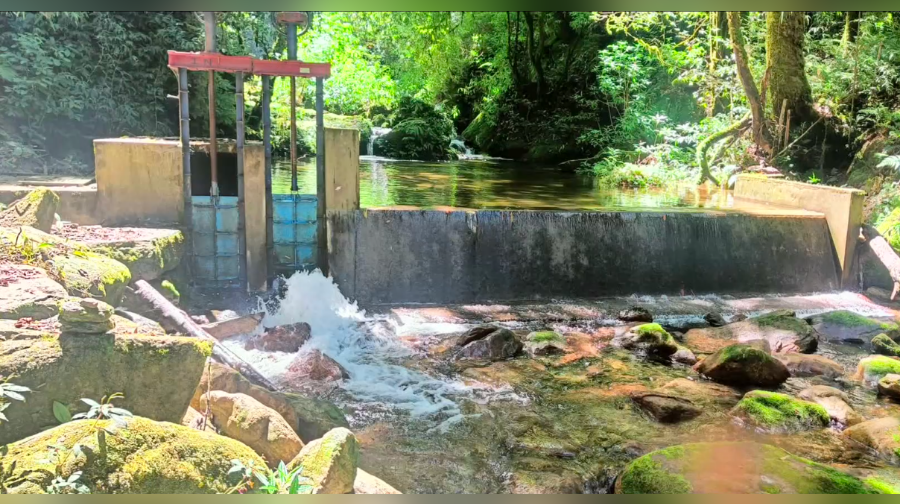
The project draws water from Kuchi river in Patshaling Gewog and has built reservoirs, village-level tanks and other water infrastructure. Nearly 18 kilometres of transmission pipelines connect the source to distribution points in Dupi and Dharchhargang before supplying the respective gewogs.
The system is designed to provide water to around 13,500 people in Patshaling, Barshong, Mendrelgang, Rangthangling, Tsholingkhar and Kilkhorthang.
However, the system has not yet reached its full capacity. District officials say the full volume of water is expected to reach the communities in the coming days.
For residents, the new supply could also mean more water for activities beyond household use.
“With the new drinking water supply, we have connected the main pipeline to the reservoir. We will be happy once we start receiving the water supply. Currently, we have a water supply but it is adequate only for drinking. The new water supply will now be adequate for our livestock and for dry land irrigation,” said Chandra Bdr. Monger, a resident of Barshong Gewog.
“For some of us here, we don’t have any other water source. We have to depend solely on the Paw River and the Khuchi River for water. The new water supply scheme will be adequate for drinking as well as for our gardens,” said Rinzin Dorji, a resident of Mendrelgang Gewog.
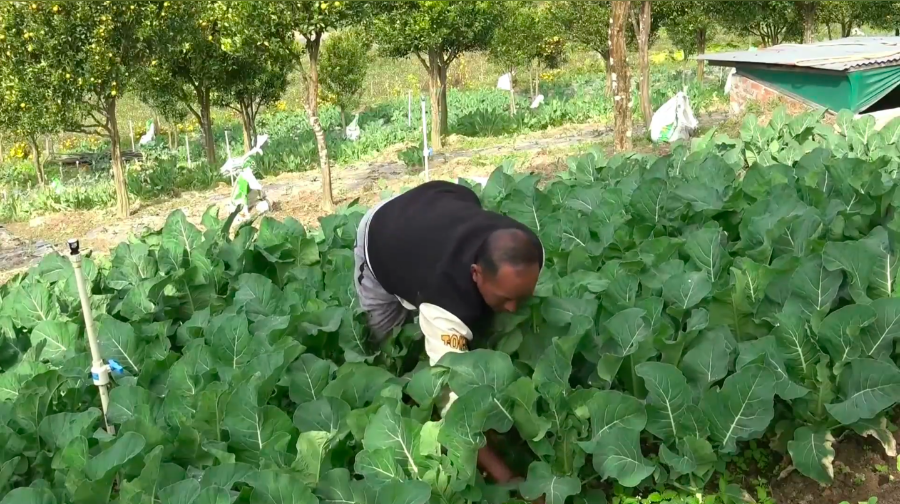 The project has also focused on turning improved water access into better agricultural opportunities.
More than 2,100 households have received irrigation tools and support in climate-smart farming. Farmers who once depended largely on rain-fed subsistence farming now have better access to irrigation, encouraging them to diversify into higher- value crops.
Farmers have adopted practices such as mulching and efficient water use across nearly 3,000 acres of farmland, exceeding the project’s initial target of about 2,600 acres.
The project has also helped bring nearly 440 acres of previously fallow land back into cultivation in Kilkhorthang and Patshaling gewogs.
Nearly 400 farmers have received training in sustainable land management, mulching and organic farming. Project officials estimate that these interventions have generated around Nu 40 million in additional income for farming households.
Tsirang Dzongda Sonam said, “It means our farms and kitchen gardens can flourish with reliable water, strengthening food security and livelihoods. And it means our gewogs become vibrant, encouraging our youths to see a future here rather than seeking elsewhere.”
The project was implemented by Tsirang district administration in collaboration with the Ministry of Infrastructure and Transport under the Advancing Climate Resilience of Water Sector or ACREWAS project.
The Global Environment Facility (GEF) through the United Nations Development Programme, funded the project.
UNDP says access to safe and clean drinking water is expected to improve community health and livelihoods by reducing the risk of waterborne diseases while also contributing to increased agricultural production.
UNDP’s Deputy Resident Representative Fadhil Bakeer Marker said, “It will reduce the burden on our mothers, sisters and daughters. There are many responsibilities and challenges associated with water insecurity. Even if the numbers suggest an equal impact, when we look at it more closely, I think their responsibilities and burden will be reduced significantly.”
With the project now handed over to the gewogs and water-user groups, responsibility for operating and maintaining the system will rest with the local communities.
For residents, the real benefit will depend on whether the new system can deliver a reliable supply throughout the year. If it does, the project could mean more than simply having water for drinking. It could allow families to irrigate their farms, cultivate previously unused land, keep livestock and earn more from agriculture.
Pema Tshewang, Tsirang
Edited by Sangay Chezom